


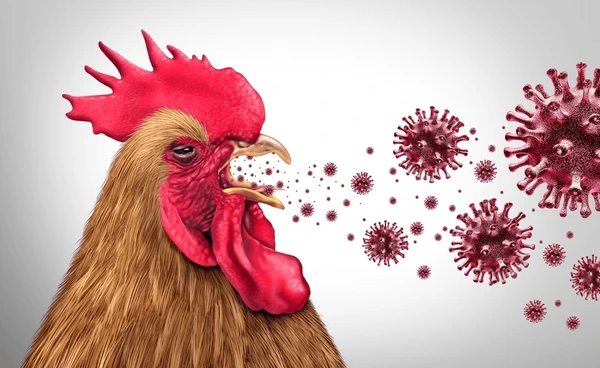
The global avian influenza (AI) antigen testing market is valued at USD 176.5 million in 2025 and is projected to reach USD 1,894.6 million by 2035, recording an absolute increase of USD 122.1 million at a CAGR of 5.4%.
A new report by Future Market Insights Inc (FMII) stated that this progression expands the industry 1.7 times compared with the baseline, but innovation trends are expected to determine how effectively market participants capture growth.
The trajectory highlights shift from traditional diagnostic kits to advanced rapid testing formats, automated systems, and field-ready devices during the horizon ending 2035.
The move toward rapid, point-of-care antigen testing systems
One of the most significant innovation trends is the move toward rapid, point-of-care antigen testing systems. Traditional laboratory-based diagnostics, while accurate, face limitations in outbreak situations where time-sensitive detection is critical.
Portable antigen test kits, equipped with lateral flow assay technology, are becoming widely adopted in poultry farms and veterinary clinics. These kits reduce turnaround times from days to minutes, making them essential for early containment strategies in the years ending 2030.
Advances in biosensor technology also support improved sensitivity and field usability, reinforcing rapid response protocols.
Automation and integration with digital platforms
Automation and integration with digital platforms represent another critical innovation pathway.
Automated immunoassay analyzers designed for veterinary labs provide higher throughput, reducing human error and enhancing consistency.
Cloud-enabled data collection platforms that connect directly with testing devices are gaining traction, enabling real-time disease surveillance across poultry-producing regions.
By the year 2035, FMII predicts that integrated surveillance ecosystems linking farms, diagnostic labs, and regulatory bodies will reshape monitoring frameworks. These innovations not only streamline disease detection but also build transparency for global poultry trade networks.
Multi-pathogen detection capability
Multi-pathogen detection capability is also emerging as an important trend. Innovation in multiplex testing platforms allows simultaneous detection of AI along with other viral or bacterial pathogens that affect poultry health.
This reduces costs, minimizes testing time, and increases efficiency, making it attractive for commercial poultry operators managing large flocks.
Multiplex solutions are expected to transition from research use to broader commercial deployment as validation standards are met during the later stages of the forecast period ending 2035.
Why is the AI antigen testing market growing?
The AI antigen testing market grows by enabling poultry producers and agricultural organizations to optimize disease management while accessing specialized diagnostic technologies without substantial in-house laboratory investment.
Poultry companies and agricultural producers face mounting pressure to implement comprehensive biosecurity protocols and rapid disease detection while managing complex surveillance requirements, with specialized antigen testing services typically providing 50-70% faster detection completion compared to laboratory alternatives, making rapid testing essential for effective outbreak management.
The poultry industry’s need for regulatory compliance and application-specific diagnostic capabilities creates demand for comprehensive testing solutions that can provide superior accuracy, maintain consistent quality standards, and ensure reliable operation without compromising disease control efficacy or production continuity timelines.
Government initiatives promoting animal health surveillance and disease prevention drive adoption in poultry production, agricultural operations, and veterinary applications, where diagnostic accuracy has a direct impact on outbreak prevention and flock health management.
System complexity constraints during large-scale surveillance programs and the technical requirements for field-based testing may limit accessibility among smaller farming operations and developing regions with limited infrastructure for sophisticated diagnostic systems.
Rapid antigen test kits segment accounts for a dominant market share
The rapid antigen test kits segment represents the dominant force in the AI antigen testing market, capturing approximately 42.3% of total market share in 2025.
This established testing category encompasses solutions featuring sophisticated point-of-care detection and field-deployable diagnostic capabilities, including advanced chromatographic methods and specialized visualization processes that enable superior testing benefits and outbreak response across all poultry applications.
The rapid antigen test kits segment’s market leadership stems from its superior operational capabilities, with solutions capable of addressing diverse surveillance requirements while maintaining consistent accuracy standards and quality compliance across all agricultural environments.
The ELISA segment maintains a substantial 37.4% market share, serving diagnostic laboratories that require specialized immunoassay solutions with enhanced sensitivity features for large-scale testing programs and research applications.
These solutions provide advanced quantitative capabilities for complex viral detection, offering sufficient analytical precision to meet laboratory and regulatory requirements.
The immunofluorescence segment accounts for approximately 14.4% of the avian influenza antigen testing market, serving specialized applications requiring specific microscopic visualization configurations or advanced cellular detection parameters.
Key technological advantages driving the rapid antigen test kits segment include:
- Advanced detection technology with integrated quality control that enhances testing accuracy and ensures consistent diagnostic performance.
- Established field-testing protocols allowing streamlined surveillance workflows across different sample types without extensive training requirements.
- Enhanced portability capabilities enabling diverse deployment formats while maintaining result reliability and testing precision.
- Superior user acceptance providing optimal operational performance for various outbreak response applications.
Swabs segment accounts for the largest market share
Swabs applications dominate the AI antigen testing market with approximately 57.3% market share in 2025, reflecting the critical role of respiratory sample collection in supporting specialized testing requirements and outbreak detection worldwide.
The swabs segment’s market leadership is reinforced by increasing surveillance trends, practical collection advantages, and rising needs for specialized diagnostic capabilities in poultry applications across developed and emerging markets.
The tissue segment represents the second-largest sample type category, capturing 23.2% market share through specialized requirements for post-mortem examination, pathological investigation, and direct viral isolation applications.
This segment benefits from growing laboratory integration demand that requires specific collection protocols, preservation standards, and diagnostic validation procedures in veterinary markets.
The fecal segment accounts for 15.1% market share, serving environmental monitoring, flock-level screening, and specialized epidemiological surveillance applications across various agricultural sectors.
Key market dynamics supporting sample type growth include:
- Swabs expansion driven by collection convenience and testing accessibility, requiring specialized collection protocols in emerging poultry markets.
- Tissue sampling modernization trends require flexible, integrated diagnostic systems for competitive differentiation and research advancement.
- Integration of multiple sample types enabling advanced surveillance capabilities and comprehensive outbreak investigation systems.
- Growing emphasis on non-invasive collection methods driving demand for specialized, validated sampling solutions without traditional laboratory limitations.
Drivers, restraints, and key trends
The AI antigen testing market is driven by three concrete demand factors tied to agricultural disease management:
- First, outbreak prevention and biosecurity enhancement create increasing demand for specialized testing systems, with surveillance program expansion of 25-35% annually in major poultry producing regions worldwide, requiring comprehensive diagnostic infrastructure.
- Second, government initiatives promoting animal health monitoring and disease surveillance drive increased adoption of advanced testing technologies, with many countries implementing mandatory testing programs and regulatory frameworks for AI management by 2030.
- Third, technological advancements in rapid detection methods and field-deployable solutions enable more efficient and scalable diagnostic approaches that improve testing quality while reducing response time and operational complexity.
Market restraints include:
- Complex regulatory requirements and validation costs for diagnostic platforms that can challenge market participants in developing compliant testing capabilities, particularly in regions where approval pathways for veterinary diagnostics remain evolving and uncertain.
- Technical complexity of sample collection and processing protocols pose another significant challenge, as antigen testing demands sophisticated handling procedures and quality controls, potentially affecting testing costs and operational efficiency.
- Accuracy limitations for field-based testing across different viral strains and outbreak scenarios create additional operational challenges for test providers, demanding ongoing investment in product development and validation programs.
Key trends indicate accelerated adoption in Asia Pacific markets, particularly India and China, where poultry production expansion and regulatory infrastructure development drive comprehensive diagnostic testing adoption.
Technology integration trends toward point-of-care testing platforms with real-time results, advanced multiplex capabilities, and integrated data management solutions enable scalable diagnostic approaches that optimize efficiency and minimize outbreak response delays.
The AI antigen testing market thesis could face disruption if significant advances in molecular diagnostics or major changes in disease surveillance methodologies reduce reliance on traditional antigen testing approaches.
India leads global market expansion
India demonstrates the strongest growth potential in the AI antigen testing market with a CAGR of 4.0% through 2035.
The country’s leadership position stems from poultry production expansion, government-backed surveillance initiatives, and comprehensive disease control regulations driving the adoption of advanced diagnostic testing solutions.
Growth is concentrated in major agricultural and poultry regions, including Punjab, Andhra Pradesh, Tamil Nadu, and Maharashtra, where commercial farms and integrated production facilities are implementing advanced testing protocols for enhanced disease management and outbreak prevention.
Distribution channels through veterinary services and agricultural cooperatives expand deployment across production facilities and surveillance programs.
The country’s Ministry of Agriculture provides policy support for diagnostic technology modernization, including comprehensive surveillance capability development.
China emerges as high-growth market
In major agricultural and production centers including Shandong, Henan, Hebei, and Guangdong, the adoption of comprehensive testing solutions is accelerating across commercial farms and production facilities, driven by regulatory scaling and government agricultural programs.
The AI antigen testing market demonstrates strong growth momentum with a CAGR of 3.6% through 2035, linked to comprehensive agricultural modernization and increasing focus on disease prevention solutions.
Chinese companies are implementing advanced testing systems and diagnostic platforms to enhance biosecurity while meeting growing demand in expanding poultry and agricultural sectors.
The country’s food safety enhancement initiatives create demand for diagnostic services, while increasing emphasis on export quality drives adoption of advanced testing systems.
Stakeholder contribution framework
AI antigen testing solutions represent a critical agricultural service that enables poultry producers, commercial farms, and governmental agencies to enhance disease management and biosecurity without substantial in-house laboratory investment, typically providing 50-70% faster detection completion compared to laboratory alternatives while ensuring unprecedented accuracy and regulatory compliance.
Scaling market penetration and testing capabilities requires coordinated action across agricultural policy, regulatory standards, diagnostic providers, farming companies, and veterinary institutions.
How could governments spur local development and adoption?
- Agricultural Surveillance Programs: Include diagnostic capabilities in national disease control initiatives, providing targeted funding for specialized testing facilities in poultry regions and supporting local veterinary companies through innovation grants and development support.
- Tax Policy & R&D Support: Implement accelerated depreciation schedules for diagnostic equipment, provide tax incentives for companies investing in advanced testing and quality technologies, and establish favorable regulatory frameworks that encourage specialized diagnostic adoption over conventional approaches.
- Regulatory Framework Development: Create streamlined approval processes for testing services across poultry and agricultural applications, establish clear quality standards and frameworks for specialized diagnostics, and develop international harmonization protocols that facilitate cross-border agricultural trade.
- Skills Development & Training: Fund vocational programs for diagnostic technicians, veterinary specialists, and agricultural professionals. Invest in technology transfer initiatives that bridge research with commercial testing development and quality optimization systems.
- Market Access & Competition: Establish procurement policies that favor advanced diagnostic solutions for government surveillance applications, support agricultural development through testing modernization programs, and create regulatory environments that encourage innovation in diagnostic technologies.
How could industry bodies support market development?
- Testing Standards & Certification: Define standardized performance metrics for diagnostic services across poultry, veterinary, and agricultural applications, establish universal quality protocols and testing procedures, and create certification programs for diagnostic performance that companies can rely on.
- Market Education & Best Practices: Lead messaging that demonstrates diagnostic service advantages, emphasizing improved accuracy, enhanced regulatory compliance, and superior outbreak response compared to laboratory testing alternatives.
- Technology Integration Standards: Develop interoperability standards for diagnostic systems, veterinary compatibility guidelines, and surveillance platforms, ensuring integration across different agricultural environments and regulatory requirements.
- Professional Development: Run certification programs for diagnostic specialists, veterinary technicians, and technical service teams on optimizing testing performance, regulatory compliance, and agricultural diagnostics in competitive farming markets.
How could service providers and technology players strengthen the ecosystem?
- Advanced Diagnostic Development: Develop next-generation testing platforms with enhanced detection capabilities, improved field-deployment features, and application-specific characteristics that enhance diagnostic reliability while reducing operational complexity.
- Intelligence Platforms: Provide comprehensive diagnostic software that integrates quality monitoring, result tracking, predictive analytics, and outbreak optimization, enabling companies to maximize testing efficiency and regulatory compliance effectiveness.
- Service & Support Networks: Offer flexible support programs for poultry producers and agricultural operations, including technical training options, quality consultation services, and diagnostic optimization pathways that keep testing systems current with surveillance demands.
- Research & Development Networks: Build comprehensive R&D capabilities, collaborative diagnostic innovation programs, and application development systems that ensure testing technologies maintain high quality standards and consistent performance across diverse agricultural environments.
How could suppliers navigate the shift?
- Diversified Testing Portfolios: Expand diagnostic offerings across rapid antigen applications (42.3% modality dominance), swab-based collection (57.3% share), and specialized tissue/fecal applications, with particular focus on veterinary diagnostic lab services (35.6% end user dominance) and specialized solutions for poultry farm requirements.
- Geographic Market Development: Establish operations in high-growth markets like India (4.0% CAGR) and China (3.6% CAGR), while strengthening presence in established markets like U.S. (3.3% CAGR) and Germany (2.6% CAGR) through regional testing capabilities and local partnerships.
- Technology-Enabled Services: Implement advanced monitoring systems with real-time result tracking, automated quality optimization, and predictive diagnostic capabilities that differentiate service offerings and improve customer satisfaction and retention.
- Flexible Service Models: Develop standard, premium, and custom diagnostic solutions that accommodate varying surveillance needs, from cost-effective screening to high-compliance applications for demanding regulatory and export requirements.
How could investors and financial enablers unlock value?
- Diagnostic Technology Expansion Financing: Provide growth capital for established companies like Zoetis Animal Health to expand testing capacity and development capabilities, particularly in emerging markets with growing poultry production demands.
- Innovation Investment: Back startups developing advanced rapid detection systems, next-generation diagnostics, and intelligent testing technologies that enhance agricultural industry efficiency and competitive positioning.
- Regional Market Development: Finance market entry and expansion strategies for diagnostic companies establishing operations in high-growth regions, supporting localization initiatives that reduce testing costs while maintaining quality standards.
- Consolidation & Scale Opportunities: Support strategic acquisitions and market consolidation that create economies of scale, improve testing capabilities, and enhance competitive positioning against fragmented regional providers across multiple geographic markets.