


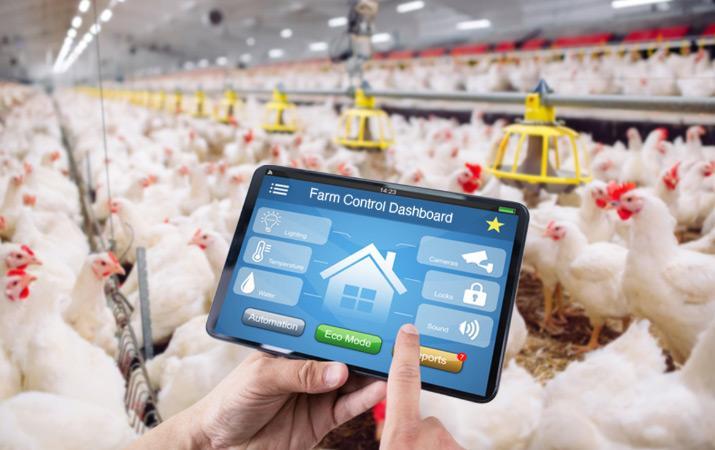
The global artificial intelligence (AI) in livestock welfare monitoring market is valued at USD 2.3 billion in 2024. The market is expected to reach USD 11.8 billion by 2034, with a CAGR of 18.4% during the forecast period of 2025-2034, according to market research by InsightAce Analytic.
AI in livestock welfare monitoring seeks to use intelligent technologies to enhance animal health, behavior tracking, and environmental factors. It uses sensors, cameras, and algorithms to monitor livestock continuously without the need for human intervention.
This technique helps farmers identify early signs of illness, stress, or discomfort, allowing them to take precise action to prevent the spread of disease and boost productivity.
Growing quickly
The market for AI in livestock welfare management is growing quickly due to the need for efficient livestock management and technological advancements.
The need for sustainable agricultural methods, the growing demand for food because of the world’s population, and technological improvements are some of the main causes driving the growth of AI in livestock welfare management.
AI helps address these needs by increasing efficiency and productivity, which results in higher outputs with less input.
Additionally, governments and the corporate sector are investing more in smart agricultural solutions as they recognize the potential of AI to transform agriculture and promote food security. This will boost the growth of AI in the livestock welfare management market in the coming years.
Drivers
The market for AI in livestock welfare management is anticipated to grow in the future due to the rising demand for livestock products. Livestock products are derived from animals bred for agricultural purposes, including meat, dairy, eggs, and other commodities.
Large amounts of data from sensors, drones, and satellite photos may be gathered, analyzed, and interpreted by farmers thanks to AI technologies. Furthermore, improvements in machine learning techniques are driving the AI in livestock welfare management market.
The behavior and health of livestock may now be predicted with greater accuracy due to these advancements. Businesses are focusing on developing user-friendly solutions that meet the needs of farmers.
Challenges
There are many obstacles in the way of integrating AI in livestock welfare management. A primary obstacle is the high upfront cost of AI systems, which small and medium-sized farms may find unaffordable.
Additionally, farmers must learn how to utilize advanced AI technology, which requires training and skill development.
Furthermore, because these systems frequently gather and handle vast volumes of sensitive data, worries regarding data security and privacy surface.
To fully utilize AI in livestock welfare management, two more issues that must be resolved are technological dependability and the requirement for a strong infrastructure to support AI applications.
Growing in strength in Asia Pacific
The AI in livestock welfare management market in Asia Pacific is growing in strength as corporate parties and governments work to modernize livestock welfare management.
Asia Pacific nations such as China, Japan, and India choose cost-effective aluminum solutions designed for intensive animal husbandry. The demand for cloud-based, mobile-enabled Al platforms that function well in a variety of infrastructure configurations is also rising in these locations.