


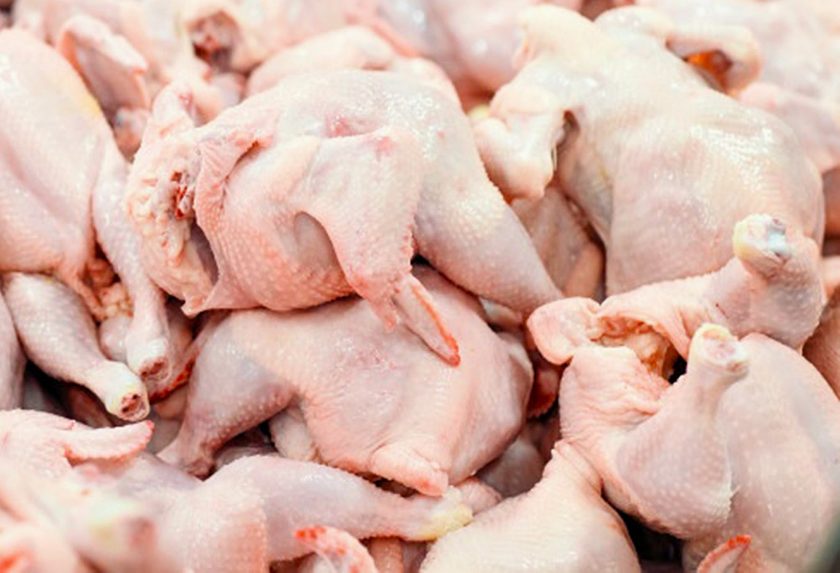
Strong demand across East and Southeast Asia continues to shape the global chicken industry. Producers are expanding output, while exporters compete for growing market opportunities throughout the region.
Those trends feature prominently in the latest USDA Foreign Agricultural Service Livestock and Poultry: World Markets and Trade report. The report forecasts higher global production and trade in 2027, with Asia accounting for much of the industry’s growth.
Global chicken meat production is forecast to rise 2% in 2027 to 114.9 million tons. Nearly all major producing countries are expected to increase output. At the same time, global exports are projected to grow 3% to nearly 15.6 million tons.
China emerges as the industry’s growth engine
China stands out as the largest contributor to future growth. The report forecasts Chinese chicken production to increase nearly 6% in 2027 to 19.0 million tons. Robust domestic demand and stronger export activity support that expansion.
Several structural factors continue to strengthen the sector. China benefits from sufficient breeding stock, relatively stable corn and soybean meal prices, and ongoing investments by large integrated poultry companies. These investments span breeding, hatching, grow-out operations, slaughter facilities, and further processing.
The country’s growing role is even more visible in trade. Chinese chicken exports are forecast to surge 25% to 1.9 million tons in 2027. Competitive pricing and growing sales to emerging markets underpin that increase.
China’s position in global trade has strengthened considerably over the past decade. Its share of world chicken exports is expected to rise from 10% in 2026 to 12% in 2027. By contrast, the US share is forecast to decline from 20% to 19%, while Brazil’s share edges down from 36% to 35%.
Southeast Asia remains a key demand center
Southeast Asia continues to play a significant role in consumption and import growth.
The Philippines remains one of the world’s largest chicken importers. Imports are forecast to increase from 580,000 tons in 2026 to 625,000 tons in 2027. Domestic consumption is also expected to rise from 2.31 million tons to 2.40 million tons during the same period.
Those figures place the Philippines among the leading import markets tracked in the report. Only Japan, Mexico, and the United Kingdom are forecast to import larger volumes in 2027.
Elsewhere in Asia, Japan remains the largest chicken importer globally. Imports are forecast at 1.18 million tons in 2027, unchanged from 2026. Japanese consumption is projected to reach 3 million tons.
The persistence of strong import demand across Asian markets creates important opportunities for exporters. However, it also intensifies competition among major suppliers seeking market share.
Brazil adapts to changing trade flows
Brazil is expected to maintain its position as the world’s leading chicken exporter. Exports are forecast to increase 1% to 5.5 million tons in 2027. Production is projected to rise nearly 2% to 16.3 million tons.
Yet growth faces new constraints. According to the report, the European Union’s restriction on Brazilian chicken imports limits export expansion. The EU represented 5% of Brazil’s chicken exports in 2025. That share increased to nearly 8% during January through September 2026 before restrictions took effect.
As a result, Brazil must seek alternative markets while competing more directly with China’s expanding export sector. The report notes that Brazil is expected to redirect product into third-country markets, particularly in Africa.
Thailand strengthens its export position
Thailand continues to rank among the world’s major poultry exporters. Exports are forecast to increase from 1.225 million tons in 2026 to 1.24 million tons in 2027. Production is expected to reach 3.53 million tons.
The country’s global export share is projected to hold at 8% in 2027. That stability contrasts with shifting shares among several larger competitors.
Meanwhile, the report indicates that competitor exporters may benefit from Brazil’s reduced access to the EU market. Thailand is among the suppliers expected to help fill part of the resulting gap.
Competition grows as markets expand
The report presents a poultry sector that continues to expand but faces an increasingly competitive environment.
China’s rapid production and export growth is reshaping global trade flows. Southeast Asian markets, particularly the Philippines, remain important demand centers. At the same time, Brazil, Thailand, and other exporters must adjust to changing regulatory and market conditions.
While global chicken trade is expected to reach a record 15.6 million tons in 2027, the battle for market share is becoming more intense. Much of that competition will play out across East and Southeast Asia, where demand growth continues to influence the direction of the global poultry industry.