


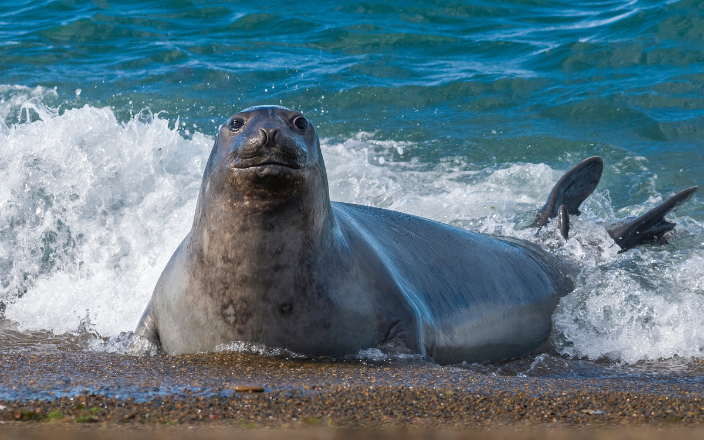
A new study has revealed a dramatic and unprecedented decline in southern elephant seals populations on South Georgia Island, a remote sub-Antarctic territory. Researchers from the British Antarctic Survey (BAS) report that highly pathogenic avian influenza (HPAI) H5N1 is the primary driver behind a staggering 47% reduction in breeding females between 2022 and 2024.
- South Georgia hosts the world’s largest population of southern elephant seals (Mirounga leonina), accounting for more than half of the global breeding population.
- Historically, annual fluctuations in female numbers have ranged between 3% and 7%.
- However, the recent decline—estimated at approximately 53,000 missing females—is far beyond normal variation and signals a severe ecological crisis.
The virus first appeared on South Georgia in September 2023, initially detected in brown skuas before spreading to marine mammals, including elephant seals and Antarctic fur seals. Scientists used aerial drone surveys to monitor three major breeding colonies, which represent about 16% of the island’s female population. Their findings show that some colonies experienced losses exceeding 60%, underscoring the devastating impact of the outbreak.
- Avian influenza has long been associated with mass mortality in birds, but its spillover into marine mammals marks a troubling new phase.
- The seals’ breeding behavior—gathering in dense colonies—creates ideal conditions for viral transmission.
- Infected mothers often abandoned pups, leading to high juvenile mortality and compounding the population decline.
- Similar patterns were observed in Argentina’s Valdés Peninsula, where 67% of breeding females and 97% of pups perished during the 2023 outbreak.
The long-term implications are alarming. Southern elephant seals are long-lived animals with slow reproductive rates. Even short-term disruptions in breeding can have cascading effects on population stability for decades. Researchers warn that if trends continue, recovery could take generations, threatening the species’ role as a key predator in the Southern Ocean ecosystem.
This crisis highlights the growing reach of HPAI, which has spread globally since 2020, affecting birds, terrestrial mammals, and now marine species. Scientists emphasize the urgent need for enhanced monitoring and biosecurity measures to prevent further spread and mitigate ecological damage. As the virus penetrates previously isolated environments, the Antarctic—once considered a refuge from global pandemics—faces an uncertain future.
Sources: Available upon request