


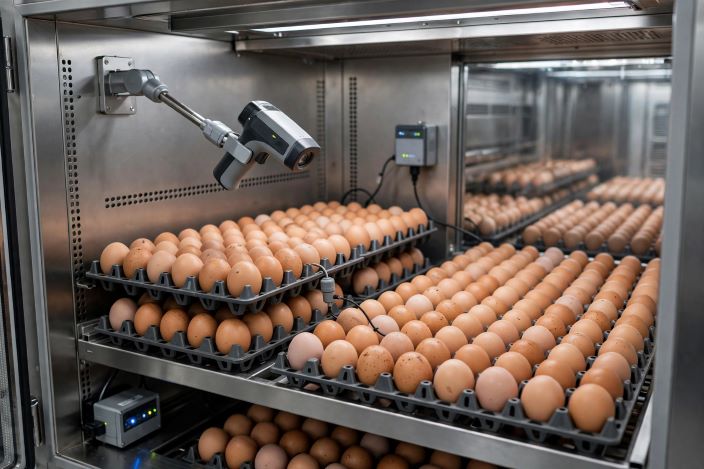
Hatchery performance is not measured by hatchability alone. Research shows that the timing of thermal exposure during incubation can influence embryo development, skeletal growth, and the quality of day-old chicks.
Temperature Is a Developmental Signal
Incubation temperature does more than maintain embryo survival. It influences embryonic metabolism, organ development, and the physiological preparation of chicks for life after hatching.
A scientific review published in Poultry Science highlights that incubation conditions—including temperature, humidity, ventilation, and turning—can shape embryo development and subsequent performance. The timing, duration, and intensity of exposure to suboptimal conditions are critical factors in determining the outcome (1).
This means hatchery management should focus not only on maintaining set temperatures but also on understanding how eggshell temperature (EST) changes throughout incubation.
Early and Late Incubation Have Different Consequences
A 2022 study published in Poultry Science investigated the effects of eggshell temperature during different developmental stages using 720 broiler hatching eggs.
Researchers compared a control program with elevated eggshell temperatures during either early or late incubation. The findings revealed distinct developmental responses:
| Early heat exposure affected skeletal development, with reduced lengths of several leg bones and lower bone mineral measurements. |
| Elevated temperature during late incubation reduced hatchability and chick quality, increasing late embryonic mortality and negatively affecting chick and organ weights. |
| The late high-temperature treatment also produced poorer navel scores, indicating less favorable chick quality at hatch (2). |
These results demonstrate that temperature deviations cannot be evaluated independently of the developmental stage at which they occur.
From Temperature Control to Precision Incubation
For hatchery managers, the findings support a more targeted approach to incubation monitoring.
Three priorities deserve particular attention:
| Monitor eggshell temperature: Machine air temperature alone may not fully reflect the thermal conditions experienced by developing embryos. |
| Identify deviations early: Temperature patterns should be evaluated throughout incubation, with particular attention to periods when embryos are especially vulnerable. |
| Assess chick quality alongside hatchability: Hatch results should be considered together with chick weight, navel condition, skeletal development, and other relevant quality indicators. |
Incubation programs should be adapted to the specific equipment, flock characteristics, and validated production targets rather than applying experimental temperature treatments indiscriminately.
The Takeaway for Hatcheries
Successful incubation means producing viable, well-developed chicks—not simply maximizing the number of eggs that hatch.
By combining accurate eggshell temperature monitoring with stage-specific management and systematic chick-quality assessment, hatcheries can better understand the relationship between incubation conditions and early-life performance.
As poultry production continues to pursue greater efficiency and uniformity, precision incubation offers an important opportunity to improve hatchery decision-making through measurable biological outcomes.
References
(1) van der Pol, C. W., et al. (2022). Chicken Incubation Conditions: Role in Embryo Development, Physiology and Adaptation to the Post-Hatch Environment. Animals, 12(4), 442.
(2) Eggshell temperature during early and late incubation affects embryo and hatchling development in broiler chicks. (2022). Poultry Science, 101(10), 102054.