


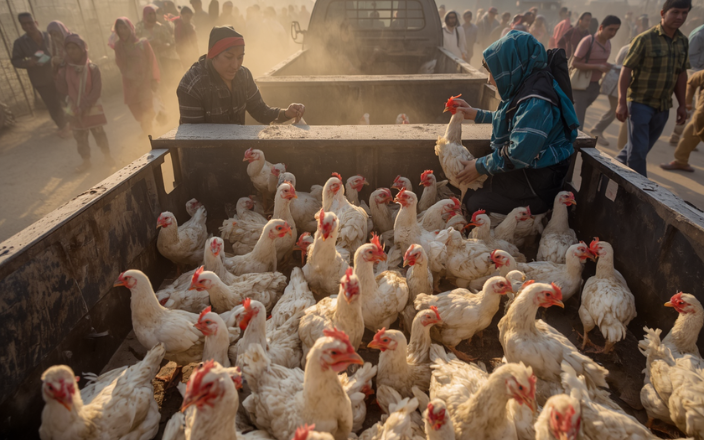
Rising Demand for Catching Crews
The U.S. poultry industry continues to expand in 2026, with weekly broiler placements climbing above 190 million chicks. This growth translates directly into higher demand for catching crews—the specialized teams responsible for gathering live birds from farms and preparing them for transport to processing plants. Catching is a labor‑intensive stage, requiring coordination, speed, and strict adherence to welfare standards. As placements increase, companies are scaling up their catching operations to keep pace with production schedules.
Labor Shortages and Workforce Adaptation
- One of the most pressing challenges in catching is labor availability.
- Many crews rely on migrant or temporary workers, and turnover remains high.
- To address shortages, integrators are investing in training programs and offering incentives to retain experienced catchers.
- Some companies are experimenting with mechanized catching systems, which reduce physical strain and improve consistency, though adoption is uneven due to cost and farm layout constraints.
Biosecurity and Animal Welfare Pressures
Catching operations are under growing scrutiny from regulators and consumers. Biosecurity protocols—such as disinfecting equipment, controlling farm access, and minimizing stress during handling—are critical to prevent disease spread. At the same time, welfare standards require crews to handle birds gently, avoid overcrowding in transport crates, and limit exposure to extreme temperatures. Failure to meet these standards can result in penalties, reputational damage, and export restrictions.
Logistics and Transportation Efficiency
- Once birds are caught, they must be moved quickly and safely to processing plants.
- Logistics companies are optimizing routes, upgrading vehicles with better ventilation, and using digital tracking systems to monitor conditions during transport.
- Rising fuel costs and stricter environmental regulations add complexity, pushing operators to balance efficiency with sustainability.
- The catching stage is increasingly seen as a bottleneck where small delays can ripple across the supply chain.
Industry Innovations
Several U.S. integrators are piloting semi‑automated catching machines that scoop birds into transport modules with minimal human contact. Early trials suggest reduced injury rates and faster throughput. Additionally, wearable technology for crew members—such as sensors tracking movement and ergonomics—aims to improve safety and reduce fatigue. These innovations highlight a shift toward modernization in a traditionally manual process.
Conclusion
Catching broiler chickens in the U.S. is evolving from a purely manual task into a critical operational link shaped by labor dynamics, welfare expectations, and technological innovation. As placements rise, the industry must balance efficiency with responsibility, ensuring that catching crews remain equipped to meet both production demands and consumer standards.
Sources: Available upon request