



Philippine poultry producers have a new tool against avian influenza following Ceva Animal Health‘s launch of its Vectormune HVT-AIV vaccine in the country.
The Philippines becomes the 52nd country worldwide to approve and register this vector vaccine, marking a significant step in sustainable disease control.
Avian influenza in the Philippines
At the vaccine’s launch on November 20, Professor Dennis Umali of the University of the Philippines Los Baños gave an update on avian influenza in the country.
The Philippines first reported a low pathogenic strain in 2005.
In 2017, a highly pathogenic avian influenza (HPAI) virus (H5N6) struck. Through depopulation, disinfection, and monitoring, the Philippines was declared AI-free in 2021. However, in February 2022, the country confirmed its first outbreak of the HPAI H5N1. Since then, several other HPAI strains have been reported.
Heavy toll on poultry
Dr Umali noted that during the 2022-2025 wave of the H5N1 clade 2.3.3.4.4b, the Philippines recorded the highest number of cases in Asia with 354.
From 2022-2024, mortalities reached 471,697 while culling exceeded 2.1 million birds, underscoring the urgent need for stronger preventive measures.
He emphasized that wild bird migration ensures avian influenza remains a persistent threat. Thus, a restructuring of the poultry industry is necessary, and should include, among others, biosecurity and compartmentalization, early diagnosis and rapid response, movement control, and vaccination according to global protocols.
Global consensus on vaccination
Ceva’s Global Marketing Director, Mustafa Seçkin Sandikli, stressed that eradication is nearly impossible since avian influenza is endemic in wildlife worldwide.
He explained that at a 2022 Paris meeting, experts from industry and the scientific community, as well as political authorities, agreed that stamping out alone is unsustainable. Vaccination must become central to long-term control strategies.
Dr Sandikli also noted that during the recently concluded World Veterinary Poultry Association Congress, among the key points brought out by key industry experts include:
- Vaccination, while not a last resort, is a critical component of sustainable control.
- Current reliance of depopulation/mass culling is outdated, unsustainable, and unethical.
- HPAI H5N1 clade 2.3.4.4b now affects wild birds, poultry, and mammals.
- Emergency vaccination campaigns in Latin America and Frances have shown success in reducing outbreaks.
These global insights reinforce the Philippines’ urgent need for sustainable vaccination strategies.
Currently, there are three main types of vaccines available:
- Live vaccines – highly effective but not permitted due to safety risks
- Inactivated vaccines – limited by narrow immune responses and interference with maternal antibodies
- Vector vaccines – emerging as the preferred solution, offering broad protection and trade compatibility
Advantages of vector vaccine

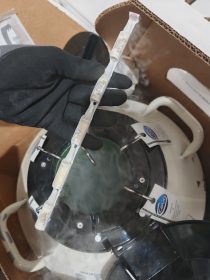
Ceva Animal Health’s Vectomune HVT-AIV vector vaccine (Photo credit: Ceva Animal Health)
As global consensus shift toward preventive vaccination, Dr Sandikli identified the key benefits of Vectormune HVT-AIV:
- Cross-clade protection across multiple strains of the H5 AI
- Reproduction ratio = 0, thus stopping transmission
- Single application at the hatchery
- Immunity lasting 100 weeks, with potential for lifelong protection
- Multi-dimensional immune response (humoral, cellular, and local)
- DIVA (Differentiating Infected from Vaccinated Animals)-compatible, supporting trade and surveillance
Studies have confirmed the safety and efficacy of Vectormune HVT-AIV against multiple H5Nx clades isolated from various parts of the world.
Dr Fauzi Iskandar, Ceva APAC Veterinary Services Manager, shared success stories from Asia, including Vietnam and Bangladesh, where the vaccine has already made a difference.
Dr Mark Andrew Cuento detailed the approval process in the Phlippines, including trial data, and steps for producers to secure government approval for vaccination.
Toward a resilient poultry industry
With Vectormune HVT-AIV, Philippine poultry producers gain a vital tool for stronger flock protection and reduced virus shedding.
This science-backed solution positions the country to confront avian influenza more effectively, aligning local strategies with global efforts for sustainable poultry health and trade resilience.