


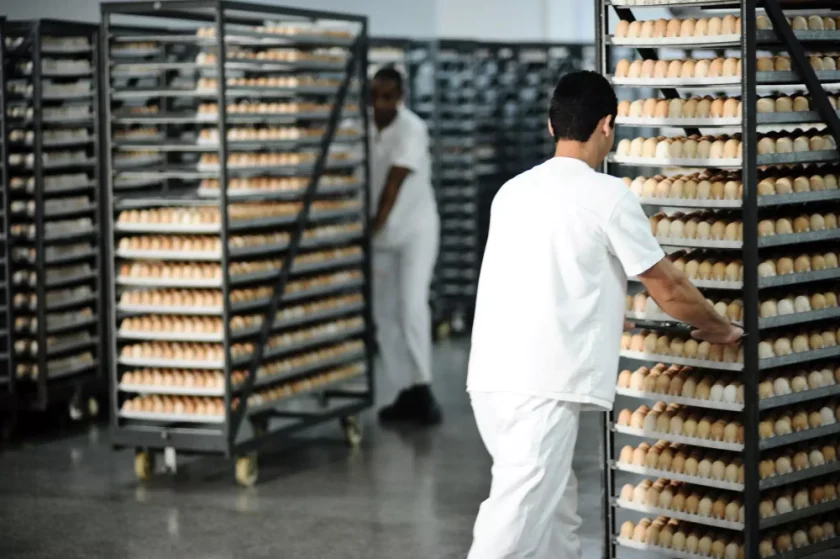
Part 3: Chick processing, biosecurity, and technology
Chick processing and quality control
- After hatching, chicks undergo several important procedures:
- Sexing (especially in layer operations)
- Vaccination against diseases such as Marek’s and Newcastle disease
- Grading to remove weak or defective chicks
Only healthy, active, and uniform chicks should be selected for dispatch. Chick quality directly determines future performance.
Waste management practices
Hatchery waste includes:
- Eggshells
- Unhatched eggs
- Dead embryos
Proper disposal methods include:
- Incineration
- Composting
- Rendering
Effective waste management ensures environmental safety and prevents disease spread.
Biosecurity: A critical requirement
- Biosecurity is the foundation of hatchery success. Essential practices include:
- Restricted entry and controlled access
- Mandatory disinfection procedures
- Use of protective clothing
- Rodent and pest control
- Sanitization of equipment and vehicles
Even a minor lapse in biosecurity can lead to serious disease outbreaks.
Technology and modern hatcheries
Modern hatcheries rely heavily on advanced technology:
- Digitally controlled incubators
- Automated egg turning systems
- Climate-controlled environments
- Automated vaccination and chick counting
- Data-driven monitoring systems
These technologies reduce human error and improve operational efficiency and consistency.
Read Part 1 👉 here.
Read Part 2 👉 here.