


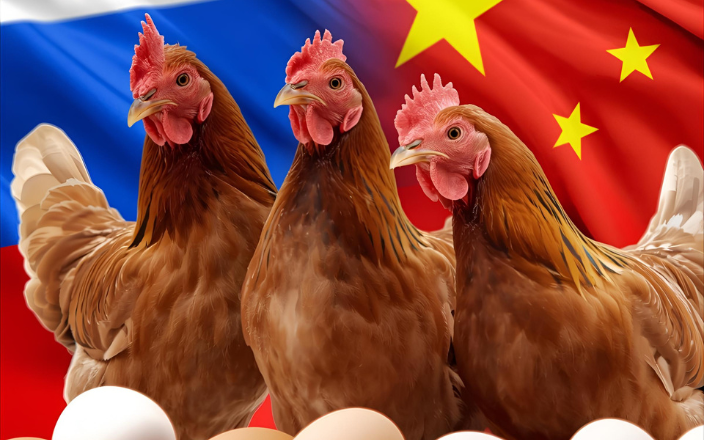
In a notable shift in global agricultural trade, China has significantly increased its poultry imports from Russia during the first seven months of 2025. According to the Russian Poultry Union, exports to China rose by 15% year-on-year, reaching 80,000 tonnes. This surge elevated Russia’s share of Chinese poultry imports to a record 18%, up from 14% in 2024, making Russia the second-largest poultry supplier to China.
- A striking feature of this trade is the dominance of chicken feet, which account for approximately 76% of Russian poultry exports to China.
- While considered waste in Russia, chicken feet are a delicacy in Chinese cuisine, aligning well with local consumption patterns.
- The Poultry Union emphasized that these exports do not strain domestic supply in Russia, as they utilize parts of the bird that are otherwise discarded.
This growth comes despite a broader decline in China’s poultry imports, which fell by 0.8% in 2025 due to rising domestic production and shifting trade policies. China’s poultry industry has become increasingly self-sufficient, with domestic output climbing steadily. In the first half of 2025 alone, China exported 308,000 tonnes of poultry, marking a 42% increase compared to the previous year.
- Russia’s success in the Chinese market is part of a broader trend of expanding agricultural exports to Asia.
- Overall, Russian agricultural exports to China rose by 10% in 2025, totaling $4 billion.
- Pork exports also saw a dramatic 140% increase, highlighting the growing importance of the eastern export vector for Russia’s food industry.
However, the long-term prospects for Russian poultry in China remain uncertain. China has reopened its market to Argentine suppliers and continues to import from Brazil, its leading poultry partner. Additionally, China’s domestic poultry production is expected to keep growing, potentially reducing reliance on foreign suppliers.
As China strengthens its position in the global poultry trade, both as an importer and exporter, competition is intensifying. The Russian Poultry Union acknowledged that maintaining market share in China will be increasingly challenging, especially as China becomes a formidable player in international poultry exports.
This evolving trade relationship underscores the shifting dynamics of global food supply chains, where consumer preferences, domestic production capabilities, and geopolitical factors all play critical roles in shaping market trends.
Sources: Available upon request