


By Priscila Beck, Director General Brazil at agriNews Group, reporting from Kuala Lumpur, Malaysia
China’s growing presence in poultry exports is changing competition in Asian markets. Its advantage is not simply a question of production costs: domestic consumers’ preference for legs, thighs and wings leaves breast meat with a lower value at home, making it competitive in international markets.
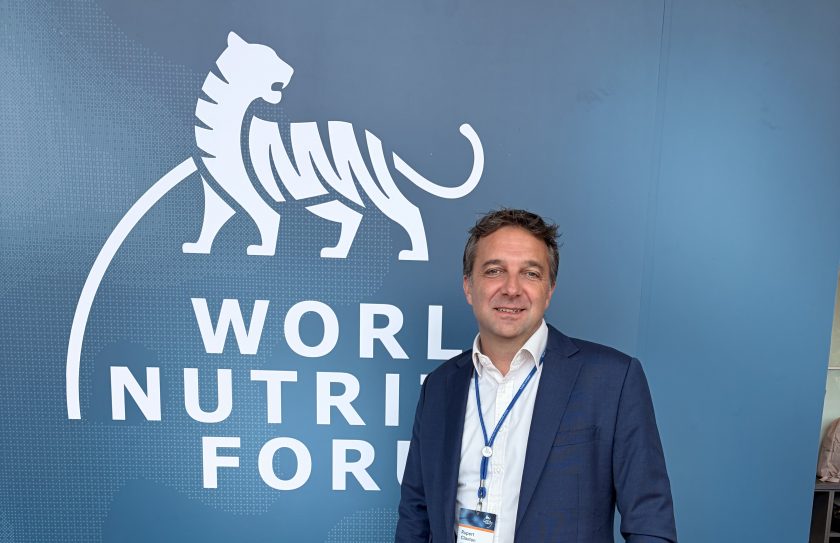
According to Rupert Claxton of consultancy Gira, this difference in how individual cuts is valued is increasingly important for established exporters, including Brazil.
“It’s not just about the cost of production, but sometimes the value of the part of the bird in the domestic market,” he said.
Mr Claxton spoke exclusively to the agriNews Brasil editorial group following his October 22 presentation at the World Nutrition Forum 2026, organized by dsm-firmenich in Kuala Lumpur, Malaysia.
His assessment highlights two developments reshaping the region: China is becoming a stronger export competitor, while other Asian countries are investing in poultry production closer to their own consumers.
China’s changing role in poultry trade
Mr Claxton identified China’s expanding exports, particularly within Asia, as a significant development for international suppliers.
Because breast meat has a comparatively low domestic value, Chinese exporters can offer it competitively overseas. This challenges the assumption that the supplier with the lowest farming and processing costs will necessarily have the strongest position for every cut.
The trade chart included in Gira’s conference proceedings illustrates the shift. At the beginning of the series, in 2023, Chinese poultry meat imports exceeded exports. In the more recent part of the series, in 2026, exports exceeded imports.
In his written presentation, Mr Claxton asks whether China’s emergence as a net chicken exporter—and its breast meat exports in particular—could become a limiting factor for Brazil’s production growth.
Gira’s broader outlook projects an additional 15 million tons of global poultry meat production between the 2025 estimate and the 2030 forecast. The projected increases include 2.6 million tons in the US, 1.9 million tons in India, 1.3 million tons in China and 400,000 tons in Brazil.
These figures represent cumulative additions to poultry meat production over the period, rather than total output or annual growth. They provide context for the competitive landscape without establishing that Chinese exports are responsible for Brazil’s smaller projected increase.
Rising Asian demand is attracting local production
For Mr Claxton, one of the most important changes in the global meat market is the development of production closer to consumers.
He pointed to Pakistan, India and Bangladesh, alongside Vietnam, the Philippines and Indonesia, as markets where commercial white-feathered broiler production is developing within poultry sectors historically supported by indigenous birds.
This expansion means that growing Asian consumption will not necessarily translate into an equivalent increase in meat imports. Investment within consuming countries can meet part of the additional demand.
A complementary perspective comes from Nan-Dirk Mulder of Rabobank, who also presented at the forum. In the proceedings, Mr Mulder describes a shift towards poultry supply chains in which chicken is produced closer to consumer markets while feed ingredients remain globally sourced.
He also identifies government incentives and protective measures supporting domestic production as countries pursue food security and more resilient supply systems.
Taken together, the presentations distinguish between opportunities in meat trade and those in the wider supply chain. Increasing domestic poultry production can change demand for imported meat while maintaining requirements for internationally sourced feed ingredients and technology.
Feed businesses are moving further along the value chain
The expansion of Asian poultry production also involves changes in business structures.
In his written presentation, Mr Claxton describes feed mills moving into hatcheries and farms, eventually adding slaughter and further processing. Consolidation through mergers and acquisitions accompanies the search for scale.
For feed and nutrition businesses, this development changes the commercial environment: customers and competitors may increasingly operate across several stages of production.
Import opportunities nevertheless remain. In the interview, Mr Claxton identified the Philippines as a market currently absorbing additional product, while cautioning that this situation could change over time.
Feed and energy costs put pressure on margins
Long-term demand growth does not guarantee stronger profitability.
Mr Claxton highlighted energy costs as a pressure extending across crop production, feed, additives, poultry houses, slaughter plants and refrigeration. At the same time, higher energy bills and inflation reduce consumers’ disposable incomes.
The result is a squeeze between more expensive production and customers with less capacity to pay.
The effect differs across markets. In developed economies, consumers may switch from more expensive meats to chicken. In lower-income markets, financial pressure can instead lead households to reduce meat consumption and choose cheaper foods.
In the proceedings, Mr Claxton also identifies potential additional feed-cost pressure in the fourth quarter of 2026 and into 2027. His assessment considers harvest conditions, disruption to Black Sea exports, fertilizer prices and competition from biofuels.
During the interview, he described some profitability across poultry integrations, supported by demand and feed costs. His written presentation also warns that expanding production volumes can put pressure on prices and margins.
These assessments underline the importance of distinguishing market growth from financial returns—and integrated-company performance from profitability at farm level.
Brazil’s advantages face new tests
Brazil retains important advantages in feed ingredient availability and land, according to Mr Claxton. However, competition from China raises questions about an export strategy built primarily around price.
“Brazil needs to decide if it can take China on price, or actually whether it needs to think about the positioning and the way that it presents its product,” he said.
He noted that some Brazilian companies are working to improve export product quality and communicate their value more effectively. A potential strengthening of the Brazilian real could add pressure by reducing exporters’ currency advantage.
For Asian buyers, the implication is a supplier landscape shaped by several factors: production costs, domestic cut preferences, exchange rates and product positioning.
Efficiency and disease prevention remain central
Mr Claxton identified disease as the leading risk for animal protein supply chains, both through direct livestock losses and disruption to trade.
Export restrictions can redirect products into domestic markets, increasing supply and putting pressure on prices. The financial consequences can therefore extend beyond the farms directly affected.
Looking towards 2030, he highlighted feeding efficiency as a link between competitiveness and sustainability. Better feed utilization can help address production costs and environmental performance as companies face increasing scrutiny of their commitments.
He also called for greater transparency about production practices and more open engagement with consumers.
For Asia’s poultry and nutrition industries, the opportunity lies in serving growing demand while navigating a changing supply structure. More local production, stronger Chinese exports and continued reliance on globally traded feed ingredients are developing together—and each affects where businesses can create and capture value.