


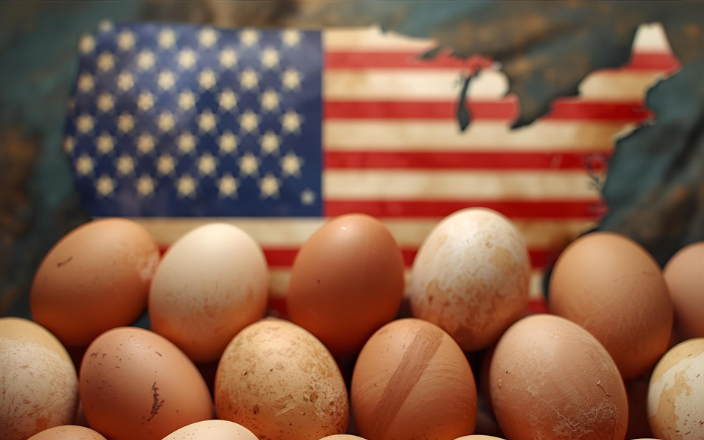
The U.S. egg industry continued its recovery phase in October 2025, following significant disruptions caused by highly pathogenic avian influenza (HPAI) earlier in the year. While production levels remain below 2024 figures, recent trends indicate steady progress toward rebuilding the national laying flock and stabilizing output.
- According to USDA projections, total table egg production for the fourth quarter of 2025 is expected to reach 1,925 million dozen, up from earlier estimates of 1,895 million dozen.
- This adjustment reflects improvements in layer inventories and a gradual increase in lay rates.
- Despite these gains, overall 2025 production is forecast at 7,398 million dozen, which is still 4.4% lower than 2024.
- The decline underscores the lingering impact of disease outbreaks and the time required for full recovery.
Layer inventory growth remains a key driver of optimism. As of early October, the number of table-egg layers exceeded 296 million birds, marking a notable increase from mid-year levels. Replacement pullet inventories also rose by approximately 4% year-over-year, signaling strong efforts to replenish flocks and secure future production capacity. These trends suggest that producers are prioritizing long-term stability, even as short-term output remains constrained.
- The average lay rate during the fall months hovered around 82 eggs per 100 layers per day, slightly higher than summer figures.
- This improvement, combined with expanding flock numbers, supports USDA’s upward revisions for late-year production.
- However, the industry’s recovery trajectory depends heavily on maintaining biosecurity and avoiding further HPAI outbreaks, which could derail progress.
Market dynamics also reflect the sector’s transitional state. Egg prices, which spiked dramatically during previous disease events, have moderated but remain elevated compared to pre-2022 levels. Consumer demand for cage-free and organic eggs continues to grow, adding complexity to production strategies. As of early 2025, more than 42% of U.S. table-egg layers were housed in cage-free systems, a figure expected to rise sharply to meet retailer and legislative commitments by 2026.
In summary, October 2025 marked a period of cautious optimism for U.S. egg producers. While output has not fully rebounded to pre-HPAI levels, the combination of expanding layer inventories, improved lay rates, and strategic investments in flock health and housing systems positions the industry for stronger performance in 2026. Continued vigilance against disease and adherence to evolving welfare standards will remain critical as producers navigate this recovery phase.
Sources: Available upon request