


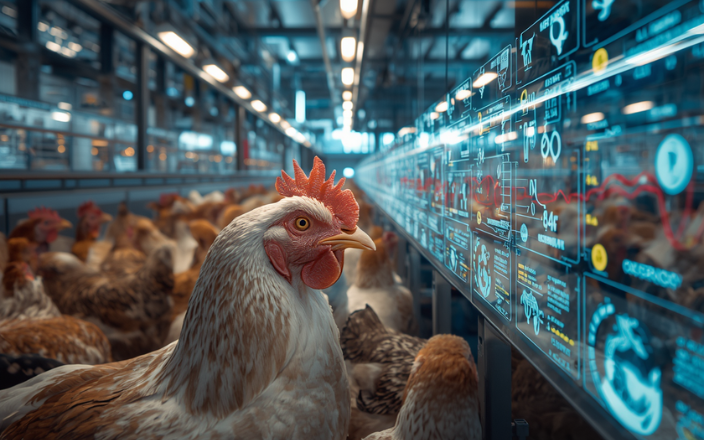
Understanding Digital Twinning in Poultry Production
Digital twinning refers to the creation of a virtual replica of a physical system. In poultry production, this means building a digital model of a broiler farm that mirrors real-time conditions such as feed intake, growth rates, environmental parameters, and health status. By integrating sensors, data analytics, and artificial intelligence, producers can simulate scenarios and predict outcomes before making costly decisions.
Optimizing Feed Efficiency
- Feed represents the largest cost in broiler production, often accounting for more than 60% of total expenses.
- A digital twin can track feed conversion ratios with precision, identifying inefficiencies in real time.
- For example, if a flock shows slower-than-expected growth, the system can simulate alternative feed formulations or adjust feeding schedules.
- This proactive approach reduces waste and ensures that every kilogram of feed contributes to optimal weight gain.
Enhancing Animal Health and Welfare
Disease outbreaks and health issues can devastate profitability. Digital twinning enables continuous monitoring of flock behavior, body temperature, and environmental stressors. By comparing real-time data with predictive models, producers can detect early warning signs of illness. Preventive interventions—such as adjusting ventilation or modifying stocking density—can then be implemented before problems escalate. This not only safeguards profitability but also aligns with growing consumer demand for higher welfare standards.
Streamlining Farm Management
- Managing a broiler operation involves balancing multiple variables: feed supply, water quality, lighting, and labor.
- A digital twin consolidates these factors into a single dashboard, allowing managers to test “what-if” scenarios.
- For instance, they can evaluate the impact of extending the grow-out period by a few days or altering the ventilation strategy during hot weather.
- These simulations reduce guesswork and support evidence-based decision-making, ultimately improving efficiency and lowering costs.
Driving Sustainability and Market Competitiveness
Profitability today is closely linked to sustainability. Digital twinning helps reduce resource consumption by optimizing energy use, minimizing feed waste, and lowering mortality rates. This not only improves margins but also enhances the farm’s reputation in a market increasingly sensitive to environmental impact. Producers who adopt digital twinning can position themselves as innovators, gaining a competitive edge in both domestic and export markets.
Conclusion
Digital twinning represents a transformative tool for broiler production. By combining real-time monitoring with predictive analytics, it empowers producers to maximize feed efficiency, safeguard flock health, streamline operations, and embrace sustainability. The result is a more resilient and profitable business model that meets the demands of modern poultry production. As technology becomes more accessible, digital twinning could shift from an experimental concept to a standard practice in the industry—unlocking significant gains in profitability and long-term competitiveness.
Sources: Available upon request