


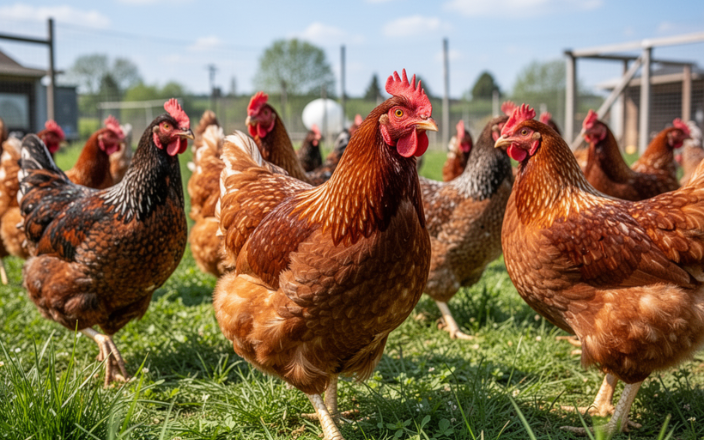
Poland’s poultry sector is bracing for severe economic consequences as the EU‑Mercosur trade agreement is expected to cut farmers’ net profits by half in the coming years. According to analysis reported by Poultry World, average profits are projected to fall from PLN 0.52 (€0.12) per kilogram to just PLN 0.26 (€0.06), effectively halving industry profitability nationwide.
Large farms could face annual losses of roughly PLN 130,000 (€31,000) under the new trade conditions, and many mid‑sized poultry operations—particularly those farming 10–50 hectares—may see income drop between 20% and 40% by 2030, triggering widespread consolidation and disappearance of medium-scale producers.
Market Pressure from Latin American Imports
- The core concern among Polish producers stems from expected increases in poultry imports from Mercosur countries such as Brazil and Argentina.
- Poland’s agriculture ministry has expressed “serious reservations,” warning that the agreement threatens to overwhelm domestic producers.
- The deal envisions allowing 180,000 tonnes of poultry into the EU market within six years—equivalent to 1.4% of EU annual production—raising fears of price pressure and competitive imbalance.
- Although a safeguard mechanism is included to counter market disruption, Polish officials argue it is “ill‑suited” to respond effectively to sudden agricultural shocks.
Broader Agricultural Sector at Risk
The poultry industry is not the only sector anticipating trouble. Estimates indicate that Poland may face:
- €225 million annual losses in poultry export value,
- €160 million losses in beef exports, and
- A one‑third reduction in dairy exports to around €166 million.
Overall, national agricultural losses linked to the agreement are projected to range between €500 million and €1.06 billion per year.
Economic Gains Elsewhere—but Not for Farmers
Despite these agricultural setbacks, the Polish economy may still experience overall gains from the agreement. Increased opportunities in the automotive, machinery, and pharmaceutical sectors could yield up to €2 billion in annual net benefits, partially offsetting agricultural losses at the macroeconomic level.
Growing Political Resistance against EU‑Mercosur
Polish skepticism echoes wider European resistance, particularly from France and other agricultural nations. Farmers’ organizations argue that the influx of cheaper imports could lead to unfair competition, threatening rural livelihoods and food quality standards.
Sources: Available upon request