


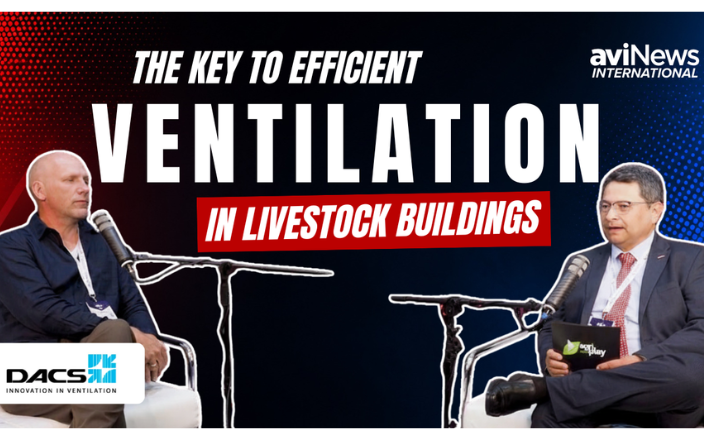
Utrecht, Netherlands – On the first day of VIV Utrecht in the Netherlands, the aviNews team had the opportunity to chat with Jens Dybdahl, the co-owner of DACS, who showcased the company’s latest innovation: the MagFan Big 50. The new fan is designed to help livestock producers improve airflow while significantly reducing energy consumption.
During the conversation, Dybdahl shared how the family-run company continues to build on more than four decades of experience in agricultural ventilation.
Designed for retrofit efficiency
According to Dybdahl, the Big 50 was developed to address a specific market need: helping producers upgrade existing ventilation systems without major modifications to their facilities.
“A lot of houses worldwide use this standard size frame,” he explained. “That means you can take out existing fans, put in these new fans and create either much higher capacity or a much higher energy efficiency.”
The fan was designed to fit standard European and North American installations, allowing producers to modernize ventilation systems while minimizing installation costs and downtime.
DACS recently completed independent performance testing at BESS Lab at the University of Illinois, one of the industry’s most recognized testing facilities for agricultural ventilation equipment.
“We got back a week ago after very successful testing,” said Dybdahl.
High performance with lower energy consumption
A key objective of the new fan was maximizing efficiency without increasing complexity.
According to Dybdahl, producers replacing older ventilation systems can reduce electricity consumption dramatically while maintaining or improving airflow performance.
“You can replace your existing fans with our new fan and cut your electricity bill in half,” he noted.
The fan is available in configurations optimized for either maximum airflow or maximum efficiency and can operate as a traditional on-off fan or with variable frequency drives for additional control.
“Keep it simple,” Dybdahl emphasized, describing the philosophy behind the design.
Supporting the future of livestock production
While DACS has built a strong presence in the dairy sector, the company’s roots remain firmly in poultry production. As energy costs continue to rise worldwide, efficient ventilation is becoming an increasingly important tool for improving farm profitability and sustainability.
By combining high airflow performance, energy efficiency, and installation flexibility, DACS aims to provide producers with practical solutions that address one of the industry’s most significant operational costs.
For Dybdahl and the DACS team, the goal is clear: helping livestock producers move more air while using less energy.
WATCH THE FULL INTERVIEW BELOW:
