


Content available at:
Inadequate feather cover in laying females can reduce fertility through female avoidance, increased physical damage, and higher energy requirements. Scoring of feather coverage can help identify when feather loss occurs, but generally does not indicate the underlying cause.
Management during Rear – Space, distribution, feed form, and management
Good quality feathers start in rearing. Stocking density is important to ensure that birds can uniformly access feed, water, and other resources.
Feeding space is critical, and all birds should be able to eat simultaneously. As birds grow, more feeding space should be provided. Distribute all feed within three minutes to give uniform access. Use satellite hoppers to speed up the process, if required.
The feed system should be filled in the dark so that the feed is available to all birds when the lights come on. Pellets and crumbles with poor consistency will result in a high volume of fines in the feed, leading to variable feed intake and, sometimes, feather pecking.
Cool, clean water should be available at all times, and sufficient drinkers should be available. This will vary depending on the type of drinker used. The presence of water in the crop indicates whether the birds have good access to water.
Nutrition
Several nutritional factors play a role in feather development and quality:
- Amino acids – Sulphur-containing amino acids, especially methionine and cystine, are important in the formation of feathers. Ensure that the recommended balance of amino acids is available to the birds, especially in the rear, when feathers are actively developing. This will often require the addition of synthetic methionine to the diet. Methionine and tryptophan in the water have also been shown to calm birds and reduce feather pecking.
- Energy – a nutritional imbalance or energy shortage can result in feather loss.
- Trace elements – Zinc is essential for feather formation. A lack in the diet can result in poor feathering and other issues. Selenium is also required for feather development. Both can be provided in a more bioavailable form to ensure adequate dietary intake.
- B-complex vitamins – Also essential for feather development. Supplementation in water at times of disturbance can reduce feather pecking or licking.
- Crude fiber – Feather eating has been associated with a craving for fiber. Low dietary fiber can result in feather pecking. Monitor the litter condition to determine if feathers are being consumed.
Flock illnesses (diseases)
Coccidiosis and necrotic enteritis can damage the gut and prevent proper nutrient uptake. Monitor the flock for abnormal behavior, discolored droppings, and diarrhea, and treat appropriately. Wet litter can cause feathers to become damp and break, prevent dust bathing, and lead to microbial buildup in the house.

Once hens are light stimulated, their physiology shifts from growth and feather formation to egg production. After adult plumage is established, birds will not produce new feathers during lay under normal conditions. Many of the management principles discussed earlier remain relevant, but during production, the emphasis is on protecting the feather cover and minimizing damage.
Body weight uniformity
A uniform flock is easier to feed and has more consistent management requirements. Birds on the body weight guide will typically have better feather coverage than those that substantially deviate from the recommendations.
Mating-up
At mating-up, the males and females must be sexually synchronized, and an appropriate number of males should be mixed with the females to prevent over-mating and feather damage. If early mating activity is excessive and females are forced onto slats to avoid mating, immediate adjustment of the male ratio is recommended.

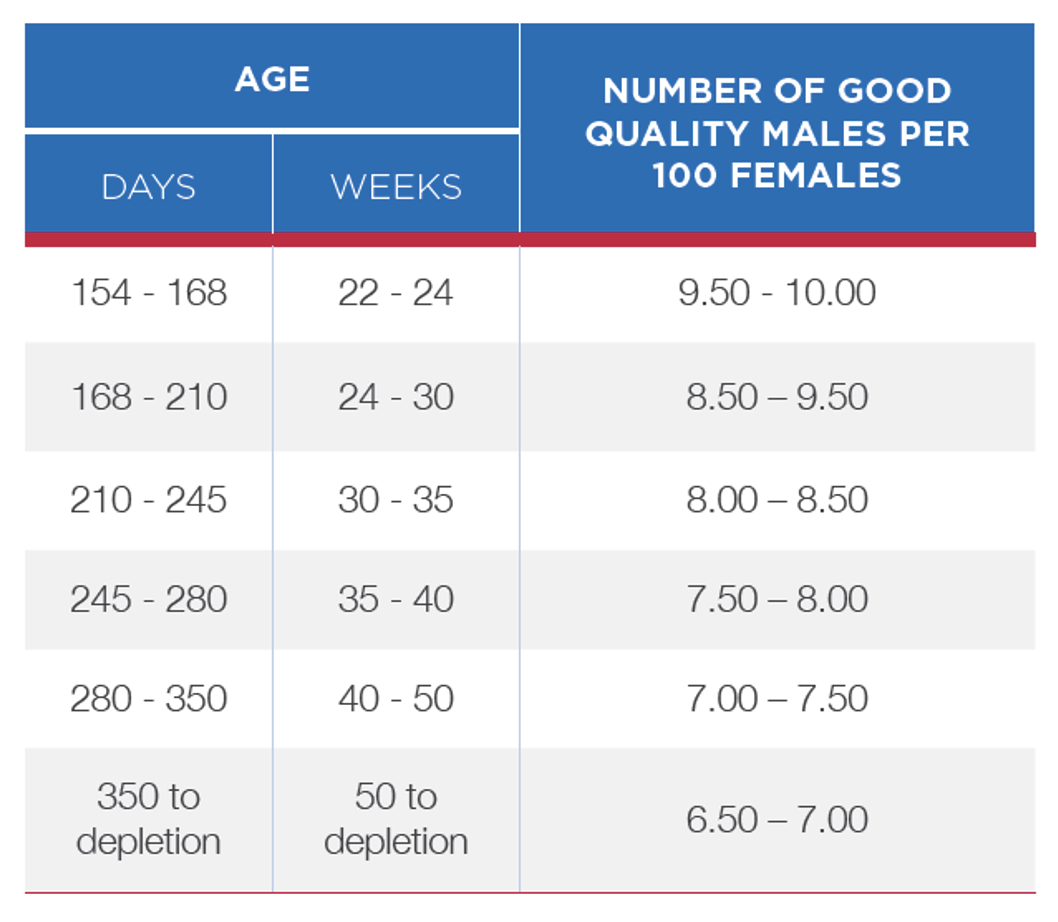
As the flock ages, the number of males should be reduced. A high level of feather wear may indicate an excess of males. Females showing feather loss are the most likely to avoid mating.
Damage during production
Light intensity in the laying house should not exceed 100 lux, as this can lead to feather pecking. Spreading insoluble grit in the litter area can encourage birds to scratch in the litter and reduce the tendency to feather peck. Always ensure that all birds can eat at the same time. As birds are lost from the flock, adjust the feeding space based on the number and size of birds to avoid giving too much feed space. Check for mites or other parasites, as these can cause pecking and require timely treatment.

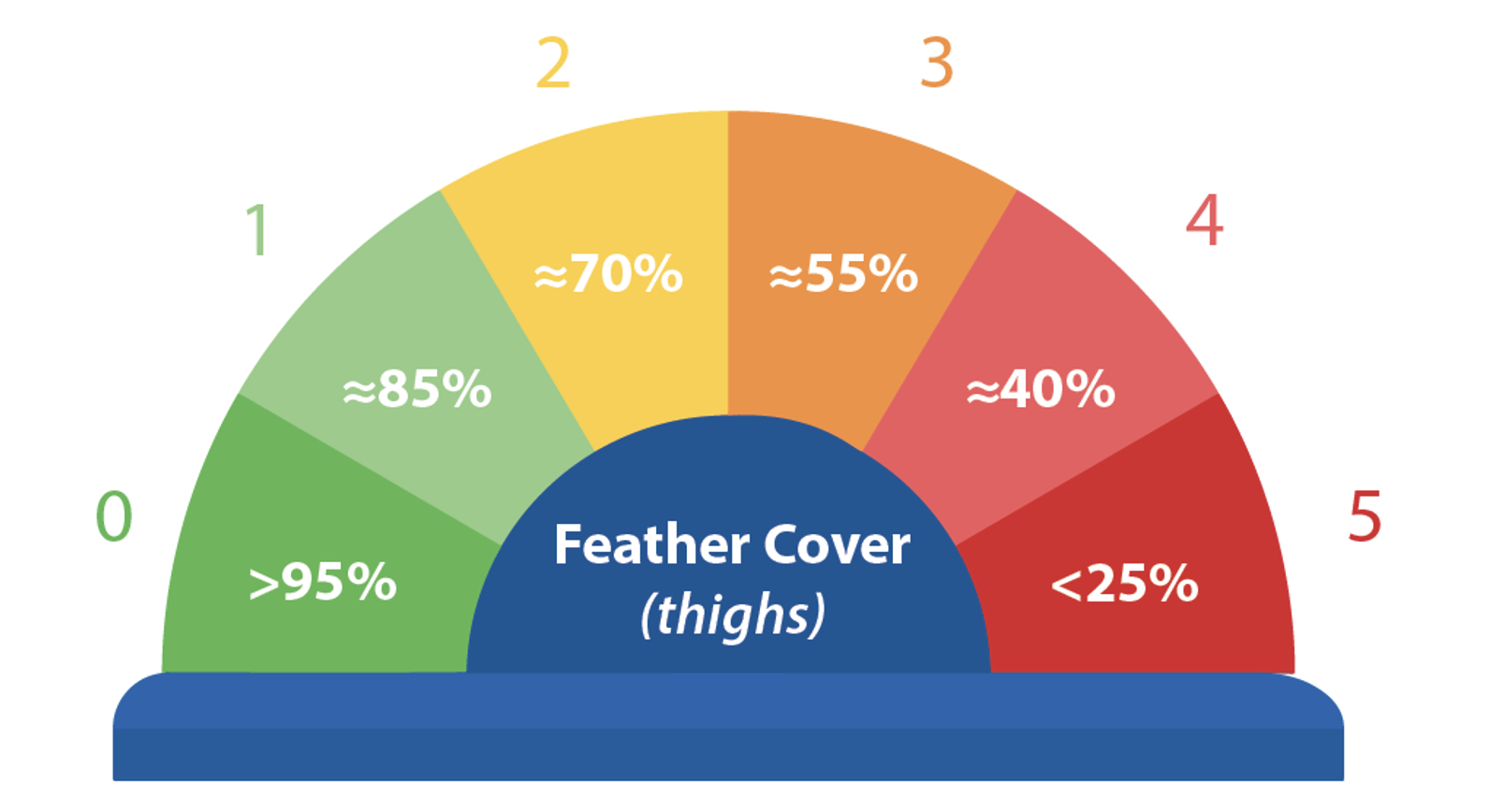
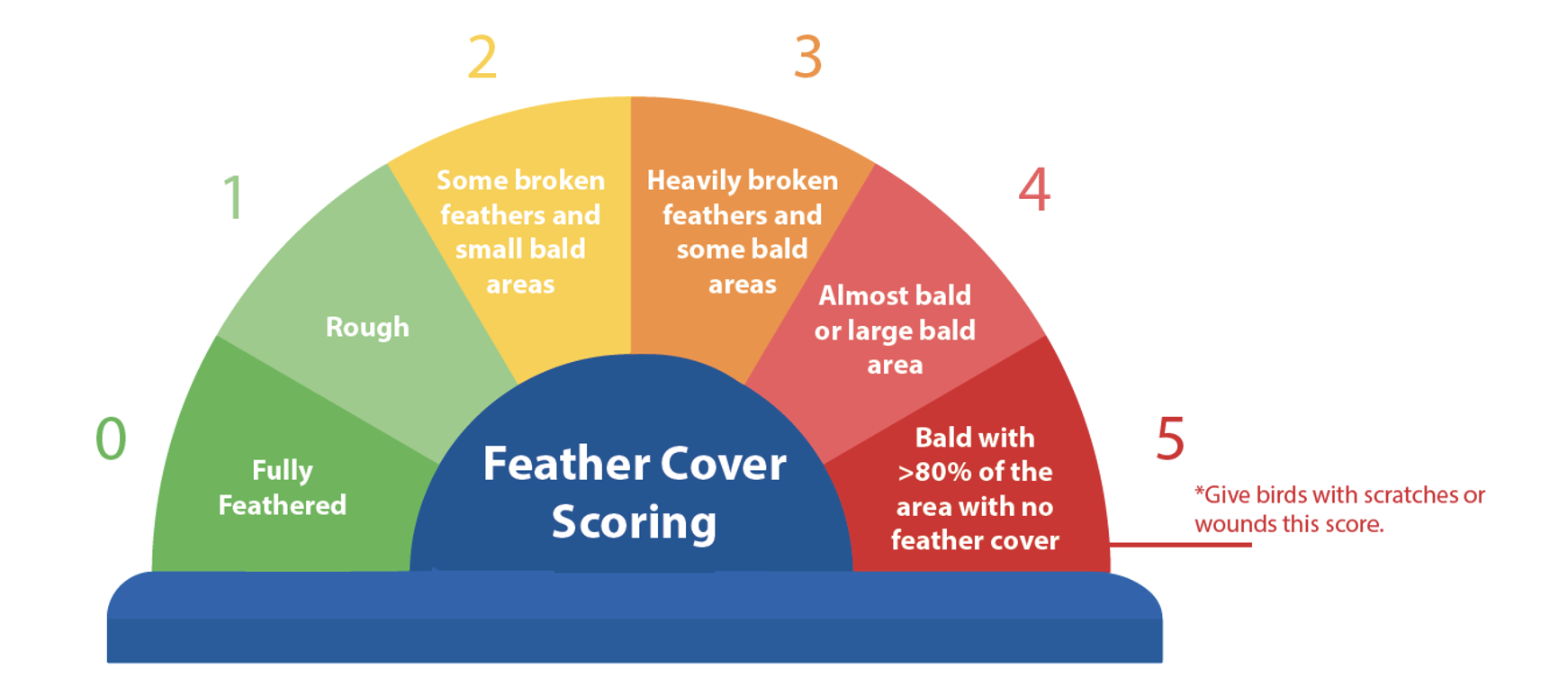
Feather scoring should be carried out on a representative sample of birds every four weeks starting at 12 weeks of age. The thigh is the last area to become feathered, so it should be the focus during rearing. Score birds every 10 weeks from peak onwards, monitoring the back, thighs, wings, and tail. Some birds undergo a natural molt around 40 weeks. These birds should be excluded from the sample.
Once feathers are significantly lost in birds 35 weeks or older, there is little that can be done to remedy the situation. Focus on developing feathering in the early rear, maintaining and growing feathering in the mid to late rear, and avoiding damage and maintaining feather condition during lay.
For more information, visit the Info Center at www.aviagen.com