


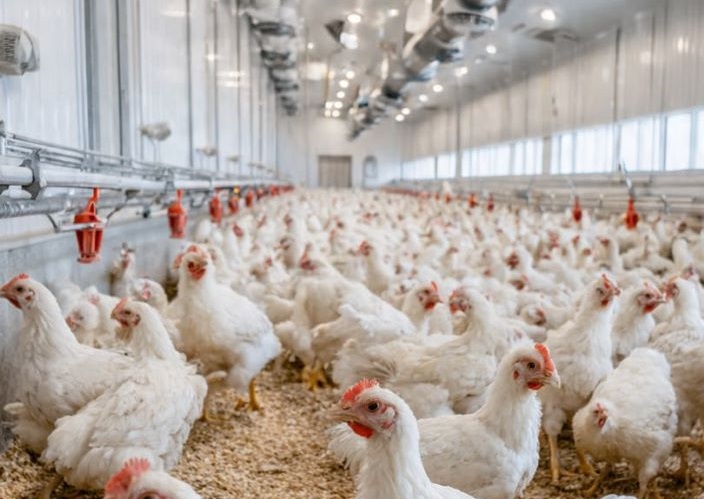
A New Management Approach Based on Early Behavioral Signals
Poultry welfare programs traditionally depend on routine inspections, mortality records, production data, and visible clinical problems. These measurements remain essential, but they often identify a problem after its effects have already become evident. A more proactive approach is emerging: using changes in flock behavior as early warning signals and integrating them with environmental and production data to guide management decisions.
This approach is particularly relevant because welfare is not limited to the absence of disease. The World Organisation for Animal Health (WOAH) defines animal welfare in relation to the animal’s physical and mental state under the conditions in which it lives and dies (1). For broilers, recognized welfare outcomes include locomotion, mortality, contact dermatitis, behavior, thermal comfort, access to feed and water, and the ability to perform normal activities (2).
Why Behavior Can Become a Management Tool
Birds continuously interact with their environment. Changes in walking activity, feeding and drinking patterns, flock distribution, resting behavior, vocalization, and clustering can indicate that environmental conditions or bird health are changing.
Research on precision livestock farming has demonstrated that automated technologies can continuously monitor poultry behavior using cameras, microphones, sensors, and other data-collection systems (3). Rather than replacing human observation, these technologies can provide farmers with an additional layer of information between conventional daily inspections.
For example, an unexpected reduction in movement may indicate increasing locomotory problems, thermal discomfort, poor litter conditions, or changes in flock health. Similarly, abnormal clustering can indicate that birds are responding to environmental gradients or difficulties accessing resources.
The key management principle is not to interpret one abnormal measurement in isolation, but to identify deviations from the flock’s normal behavioral pattern.
Building a “Welfare Baseline” for Each Flock
A practical welfare-forecasting system should begin by establishing a baseline during periods when birds are considered healthy and comfortable. Baseline information can include:
- Daily activity and movement distribution
- Feed and water consumption patterns
- Flock distribution within the house
- Resting and active periods
- Mortality and culling
- Litter condition
- Temperature, humidity and ventilation parameters
- Gait and visible welfare indicators
This creates a flock-specific behavioral profile rather than relying exclusively on fixed thresholds.
Such an approach is important because welfare outcomes are influenced by multiple interacting factors. EFSA identified high stocking density, poor litter quality, excessive effective temperature, inappropriate lighting and rapid growth as important hazards affecting broiler welfare (4).
Connecting Behavior With the House Environment
Behavior becomes more useful when it is interpreted together with environmental information. A sudden change in bird distribution, for example, could have several explanations. If the change occurs simultaneously with increased house temperature, thermal discomfort may be the most likely explanation. If it appears alongside increasing litter moisture and reduced activity, contact dermatitis or locomotory problems may deserve investigation.
Management decisions should therefore be based on the relationship between bird response and environmental conditions—not on technology-generated alerts alone.
This principle is consistent with WOAH recommendations, which emphasize monitoring animal-based outcomes such as gait, morbidity, mortality, contact dermatitis and behavior alongside management and environmental conditions (2).
From Alerts to Preventive Action
The real value of welfare monitoring is achieved when information leads to rapid corrective action. A farm could establish predefined response protocols for abnormal patterns.
For instance, an unexplained decline in activity could trigger inspection of drinker function, feed distribution, ventilation, temperature, litter condition and flock health. If birds are increasingly concentrated in particular areas, personnel could investigate air movement, temperature gradients, lighting uniformity or equipment accessibility.
This transforms welfare monitoring from a recording exercise into a preventive management system.
The Role of Artificial Intelligence
Artificial intelligence and computer vision could further strengthen this approach by automatically quantifying flock activity, spatial distribution, posture and movement. Recent research describes computer-vision models as increasingly important tools for monitoring poultry behavior and welfare within precision poultry farming systems (5).
However, technology should support—not replace—experienced stockmanship. Automated systems may identify deviations, but farm personnel remain responsible for determining their biological significance and implementing corrective measures.
A systematic review also highlighted that although precision livestock technologies have considerable potential for welfare monitoring, commercial adoption remains an important challenge (6).
A Practical Welfare Dashboard
Future poultry houses could integrate welfare indicators into a single management dashboard. Instead of viewing mortality, ventilation, water consumption, litter quality and behavior separately, managers could examine them as interconnected indicators.
The objective is to detect welfare deterioration while it is still reversible, rather than waiting until mortality, lesions or production losses become obvious.
Such systems could eventually allow farms to move from reactive welfare management toward predictive welfare management, where continuous biological and environmental data help identify emerging risks before they develop into serious welfare problems.
Conclusion
Poultry welfare management is increasingly moving beyond periodic visual inspection toward continuous assessment of how birds respond to their environment. Combining animal-based indicators with environmental monitoring, historical flock data and automated behavioral analysis offers an opportunity to identify problems earlier and improve management precision.
For commercial producers, the most valuable development may not be another welfare score, but a system capable of answering a more practical question: “Is this flock beginning to behave differently, and what should we investigate now?”
Sources
(1) World Organisation for Animal Health (WOAH). Animal Welfare – Definition and Standards. WOAH.
(2) World Organisation for Animal Health (WOAH). Terrestrial Animal Health Code, Chapter 7.10: Animal Welfare and Broiler Chicken Production Systems.
(3) Li, N., Ren, Z., Li, D., & Zeng, L. (2020). Automated techniques for monitoring the behaviour and welfare of broilers and laying hens: towards the goal of precision livestock farming. Animal, 14(3), 617–625.
(4) EFSA Panel on Animal Health and Welfare. (2023). Welfare of broilers on farm. EFSA Journal, 21(2), 7788.
(5) Paneru, B., Dhungana, A., Dahal, S., & Ritz, C. W. (2026). Computer vision models for precision poultry farming: A narrative review of behavioral and welfare monitoring studies. Poultry Science, 105(7), 106887.
(6) Rowe, E., et al. (2019). A Systematic Review of Precision Livestock Farming in the Poultry Sector: Is Technology Focussed on Improving Bird Welfare? Animals, 9(9), 614.