For the proper control of Gumboro disease (IBD), it is essential not only to protect against outbreaks, but fundamentally to prevent the risk of replication of field strains, which is called prevention, as it is known, since this can impact field results and the processing of broiler carcasses in the slaughterhouse.
For that, the name of the game in controlling IBD will be through vaccination, blocking the bursa against the field strains by the replication of the vaccine virus, and this way preventing the field strains from infecting the chick.
- Need to block the bursa of Fabricius through effective vaccination to prevent replication of field IBD viruses.
The objectives of Gumboro vaccination program must be:
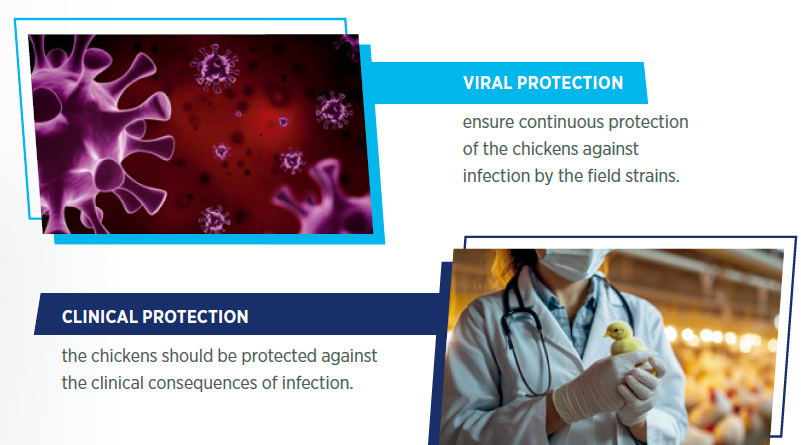
For this, a live virus must be used, blocking the replication of any other IBD virus, including the field strains. The strain used in the immune-complex IBD vaccine, such as W2512, must be:
- Attenuated.
- Maintain its invasiveness.
- Without generating any kind of permanent damage to the cells of the bursa of Fabricius.
It is important to note that the lymphoid depletion generated by intermediate or intermediate plus strains, in which a decrease in bursa size is observed, is physiological and transient, not impacting the immune system of birds.
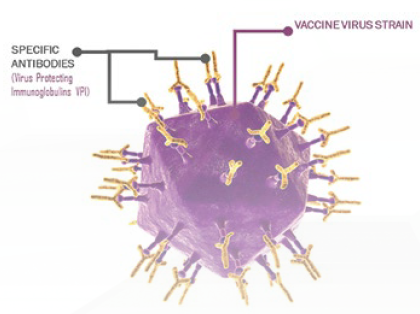
At the same time, this virus must be protected by antibodies (Virus Protecting Immunoglobulins – VPI) so that the release occurs at the right time, and the inactivation of this vaccine virus does not occur, as in the Immune-complex IBD vaccines.
A correct balance between the IBD virus and the anti-IBDV antibodies is of crucial importance for the efficacy and safety of these vaccines. The fact that the virus is covered by VPI is important to maintain safety and stability in chickens with varying levels of maternal antibodies.
- The ability of these vaccines to fully colonize the bursa and protect against all field IBD viruses is one of the key advantages of immune-complex vaccines.
The vaccine take occurs when the MDA level decreases to a point that allows the vaccine virus to be released and to reach the bursa of Fabricius.
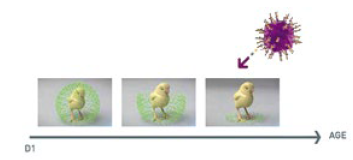
From this moment on, the vaccine strain will replicate in the bursa of Fabricius, and the chicken will be immunized against any type of IBD virus.
The fact that the virus is covered by VPI is important to maintain safety and stability in chickens with varying levels of maternal antibodies.
In all birds, thus adapted according to the most appropriate time for replication, and thus the onset of active immunity.
GUMBORO DISEASE CONTROL
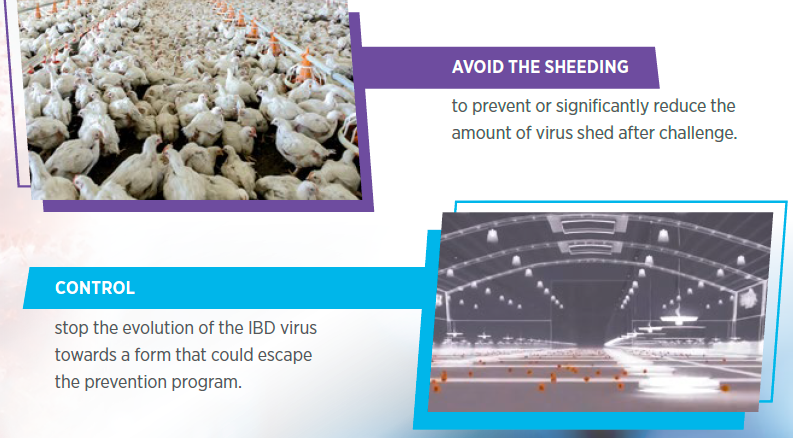
Understanding the importance of blocking the bursa by a live vaccine, and in this way prevent the build-up of higher virus pressure, cycle after cycle, and stop the evolution of the IBD virus towards a form that could escape the prevention program.
- These are the consequences of the “protection against shedding”. In other words, the objectives of a Gumboro vaccination program should aim at stopping the Gumboro cycle.
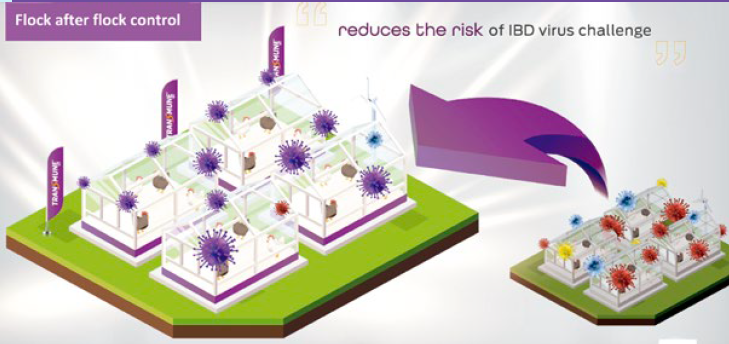
To achieve the stop of Gumboro disease, the vaccination program should be well fitted.
In addition to vaccination, other factors that should be observed for optimal short-term and long-term control of Gumboro Disease include:
- Biosecurity
- Cleaning & disinfection
- Passive immunity
CONCLUSION
As a summary, to have IBD control and keep the consistency of broiler production, it is essential to provide protection against clinical and sub-clinical infection, and prevent field virus replication.
- But it should be done with safety, as with the immune-complex vaccine Nextmune, which adapts to different maternal antibody levels, blocking the bursa for a better Gumboro disease control.