


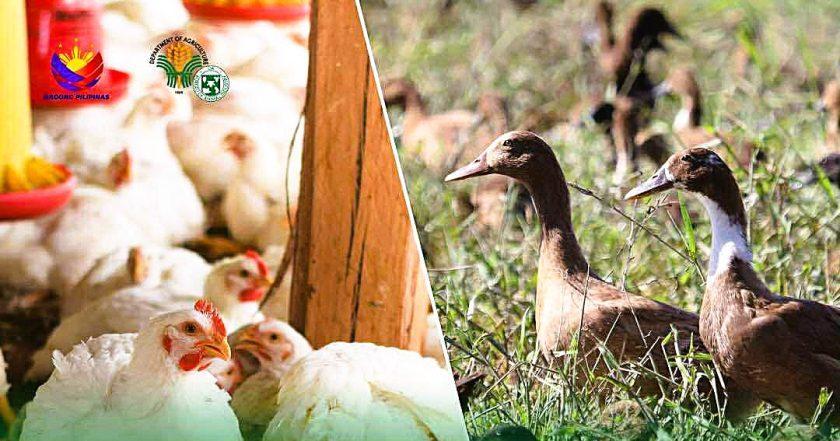
Cases of Highly Pathogenic Avian Influenza (HPAI) have been confirmed in the Philippine provinces of Isabela, Cotabato, and South Cotabato, the Bureau of Animal Industry (BAI) reported.
BAI emphasized that the cases are localized and well-contained, and pose no immediate threat to food safety. Poultry products from monitored farms remain safe to consume. Properly cooked meat and eggs do not transmit the HPAI virus.
Surveillance and monitoring efforts continue in coordination with local government units and other agencies to prevent further spread.
Confirmed cases and containment actions
BAI’s Animal Disease Diagnosis and Reference Laboratory (ADDRL) confirmed multiple HPAI strains in recent weeks:
- October 16: H5N1 detected in a commercial farm in Gamu, Isabela. The farm was depopulated and the case was declared resolved.
- October 17: H5N8 found in two smallhold duck farms in Mlang, Cotabato. One farm was depopulated; the other had sold its flock before detection.
- October 20: H5, H9, N1, and N2 detected in a duck farm in Norala, South Cotabato. The flock had been transferred to Maguindanao del Sur.
- October 28: H5N1 confirmed in a commercial farm in Cauayan City, Isabela. Depopulation, cleaning, and disinfection were completed by October 27.
Authorities are tracing bird movements and coordinating with law enforcement and regional offices to contain any potential spread.
Bulacan regains AI-free status
Meanwhile, Agriculture Secretary Francisco Tiu Laurel has officially declared Bulacan—a key poultry producing province—free from HPAI.
The outbreak, confirmed in December in a commercial duck farm, involved the H5N1 strain.
Control measures included:
- Immediate depopulation
- Cleaning and disinfection
- Movement restrictions
- Intensive monitoring within 1-km and 7-km zones
Bulacan had previously reported HPAI cases in 2022 and 2023 but recovered each time through rapid response and strict biosecurity.
Vigilance needed
BAI urges poultry raisers nationwide to report unusual mortalities or symptoms immediately and to cooperate with local veterinary offices.
Strict biosecurity must be maintained in all farms to prevent further spread of the virus. This includes limiting farm access, disinfecting equipment, and monitoring flock health. Government teams continue to conduct field inspections, enforce containment protocols, and oversee cleaning and disinfection activities in affected areas.
In August this year, the Philippine Food and Drug Administration approved the country’s first AI vaccine. Nonetheless, poultry practitioners continue to urge producers to maintain strict biosecurity to keep the virus at bay.