


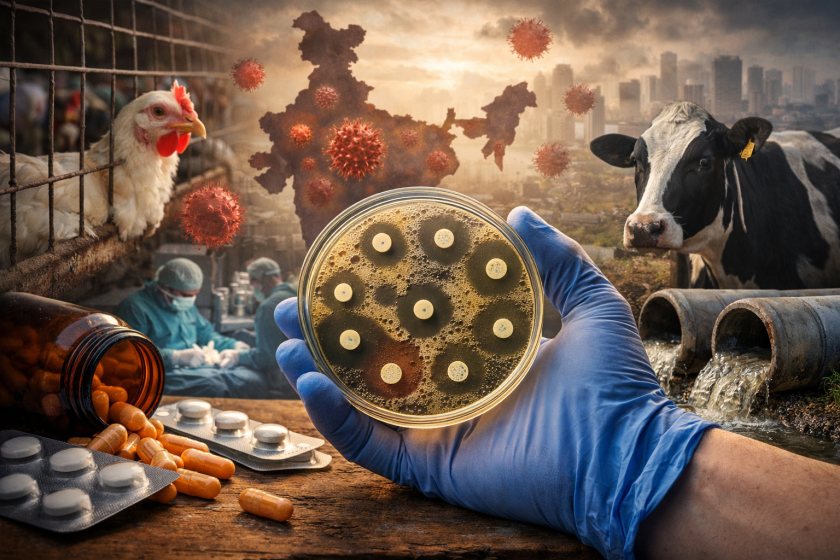
Antimicrobial resistance (AMR) is rapidly emerging as one of the most serious public health threats of this century. Microorganisms are steadily developing the ability to survive drugs that once destroyed them with ease, eroding the certainty that antibiotics long provided.
For decades, these medicines stood as one of healthcare’s most dependable achievements. They transformed fatal infections into treatable conditions, made surgery safer, reduced maternal mortality, and strengthened the foundation of modern medicine. That legacy is now under pressure as resistant organisms spread, threatening routine care and undermining the reliability of life‑saving treatments.
AMR does not spread with the drama of a viral epidemic, yet its consequences are equally disturbing. It appears in repeated treatment failure, prolonged illness, recurrent infections, rising hospital costs, and growing dependence on stronger reserve drugs. Resistant infections already cause substantial deaths worldwide, but beyond mortality, AMR threatens the certainty antibiotics once provided in routine care. When common infections stop responding predictably, every surgical procedure, intensive care intervention, and neonatal treatment becomes more precarious.
India’s unique challenge
India occupies a significant position in this crisis. The country combines a large infectious disease burden with high antibiotic consumption, variable healthcare access, rapid livestock expansion, and uneven sanitation. These conditions allow resistant organisms to emerge and circulate across hospitals, farms, pharmacies, food chains, and wastewater systems. AMR in India is therefore not merely a clinical problem; it is a wider systems challenge.
One of the clearest drivers remains irrational antibiotic use in healthcare. In many settings, antibiotics are purchased or prescribed for fevers, coughs, sore throats, and minor infections, even when illnesses are viral and self-limiting. Equally problematic is the practice of stopping medication as soon as symptoms improve. Incomplete exposure allows surviving bacteria to adapt, making future treatment less effective.
Hospitals add another dimension. Because microbiological diagnosis is often delayed or unavailable, clinicians frequently prescribe broad-spectrum antibiotics empirically, particularly in emergency and critical care. While sometimes necessary, repeated overuse creates strong selective pressure for resistance. Indian hospitals increasingly report multidrug resistance in pathogens such as Klebsiella pneumoniae, Escherichia coli, Acinetobacter baumannii, and Staphylococcus aureus. For patients, this means longer hospitalization, higher costs, and fewer reliable options.
Farms and food exposure
The story does not end in hospitals. India’s poultry and dairy sectors contribute significantly to antimicrobial exposure. Antibiotics are widely used not only to treat disease but also to prevent infection under intensive rearing conditions. Preventive medication is often seen as economically safer than managing outbreaks, but repeated exposure fosters resistance.
Poultry farming illustrates this clearly. Resistant bacteria and residues in poultry products can travel through slaughterhouses, markets, kitchens, and wastewater channels. Human exposure may occur through handling, consumption, or environmental contamination. What begins as a veterinary decision can eventually surface as a public health issue.
The dairy sector presents a quieter but equally relevant concern. Smallholder farmers often treat mastitis empirically with broad-spectrum antibiotics because laboratory testing and veterinary supervision are limited. Repeated use without proper diagnosis encourages resistant bacteria in herds, while poor compliance with withdrawal periods raises risks of residues entering the food chain.
Environment and one health
A third layer lies in the environment. Antibiotics consumed by humans and animals do not vanish after use. Residues, resistant bacteria, and resistance genes enter sewage, runoff, and water bodies through hospital discharge, livestock waste, household drainage, and pharmaceutical effluents. Inadequate wastewater treatment turns these sites into reservoirs for resistant microorganisms.
This is why AMR is increasingly viewed through the One Health lens. The approach recognizes that human, animal, and environmental health are interconnected. Resistant bacteria do not respect boundaries between medicine, veterinary science, and environmental regulation. Misuse in any sector contributes to the same microbial evolution.
India’s response and the road ahead
India has begun responding. The National Action Plan on AMR marked an important policy acknowledgment that containment requires surveillance, stewardship, infection control, public awareness, and research. Laboratory monitoring has been strengthened by the Indian Council of Medical Research, while several states and hospitals have introduced stewardship programs to encourage rational prescribing.
The challenge remains implementation. Surveillance is concentrated in larger hospitals, while rural healthcare, informal antibiotic sales, small veterinary practices, and environmental discharge points remain poorly monitored. Regulatory restrictions on over-the-counter availability are unevenly enforced, and awareness among livestock producers is limited. India has recognized the crisis, but its response is fragmented.
That fragmentation is dangerous because AMR cannot be solved by one sector alone. New antibiotics may provide temporary relief, but innovation cannot compensate indefinitely for misuse. Long-term containment depends on better diagnostics, stricter prescription practices, stronger infection prevention, improved veterinary services, tighter farm controls, and rigorous wastewater management. Public education is equally vital. Antibiotics must stop being seen as quick remedies for every fever or cough.
India’s role in this fight is globally significant. Few countries combine such a large population, extensive antibiotic access, and rapid agricultural growth. If AMR can be managed here through integrated surveillance and coordinated One Health governance, lessons will be relevant across the developing world.
Antimicrobial resistance is often described as a silent pandemic, and the phrase is apt. It spreads gradually, often unnoticed, until consequences become impossible to ignore. Every failed prescription, recurrent infection, and shrinking treatment option is a reminder that the age of dependable antibiotics cannot be taken for granted. Preserving these life-saving drugs will depend not only on hospitals, but also on farms, pharmacies, factories, and wastewater systems.
The battle against AMR is no longer only about curing infection. It is about protecting the future credibility of modern medicine.