


The poultry processing industry is experiencing rapid technological advancement, especially in the areas of cooling and packaging, where efficiency, safety, sustainability, and product quality are now top priorities.
Advances in Poultry Cooling Technologies
Air Chilling: Precision and Sustainability
- Air chilling has become one of the most significant breakthroughs in poultry cooling due to its environmental and quality advantages.
- This method uses controlled cold-air circulation around individually hung birds, ensuring gradual and uniform temperature reduction.
- It preserves the natural flavor and texture of poultry without adding excess moisture, resulting in better product weight accuracy and superior culinary performance.
- Air chilling also consumes significantly less water, contributing to sustainability goals.
- The method is increasingly used in markets favoring premium fresh poultry and regions addressing environmental concerns.
Water Chilling: Efficiency for High-Volume Processing
Water chilling remains widely used in regions prioritizing production scale and frozen poultry markets. By immersing carcasses in chilled, often antimicrobial-treated water, processors achieve rapid temperature reduction suitable for large volumes. Although moisture uptake can be beneficial for frozen products by preventing freezer burn, this method requires strict water management to avoid cross‑contamination. Despite environmental drawbacks, its speed and scalability keep it relevant in high‑demand supply chains.
Packaging Innovations Enhancing Safety and Shelf Life
Active and Antimicrobial Packaging
- One of the most notable developments is the integration of antimicrobial agents directly into packaging materials.
- Research on biodegradable, collagen-based edible films infused with natural antimicrobials has shown significant reductions in Listeria monocytogenes over extended storage while eliminating synthetic plastics.
- These films demonstrate strong potential for vacuum-sealed processed poultry and aim to reduce plastic waste while improving food safety.
Cold Plasma for Surface Decontamination
Cold plasma technology offers non‑thermal, residue‑free microbial reduction on raw poultry and processing surfaces. By generating reactive oxygen and nitrogen species, the method achieves over 2‑log reductions in pathogens such as Listeria and Salmonella. It is particularly appealing to processors seeking chemical‑free solutions to enhance safety without compromising product quality.
Modified Atmosphere and Smart Packaging Systems
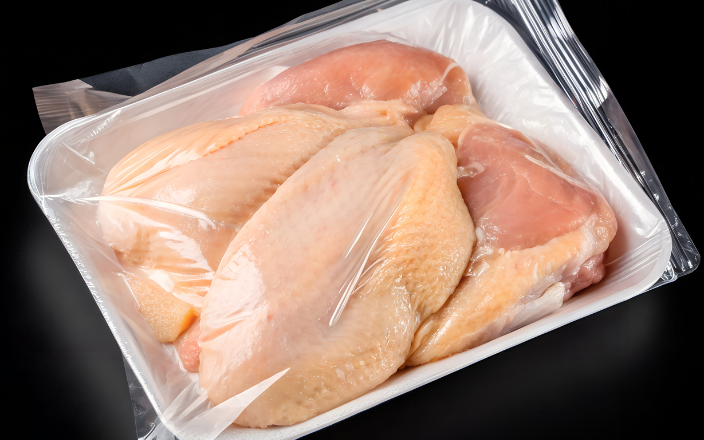
Packaging systems using high‑barrier Modified Atmosphere Packaging (MAP), HiOx‑MAP, and leak‑resistant vacuum designs are becoming essential in modern poultry processing. These technologies extend shelf life by up to nine days, reduce microbial growth, enhance product appearance, and support longer distribution chains, including export. Sustainability efforts are pushing integration of post‑consumer recycled materials, compostable films, and nanocoatings to reduce waste. Market innovation is shifting toward modular, intelligent, and cloud‑integrated platforms that improve traceability, efficiency, and operational agility.
Conclusion
The combined progress in cooling and packaging technologies is redefining the processed poultry sector. Air and water chilling methods continue to evolve toward greater efficiency and sustainability, while advances in antimicrobial films, cold plasma treatment, and MAP systems improve safety, shelf life, and environmental performance. These innovations position the industry for a more resilient and consumer‑aligned future.
Sources: Available upon request