


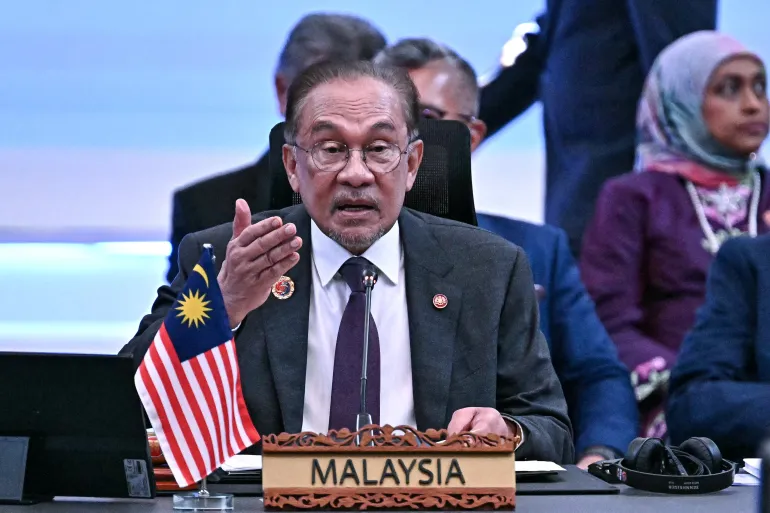
Four weeks into the US-Israeli war on Iran, Malaysia is beginning to feel the impact. Prime Minister Anwar Ibrahim has cut the monthly quota for subsidized petrol, while food manufacturers warn that surging diesel costs could force closures or price hikes, according to the South China Morning Post.
The move shows how a distant geopolitical shock is feeding directly into Malaysia’s fuel bill, food supply chain, and inflation outlook, analysts note. Mr Ibrahim said the fallout from the conflict was no longer something Malaysia could watch from a distance.
Strait of Hormuz reopens
Malaysia’s vessels are once again allowed through the Strait of Hormuz after talks between Mr Ibrahim and leaders in Iran, Egypt, Turkey, and other regional countries. The strait remains a vital chokepoint for global oil and gas trade.
Malaysia, a Muslim-majority country, has long maintained cordial ties with Iran. It recognizes Tehran’s right to defend its sovereignty while also urging a rapid resolution to the conflict.
Rising costs across supply chains
Mr Ibrahim said the blockade, war and disrupted oil and gas supplies “all have an impact on us,” even if state-owned Petronas offers some cushion. He warned food supplies were also disrupted and that prices for fertilizer, oil, and gas would “certainly rise.”
The government’s immediate step was to keep subsidized BUDI95 petrol at USD 0.50/L while lowering the monthly eligibility cap from 300L to 200L starting April 1. Limits on fuel purchases, tighter enforcement against smuggling, and staged work-from-home arrangements for civil servants were also announced.
Manufacturers sound alarm
Food manufacturers and sundry goods traders have urged the government to stabilize diesel prices and provide temporary relief. They warn the shock now affects transport, packaging, and raw materials, according to local media.
Ding Hong Sing, President of the Malaysian Food Manufacturers Association, warned that rising transport costs would force manufacturers to either “close down or increase prices.”
Some producers, he said, were already absorbing an extra USD 14,922-19,895 a month in diesel costs, while others were paying more than USD 24,869.
Fertilizer makers in Malaysia have suspended new orders as feedstock shortages and supply chain disruptions drove up raw material prices, Reuters reported.
Inflation pressure deepens
Asrul Hadi Abdullah Sani, Associate Vice President at The Asia Group, said Mr Ibrahim is trying to preserve the political cushion of cheap headline fuel prices while quietly tightening quotas and plugging leakages before the full force of the shock arrives.
“Despite open lanes in the Strait of Hormuz, Malaysia is absorbing the shock not through shortages, but through rising cost pressures embedded deeper in the supply chain,” Mr Sani said. “That is precisely the kind of inflation that feeds directly into household expenses.”