


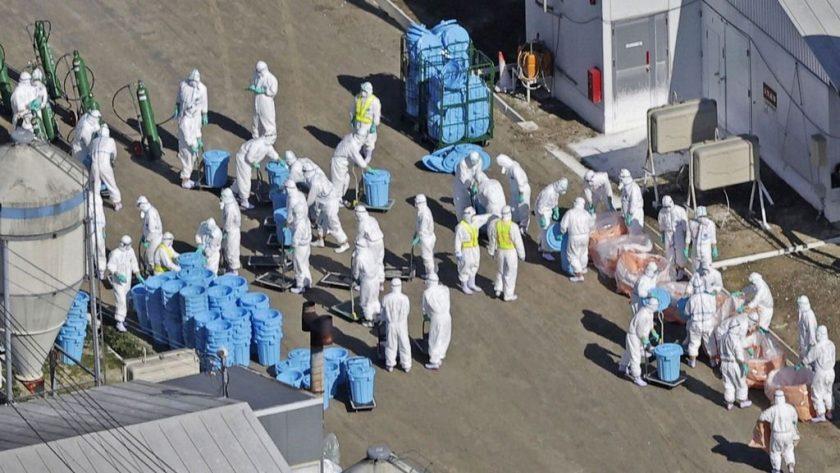
Japan has confirmed the season’s first outbreak of avian influenza at a poultry farm in Shiraoi Town, located in Hokkaido prefecture.
Farm workers discovered several dead chickens on October 21. Prompt testing revealed the highly pathogenic H5 strain of the virus.
Swift response and containment efforts
In response, the Hokkaido prefectural government convened an emergency meeting. Governor Suzuki Naomichi led discussions to coordinate containment efforts and prevent further spread.
Government officials and private-sector workers have begun culling approximately 459,000 chickens at the affected farm. This figure accounts for about 8% of Hokkaido’s egg-laying hen population.
Authorities aim to complete the culling by October 30 and fully disinfect the hen houses by November 2.
Movement controls to prevent spread
To contain the virus, strict movement restrictions are now in place. Farms within a 3-km radius are banned from moving chickens and eggs. Additionally, three other farms located within a 10-km cannot transport poultry products outside the area.
These controls follow Japan’s standard response protocol for avian influenza, designed to reduce contact and limit the virus spread among farms and regional poultry operations.
Experts urge nationwide vigilance
Experts warn that further outbreaks may continue to occur nationwide. Migratory birds, which travel along multiple routes, can introduce new strains of the virus to domestic flocks.
A leading avian disease specialist cautioned that “an outbreak can happen anywhere,” urging farmers to strengthen on-site biosecurity and report abnormal bird deaths immediately.
Ongoing biosecurity challenge
The outbreak underscores Japan’s continuing struggle to maintain farm biosecurity during migratory bird season. Annual outbreaks have caused significant losses in the egg and poultry sectors, disrupting supply and increasing production costs.
Authorities continue to emphasize the importance of early detection, rapid containment, and strict farm hygiene. These measures remain critical to protecting Japan’s poultry industry and preventing broader outbreaks in the months ahead.