


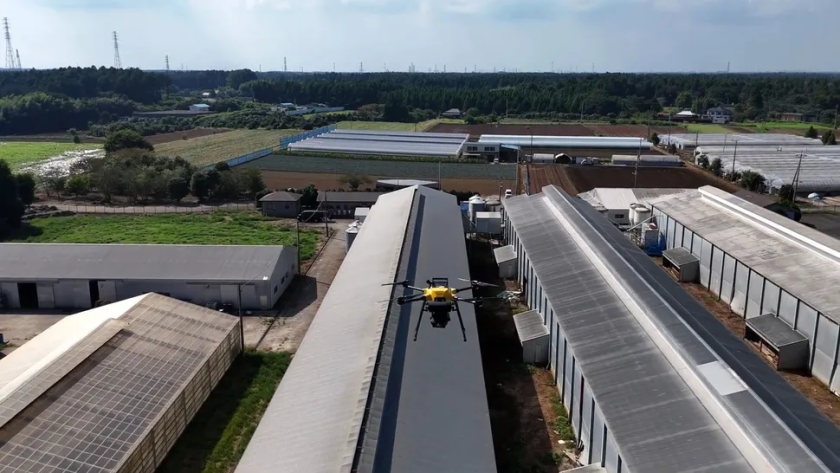
In Japan, a novel laser drone system developed by NTT is being deployed to shield domestic poultry flocks from avian influenza or bird flu threats.
The technology is engineered to deter wild birds—especially species known to carry viruses—from venturing into farm zones and thereby reduce disease transmission to commercial birds. The system is designed to target common vectors such as crows and pigeons, which often act as carriers of avian pathogens.
As a nonlethal and automated deterrent, it offers an alternative to traditional methods like acoustic scaring devices, chemical repellents, or manual culling and chasing approaches.
Laser beams
NTT’s drone model BB102 features red and green laser beams that flash in patterns. The intermittent flickering is intended to prevent birds from becoming habituated—making the stimuli unpredictable and thus more effective in deterring them from landing near poultry houses or accessing feed areas.
According to multiple sources, the design is a collaborative effort between NTT e-Drone Technology, NTT East Japan, and Chiba Prefecture government agencies.
The timing of the deployment is critical. In 2025, the Chiba Prefecture alone witnessed the culling of more than 3.3 million birds during a severe outbreak—an incident that starkly illustrated the vulnerability of regional poultry operations to H5-type avian influenza.
Cost-sharing schemes
To encourage farmer uptake, local authorities are reportedly designing subsidy or cost-sharing schemes to reduce the financial burden of adopting laser drone systems.
The expectation is that large-scale adoption of such automated deterrents could enhance biosecurity, reduce dependency on chemical or manual measures, and diminish the likelihood of virus spillover into domestic flocks.
Experts believe the broader deployment of laser drones could strengthen Japan’s resilience against future avian influenza outbreaks, protect poultry production, and reduce human health risks—especially for workers in close contact with birds.
If effective and scalable, the fusion of advanced technology and subsidy support may help transform bird-flu prevention practices in farm systems.