


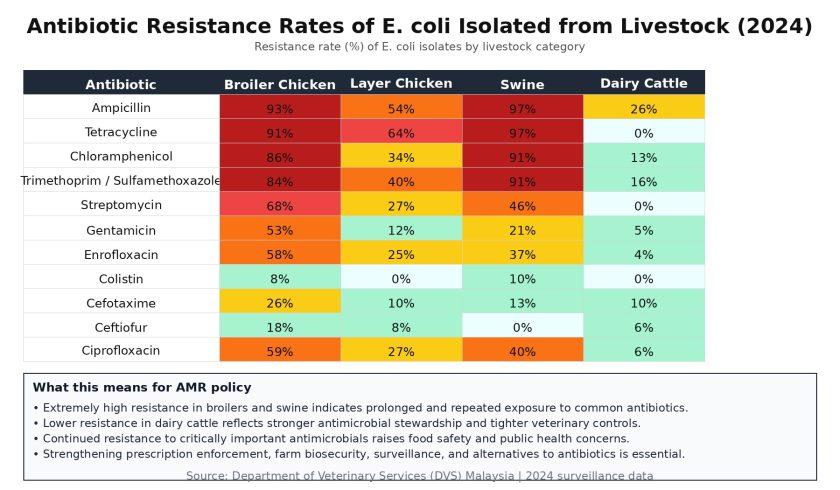
Malaysia’s Department of Veterinary Services (DVS) has detected rising levels of antimicrobial resistance (AMR) in livestock, including poultry, pigs, and dairy cattle. Officials say the trend is largely driven by improper antibiotic use at the farm level.
Bacterial samples collected in recent years show increasing resistance to several commonly used antimicrobial drugs. While assuring consumers that animal-based products remain safe, the DVS said coordinated action across the entire food chain is essential to curb the problem.
Misuse of antibiotic
According to the DVS, the increase in AMR is primarily linked to inappropriate antibiotic practices among farmers. These include incorrect dosages, prolonged treatments, and the use of antibiotics that fall outside outside regulatory guidelines.
The department also cited the preventive and growth-promoting use of antibiotics, combined with poor farm biosecurity, as contributing factors. Of particular concern is the ease of obtaining antibiotics without veterinary prescriptions, including through online platforms, which has enabled uncontrolled and excessive use.
Surveillance findings
Between 2022 and 2024, DVS surveillance detected increasing resistance in Salmonella and Escherichia coli (E. coli) isolates collected from broilers, pigs, and dairy cattle. The bacteria showed resistance to antibiotics such as cefotaxime and ceftiofur, both third-generation cephalosporins.
These findings are concerning because these drugs are commonly used to treat serious human infections, including sepsis, pneumonia, and meningitis. The department reported no significant regional variation in resistance levels, indicating the issue is consistent nationwide. Surveillance activities will continue to monitor trends and enable early detection of emerging risks.
National monitoring and response
The DVS said it is actively monitoring antimicrobial resistance through the Malaysian Action Plan on Antimicrobial Resistance (MyAP-AMR). In 2024 alone, the department isolated 276 Salmonella samples and 1104 E. coli samples from farms, slaughterhouses, and processing facilities for testing.
Drug-resistant bacteria can spread from livestock to humans through several pathways. These include consumption of improperly cooked contaminated meat, environmental exposure via manure, and the transfer of resistance genes.
Preventive and regulatory measures
The DVS stressed that antibiotics should be used responsibly, not for growth promotion or routine disease prevention. Farmers must observe withdrawal periods before slaughter and maintain strict hygiene, vaccination programs, biosecurity measures, and high-quality feed standards.
Regulatory measures include the Feed Act 2009, which governs antimicrobial use in animal feed. Since 2012, antibiotics classified by the World Health Organization as critically important for human medicine have been banned from use in livestock.
The department also promotes compliance through Malaysian Good Agricultural Practices (MyGAP) and Veterinary Health Mark (VHM) certification schemes, which emphasize disease prevention and reduced reliance on antibiotics.