Mycoplasmosis update: Antimicrobial Resistance, Vaccines, and Control Challenges
Avian mycoplasmosis remains of great clinical and economic importance in the poultry industry worldwide. Mycoplasma infection causes significant economic losses in terms of:
- Decreased weight gain,
- Feed conversion efficiency,
- Egg production,
- Hatchability,
- An increase in embryo and broiler mortality,
- Eggshell defects,
- Carcass condemnation,
- Prophylaxis with vaccination,
- Susceptibility to bacterial or viral infections,
- Treatment cost in broiler, layer, turkey, and breeder flocks.
Mycoplasmas are the smallest known prokaryotes capable of self-replication. They have a very small genome and have evolved to this ‘minimalist’ status by losing non-essential genes, including those involved in cell wall synthesis. Strains vary in tissue tropism and virulence depending on the route of infection.
Four species are frequently related to poultry mycoplasmosis. Mycoplasma gallisepticum (MG) and Mycoplasma synoviae (MS) are the two most pathogenic avian mycoplasma species. However, Mycoplasma meleagridis (MM) and M. iowae (MI) can be relevant respiratory pathogens for turkeys. Nevertheless, 25 Mycoplasma species are associated with poultry.
Worldwide prevalence of mycoplasmas
Prevalence varies widely worldwide. In a systematic review and meta-analysis Chaidez-Ibarra et al. (2021) summarized 85 publications from 33 countries that reported studies with 22,162 samples for MG and 48 studies with 26,413 samples for MS. This Mexican research group concluded that the pooled global occurrence was 38.4% (95% CI: 23.5–54.5%) for MS and 27.0% (20.4–34.2%) for MG.
Across regions, Europe and Central Asia had the lowest incidence of both pathogens, whereas MG and MS were highly prevalent in South Asia and sub-Saharan Africa, respectively. At the national level, MG occurrence was higher in Algeria, Saudi Arabia, and Sudan, whereas China, Egypt, and Ethiopia reported higher MS values. Heterologous mycoplasma infections or co-infections are becoming more frequent.
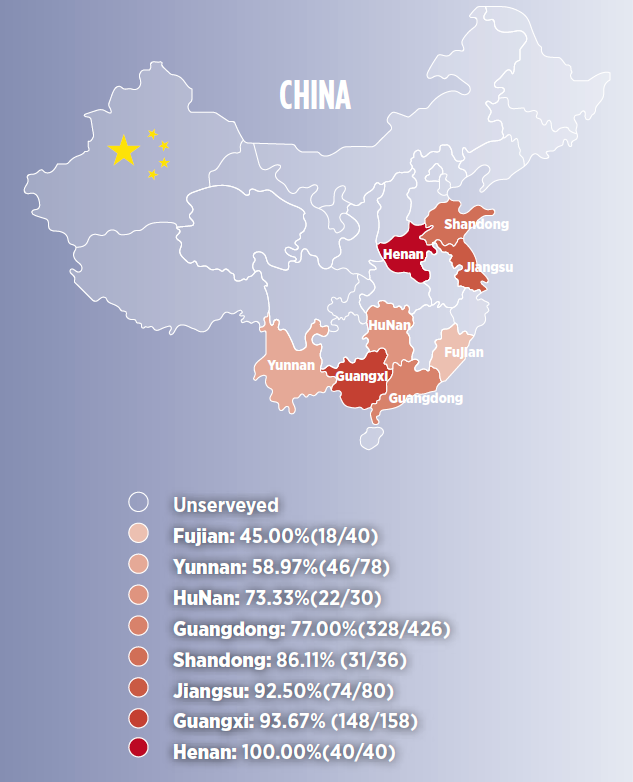

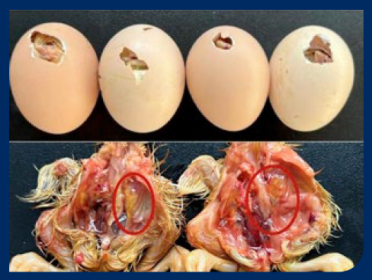
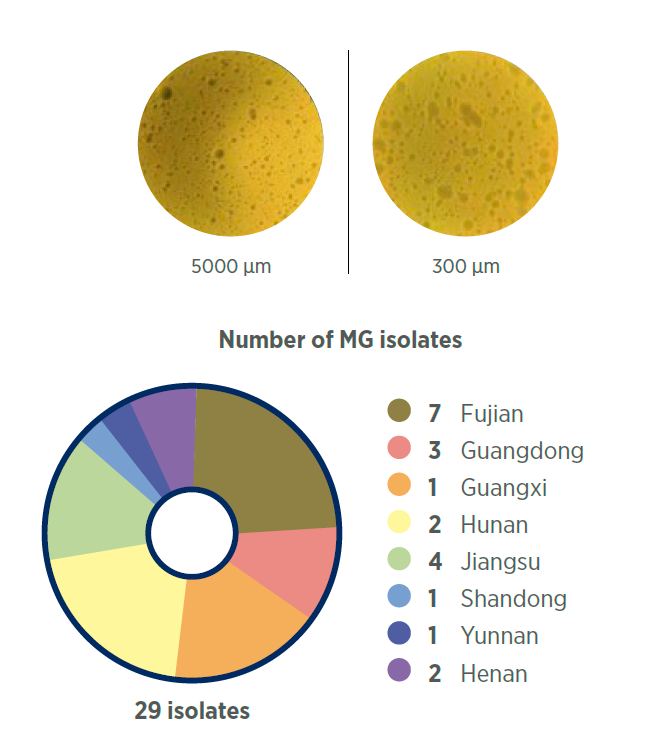
A recent Chinese study (Fang et al., 2025) reported 80% MG positivity in dust and feather samples from hatcheries and up to 100% positivity in pipping-failure embryos (Figure 1). Yin et al. (2025) reported a 52% positivity for MS in 3,284 choanal cleft swab samples collected from 2- to 25-week-old indigenous chickens. However, these researchers did not detect MS infection in embryos but reported 54% positivity for MG. In another study, Tu et al. (2026) detected MS positivity with PCR in 14% of 450 samples collected in 643 broiler farms across 15 provinces in 2024.


Pathogenicity and differential diagnosis
The MG is a motile species that possesses a terminal tip structure that mediates adherence to target tissues and can invade cells. New virulent strains have been detected in the past decade, and reports of mycoplasma antimicrobial resistance are increasing.
MG causes chronic respiratory disease (CRD), coughing, nasal discharge, and reduced growth performance in chickens, as well as infectious sinusitis in turkeys. MS causes synovitis, inflammation of tendon sheaths, swelling of tarsal joints and paws, paralysis, and airsaculitis in birds.
- Mycoplasmas in chickens may appear like respiratory diseases caused by other pathogens, such as those that cause mild Newcastle disease and avian infectious bronchitis.
- Turkeys infected with MG may be misdiagnosed as avian pneumovirus infections, and sinusitis may also suggest infection with Pasteurella multocida, Chlamydomonas, or MS.


Moreover, care should be exercised in distinguishing between MS-related infectious exudative synovitis, tenovaginitis, bursitis, Staphylococcus aureus infections, and reovirus-related infectious tenosynovitis. In the past two decades, eggshell apex abnormalities have also been linked to MS infections. A significant reduction in the daily average egg weight and in the number of eggs was observed in MS-infected birds.
- The infection is transmitted both horizontally and vertically.
- Mycoplasmas spread rapidly horizontally within a flock via aerosols, particle matter dust 2.5, feed, water, and contact.
- Vertical transmission occurs through hatching eggs, enabling long-distance spread.


Diagnosis and effectiveness of antimicrobials
It is widely accepted that early diagnosis and strain identification within typical species are essential for effective control. Although time-consuming, the traditional cultural approach remains the gold standard for MG and MS diagnosis. Culturing MG and MG requires specialized, nutrient-rich broth and agar media such as Fery’s medium supplemented with 10-15% horse or swine serum and yeast extract. They are cultured in microaerophilic conditions (5-10% CO2) at 37 oC for up to 28 days, requiring blind passage.
The PCR-based methods are more specific and faster than traditional culture-based methods; however, they should be performed in parallel with the latter. Periodic in vitro testing of the minimum inhibitory concentration (MIC) of antibiotics against Mycoplasma field isolates is required to monitor the impact of mass medication programs and to inform the development of effective therapies.
The in vivo effectiveness of antimicrobials can be indirectly assessed by in vitro susceptibility testing, which determines the MIC and minimum bactericidal concentration (MBC) of an antimicrobial agent against Mycoplasma strains. Strain titration is important because the inoculum concentration can affect MIC values obtained in broth or on agar.
- Because of their small size, mycoplasmas cannot be titrated by optical density measurements, as is done for classical bacteria.
- Titrations are performed in different broths or agar media, depending on the Mycoplasma species studied.
- The MIC methods for MG and MS use FM4, Frey’s, Frey’s modified, Friis’s, and Hayflick’s modified media.




Antibiotic resistance of mycoplasmas
Mycoplasmas are intrinsically resistant to antimicrobials targeting the cell wall (fosfomycin, glycopeptides, or β-lactam antibiotics) and to sulfonamides, first-generation quinolones, trimethoprim, polymixins, and rifampicin.
- Standardization of methods for determining susceptibility levels is difficult because no quality-control strains are available and because species-specific growth requirements exist.
- Reduced susceptibility to, or resistance to, several classes of antimicrobials has been reported in field isolates of pathogenic Mycoplasma species.
- Some reports have shown that MG were 5 to 10 times more sensitive than the MS strains in Mexico (Petrone et al., 2020). However, resistance may develop depending on the type of antibiotics used in the area.
- For example, in Egypt, Tiamulin (450 mg/g) and spiramycin (150,000,000 IU) have been detected as the antibiotics of choice for the treatment of MG and MS infections, respectively.
- However, Mexican isolates of MS were less sensitive to tiamulin and tylosin.
- Diverse degrees of antimicrobial resistance or lower efficacy for control have been observed with chlortetracycline, lincomycin, erythromycin, and Doxycycline.
- Tylvalosin is the antibiotic of choice in some areas, while in others, lower efficacy has been reported.
Several studies in China, Southeast Asia, and Europe have shown that resistance to fluoroquinolones, such as enrofloxacin and erythromycin, has increased rapidly. There is still a bimodal MIC distribution for enrofloxacin and the macrolides (spiramycin, tilmicosin, and tylosin), indicating that both mycoplasma species have sub-populations that are less susceptible in vitro to those antimicrobials. High MIC values for enrofloxacin were observed across all isolates, with MICs ranging from 4 to 32 μg/mL.
- Consequently, antimicrobial treatment may not be an effective or sustainable strategy and should be used only in combination with epidemiological management and vaccination programs.
Molecular methods currently used for Mycoplasma typing
Mycoplasmas can vary considerably in antigenicity, pathogenicity, and virulence. MS has two major phase- and size-variable antigens, MSPA and MSPB, expressed as a prolipoprotein from the variable lipoprotein and haemagglutinin A (vlhA), encoded by a single gene (vlhA).
- Currently, it is important to continue the identification of mycoplasma species traditionally conducted using PCR-based methods, with a description of genetic diversity and the detection of virulence genes.
- The most reported virulence genes are the MG cytadhesin 2 (mgc2), the cytadhesin (gapA), and the vlhA.
- These genes are essential for cytadherence, the process by which bacteria bind to host cells, a necessary step in initiating infection.
- VlhA is also linked to immune evasion via phase variation.
Molecular typing
Molecular typing approaches for MS and MG include DNA fingerprinting, whole-genome sequencing, and multilocus sequence typing (MLST). Among these methods, MLST has emerged as the preferred method for MS typing, offering high sensitivity and specificity and being directly applicable to clinical samples.


MLST was originally developed for MG and adapted for MS by Mohamed El-Gazzar in 2017, incorporating seven housekeeping genes and the variable vlhA locus. By sequencing seven housekeeping gene fragments from the vlhA locus, MLST enables the determination of genetic relationships among strains. Studies have reported concurrent circulation of multiple MS strain types within the same poultry operation across time and space, underscoring the critical importance of robust strain typing for effective MS control.
- Molecular studies have also identified the pMGA and pvpA gene families as markers of major surface proteins that drive pathogenicity, antigenicity, and immune evasion among MG isolates.
Some isolates exhibit high similarity to vaccine strains such as F and S6 (Yasmin et al., 2018; Taiyari et al., 2024). This genetic variation highlights the need for targeted control efforts and continuous monitoring. Additionally, conserved mycoplasma antigens such as GrpE (a heat-shock protein cofactor) and CrmA (a cytadhesin-related protein) have been identified as potent immunogens with the potential for cross-strain protection and broad immunogenicity.
Prevention, vaccines, and control
Biosecurity, antimicrobial treatment, and vaccination are the main methods of prevention and control. For vaccination of birds, live-attenuated, inactivated bacterins, and/or recombinant live vaccines are commercially available against MG and MS infections.
- Currently available vaccines for MG include attenuated live vaccines: the F-strain (FVax-MGH), 6/85 (Mycovac-LH), Ts-11 (MG ts-11H), and the K-strain; and for MS, the H-strain (Vaxsafe MS) and the NAD-independent MS1 vaccine (Nobilis MS Live).
- These vaccines are commercially available in lyophilized form for administration via nasal, coarse-spray, or eye-drop routes.
- Inactivated heterologous oil-emulsion and subunit vaccines (rFP-MG) are also commercially available and have made great contributions to the control of MS.
Live Vaccines
In live vaccines, the F-strain vaccine is highly immunogenic and widely used in chickens, displacing field-virulent MG strains. The F-strain is mildly virulent in chickens but virulent in turkeys and should be avoided, as it can cause clinical outbreaks. A single dose of F-strain is needed for lifelong immunization and protection against MG. This F-strain persists in the trachea of vaccinated chickens, inducing a consistent serological response in the flocks.
The 6/85 and Ts-11 vaccine strains may elicit a milder post-vaccination respiratory reaction and confer lower immunity than the F-strain, but they also provide lifelong protection. The K-type vaccine strain is highly efficacious compared to the F or Ts-11 strains. These three vaccines can be administered to chickens and turkeys because they are avirulent and have a lower capacity for horizontal transmission than the F-strain.
The MS-H and the MS1-strain vaccines have minimized vertical and horizontal transmission of MS and reduced air sac lesions and eggshell abnormalities. However, to be effective, MS-H must be applied to non-infected birds, and it complicates monitoring because it does not prevent infection of wild strains. Liao et al. (2024) developed a real-time PCR method to differentiate vaccine from wild-type MS strains.
Inactivated vaccines
Inactivated vaccines have been used to control poultry mycoplasmas since the 1960’s, because live vaccines may mutate. Compared with the live attenuated vaccine, the oil-in-water emulsion inactivated vaccine offers the greatest advantages in reducing virulence and inducing higher levels of humoral antibodies, while facilitating vaccine storage. However, a disadvantage is that it requires multiple immunizations to elicit a robust immune response, thereby increasing costs.
The R-strain has been used to control MG in univalent inactivated vaccines. Multivalent inactivated vaccines are also used to prevent MG infection. For example, inactivated pentavalent vaccines for chickens have demonstrated favorable preventive efficacy against Salmonella typhimurium, Salmonella enteritidis, Salmonella kentucky, MG, and MS.
At present, the inactivated MS vaccine has not been commercialized. Gong et al. (2020) reported that the ISA 71 VG vaccine, with chitosan as an adjuvant, can induce both cellular and humoral immune responses in broilers against MS.
The recombinant fowl pox-MG vaccine that possesses and expresses protective MG immunity is found to be less effective in both chickens and turkeys as compared to live attenuated vaccines but has the advantage of not introducing the live MG vaccine strain into a flock.
Research
- Recently, a research group from Nanjing University in China (Sabir et al., 2026) reported that a live recombinant vaccine using Salmonella enterica expressing the mycoplasma antigens GrpE and CrmA elicited robust humoral, innate, and mucosal immune responses that conferred significant protection against MS and MG.
- The efficacy of a combination of inactivated and subunit vaccines against MS was evaluated by Yi et al. (2025).
- The results indicated that an inactivated vaccine combining whole-cell and subunit components of MS offered effective protection in layers during the pullet-rearing phase with a single immunization.
- The inactivated plus subunit vaccine contained Cfba, Ppht, EF-G, MSPB, and inactivated HB03-strain as antigens.
- The antigens were emulsified with the P178 adjuvant (a specific peptide antigen) to form a water-in-oil-in-water double-emulsion vaccine.
- The final protein concentrations were 30 μg/mL, with the HB03 strain at 0.7 × 10⁹ CCU/mL.
- Interestingly, vaccine-induced antibody levels did not strongly correlate with protective efficacy, underscoring the importance of host cellular immunity in combating MS infection.


Conclusion
In conclusion, mycoplasmosis is a highly prevalent disease worldwide that is difficult to control with antimicrobials. The control methods require comprehensive molecular studies to characterize the strains, assess their epidemiology, and identify the strains to control and their susceptibility to antimicrobials. Vaccination programs are rapidly evolving, and greater attention needs to be paid to control options.