


New Enforcement Measures Put Traditional Hen Collection Methods Under Pressure
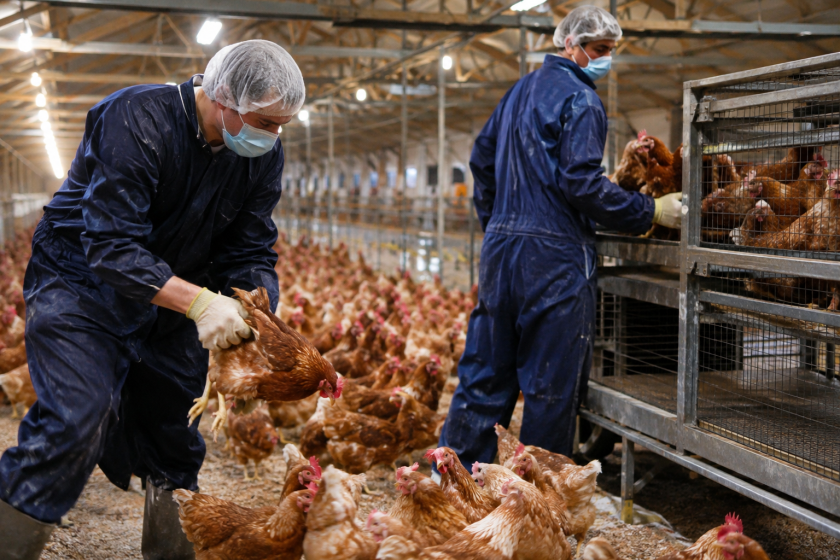
The Netherlands is preparing for a significant change in poultry collection practices, with stricter enforcement against lifting and carrying poultry by their legs scheduled to begin on January 1, 2027. The decision follows a July 2026 ruling by the country’s highest administrative court for trade and industry, which rejected an exemption that had allowed certain catching practices under specific conditions (1).
Under the enforcement measures, catching companies and poultry producers face financial penalties for violations. The penalty can reach €50 per bird lifted unlawfully by its legs, with a maximum of €60,000. Dutch authorities have confirmed that no additional transition period will be granted after the January deadline.
Poultry Producers Face Higher Collection Costs
The regulatory change is expected to affect catching operations, particularly in large laying-hen facilities where traditional inverted catching remains common.
According to calculations reported by the German agricultural publication top agrar, switching to upright catching for a flock of 35,000 hens could increase collection costs from approximately €8,100 to €17,100. The alternative method requires more workers and additional catching time, creating new financial pressures for producers (1).
The change also places greater responsibility on poultry farmers and catching companies to establish clear handling procedures and supervise collection operations.
Animal Welfare and Collection Efficiency in Focus
The regulatory development comes amid growing scientific attention to poultry handling before slaughter.
Research published in Poultry Science in 2024 found that upright catching reduced wing flapping and improved handling scores in end-of-lay hens compared with inverted catching (2).
A separate 2025 study involving 15 commercial broiler farms also identified welfare advantages associated with upright catching, including reduced wing flapping and improved catcher-bird interactions. However, the method required more labor and was more expensive than conventional catching (3).
Implications Beyond the Netherlands
Although the enforcement decision applies specifically to the Netherlands, it raises broader questions for international poultry producers as animal-welfare requirements increasingly influence catching, loading and transport practices.
The transition highlights a growing challenge for the poultry industry: improving bird welfare during collection while controlling labor requirements, operational costs and processing schedules.
References
(1) College van Beroep voor het bedrijfsleven (2026). Dutch administrative court ruling, ECLI:NL:CBB:2026:335. July 2026. Additional industry reporting: British Free Range Egg Producers Association (BFREPA), October 5, 2026.
(2) Delanglez, F. et al. (2024). Upright versus inverted catching and crating end-of-lay hens: a trade-off between animal welfare, ergonomic and financial concerns. Poultry Science, 103(10), 104118.
(3) Delanglez, F. et al. (2025). Comparing methods for catching and crating broiler chicken flocks: A trade-off between animal welfare, ergonomics and economics. Poultry Science, 104(2), 104704.