


Foodborne salmonellosis remains one of the most significant global public health challenges, with poultry and poultry products recognized as major reservoirs and transmission vehicles of Salmonella enterica.
Recent report from the World Health Organization highlighted non-typhoidal Salmonella as a leading cause of bacterial gastroenteritis worldwide, contributing substantially to disease burden, hospitalizations, and economic losses.
Contamination of chicken meat may occur at multiple stages along the value chain, including farms, slaughterhouses, processing environments, retail markets and at finished food preparation stage, facilitating pathogen persistence and cross-contamination.
Detection of Salmonella Agona increases significantly
Among circulating serovars, the detection of S. enterica serovar Agona (S. Agona) in broiler production systems and retail poultry has increased significantly, with this serovar implicated in both sporadic cases and outbreaks, underscoring the need of effective control strategies for poultry products.
In addition, S. Agona has emerged as an epidemiologically important serovar associated with both sporadic infections and international foodborne outbreaks. This serovar is frequently linked to poultry and poultry products and has demonstrated the ability to persist in production and processing environments, facilitating its dissemination along the food chain.
Although S. Agona is generally reported at lower prevalence compared to dominant serovars, it is consistently detected in broiler production systems and poultry-related samples, typically accounting for a small but recurrent proportion of isolates (generally <5%).
Moreover, S. Agona has been increasingly associated with the presence of antimicrobial and disinfectant resistance determinants, often linked to mobile genetic elements, which may facilitate their persistence and dissemination along the poultry production chain and further complicate effective control.
Phages for food safety applications
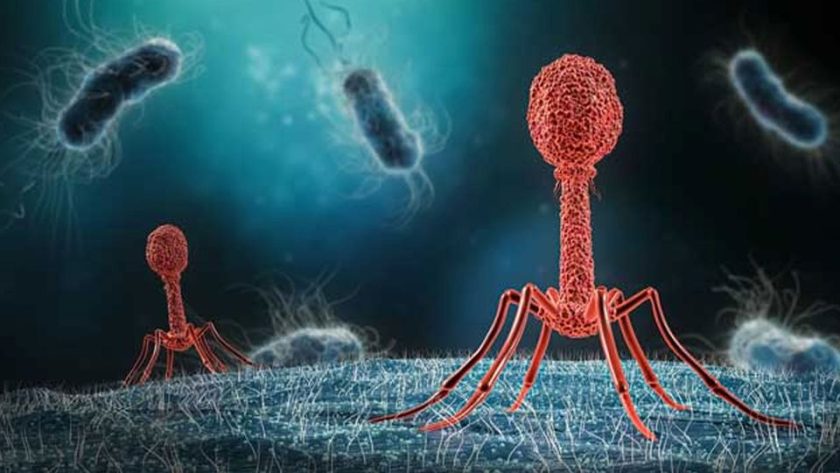
Bacteriophages (phages), viruses that specifically infect bacteria, have emerged as promising candidates for food safety applications.
Lytic phages exhibit several advantageous biological properties, including high host specificity, rapid adsorption and replication, self-amplification at the site of contamination, and efficient bacterial lysis.
Their targeted activity minimizes the disruption to beneficial microbiota, while their natural origin, biodegradability, and absence of chemical residues make them inherently eco-friendly.
Importantly, phages remain active under refrigerated storage and within complex food matrices, supporting their suitability for the post-harvest treatment of fresh poultry products.
Recent studies have demonstrated that phage application will significantly reduce bacterial loads on meat and fresh foods without compromising sensory quality, reinforcing their potential as sustainable biocontrol tools.
Study of Salmonella phage WP85
In a study by Wattana Pelyuntha of Thailand’s Walailak University together with her team from Thailand and Canada, Salmonella phage WP85 was comprehensively characterized to assess its potential as a biocontrol agent against S. Agona in chicken meat.
Broad lytic activity was observed against 57% of tested S. Agona isolates, and efficient propagation was achieved on susceptible hosts.
- Infection kinetics showed rapid adsorption (80% within 25 min), a short latent period (20 min), and a high burst size (134 particles per infected cell), indicating strong lytic capacity.
- Transmission electron microscopy (TEM) demonstrated that phage WP85 exhibits siphovirus-like morphology.
- Whole genome sequencing (WGS) identified a 109,049-bp linear double-stranded DNA genome comprising of 201 open reading frames and 21 tRNAs.
- Phylogenetic and comparative genomic analyses classified phage WP85 within the Tequintavirus genus and suggested that it represents a novel species.
- Structural modeling and docking of the receptor-binding protein supported a plausible host-recognition mechanism.
- High environmental robustness was demonstrated, with phage viability retained between 4 and 60 °C, pH 5–11, and up to 15% NaCl.
- Strong multiplicity-of-infection (MOI)-dependent growth suppression was observed in vitro, with sustained inhibition of bacterial turbidity at high MOIs.
- When applied to spiked chicken meat during refrigerated storage, phage WP85 significantly reduced S. Agona populations by up to 3.2 log CFU/mL (99.9%).
- Importantly, no significant changes were detected in proximate composition, lipid oxidation indices, or overall meat quality.
Collectively, the biological efficiency, genomic characterization, environmental stability, and practical decontamination efficacy demonstrated, established phage WP85 as a safe, stable, and effective candidate for postharvest poultry meat biocontrol and supports phage application as a sustainable, residue-free intervention to improve food safety within the poultry value chain.