


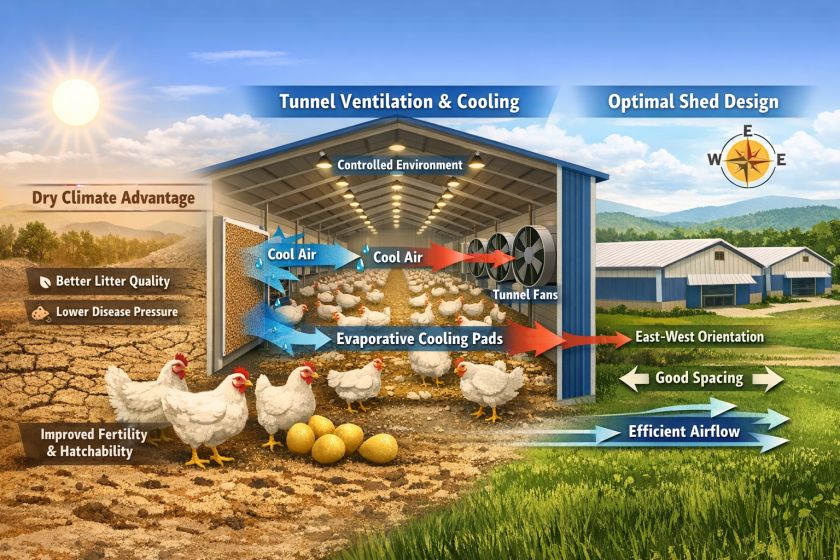
Across South Asia, broiler breeder farms rarely enjoy perfect climates. Yet many achieve consistent fertility and hatchability. Success depends less on weather itself than on how the environment is understood, chosen, and managed. Practical field insights combined with technical fundamentals provide a clear guide for site selection and environmental control.
Understanding the ideal climate
Breeder performance depends on a narrow comfort zone. Prolonged heat or high humidity directly reduce reproductive efficiency. Birds thrive when temperature and humidity remain stable, allowing energy to be directed toward reproduction rather than stress management. Farmers who monitor and adjust conditions daily often see stronger fertility outcomes.

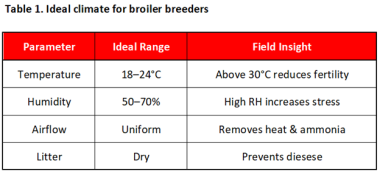
Ideal climate for broiler breeders
Why dry regions often perform better
Humidity often matters more than temperature. Dry regions help birds dissipate heat, lower disease pressure, and maintain better litter quality. Reduced moisture in the environment limits bacterial growth and improves air quality inside sheds. These factors support stronger reproductive outcomes and reduce the need for corrective interventions.

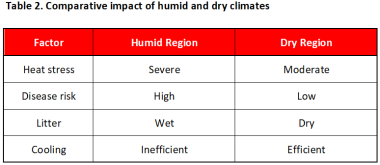
Why dry regions perform better
Engineering the shed environment
Modern breeder farms rely on tunnel ventilation and evaporative cooling. These systems create controlled airflow, lowering the effective temperature birds experience and improving comfort. When properly maintained, they stabilize the shed environment even during seasonal extremes. Farmers who invest in reliable systems often achieve more predictable hatchability rates.

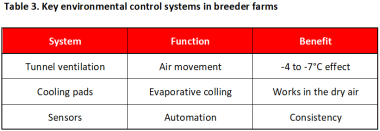
Environmental control systems
Shed design and layout
Proper orientation and spacing enhance ventilation efficiency. East–West alignment minimizes solar load, while proper spacing prevents airflow obstruction. Well-designed sheds maximize environmental control systems, ensuring airflow reaches all sections evenly. Attention to layout details often distinguishes farms with consistent performance from those struggling with uneven results.

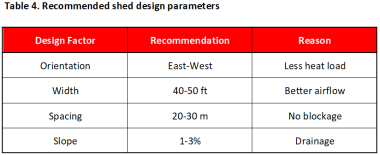
Shed design guidelines
The simple principle
Successful breeder farming rests on one principle: select a dry, well-ventilated site and engineer the shed environment. When these elements align, consistent performance follows despite external climate challenges. Farmers who respect this principle build resilience into their operations and secure long-term productivity.