


Southeast Asia’s poultry industry is set for another year of solid expansion in 2027, with the Philippines and Vietnam expected to post the region’s strongest production gains as consumers increasingly choose chicken as an affordable source of protein. Rabobank‘s Global Animal Protein Outlook 2027 report identifies poultry as the fastest-growing major animal protein category globally next year.
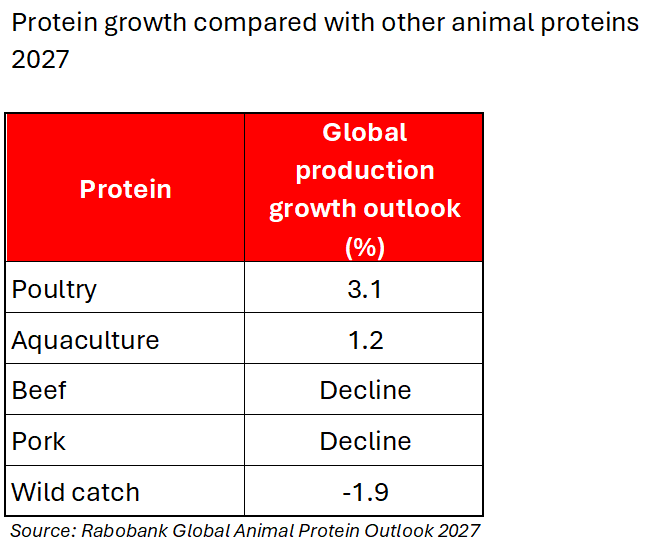
The report forecasts chicken production across the Asean-5 countries of Indonesia, Malaysia, the Philippines, Vietnam and Thailand to increase 3.7% in 2027, following growth of 3.6% in 2026. Globally, poultry production is expected to rise 3.1%, while beef and pork production are forecast to decline, further strengthening poultry’s position in the global protein market.
Growing consumer sensitivity to food prices remains a key theme underpinning the sector’s outlook. As inflation and cost-of-living pressures continue to influence household spending decisions, consumers are increasingly expected to favor lower-cost proteins such as chicken and eggs over beef, lamb and premium seafood products. The shift is helping support poultry demand across developed and emerging markets and is particularly evident in Asia.
Philippines and Vietnam emerge as growth leaders
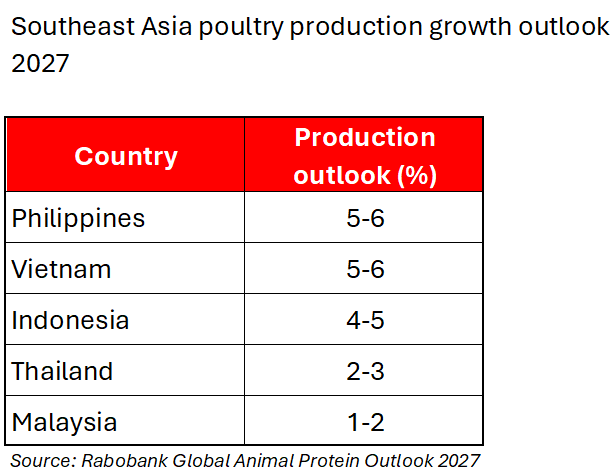
Within Southeast Asia, the Philippines and Vietnam are projected to lead poultry production growth, with output in both countries expected to increase by 5-6% in 2027. The growth reflects a continued shift in consumer preference toward chicken, which remains one of the most affordable animal proteins in both markets.
In the Philippines, poultry production is expected to continue expanding even as the domestic swine sector gradually recovers from African swine fever-related disruptions. Growth is expected to be concentrated in the broiler segment. While the swine sector continues to recover, full domestic supply restoration is expected to take time, supporting poultry’s position in the country’s protein market.
Vietnam is also expected to remain one of the region’s strongest poultry growth markets. Colored chicken still accounts for more than half of production, but white broilers continue to gain share. Rising demand for chicken continues to support production growth.
Other Southeast Asian producers are expected to follow different growth paths. Indonesia’s poultry sector is forecast to expand by 4-5%, supported by rising incomes and the government’s free school meals program. Thailand is expected to record growth of 2-3%, with exports continuing to play a central role in industry performance. Malaysia’s mature poultry market is projected to grow by 1-2%, reflecting slower expansion and increasing import competition.

China expands its regional influence
Beyond Southeast Asia, China is expected to remain a major driver of poultry growth and trade in Asia.
Poultry is expected to remain China’s leading source of animal protein growth in 2027, even as expansion moderates from recent gains. White-feathered broilers are expected to continue driving production growth, supported by demand from quick-service restaurants, convenience foods and health-conscious consumers.
China’s role in the global poultry trade is also expanding. The country became a net poultry exporter in 2025 and strengthened its position in selected international markets during 2026. Continued improvements in biosecurity, quality control and cost competitiveness are expected to support further export growth in 2027.
That shift is likely to have implications for exporters throughout the region. China’s transition from a net importer to a net exporter is expected to heighten competitive pressure on suppliers, including Thailand and Brazil, as competition for export markets intensifies.
Poultry leads global protein growth
The positive outlook for Asia’s poultry sector mirrors broader global trends highlighted in the report.
Among major animal protein categories, poultry is expected to deliver the largest production gains in 2027, outpacing aquaculture, while pork, beef, and wild-catch production are forecast to contract. Overall animal protein production growth is projected at just 0.3%, underscoring poultry’s increasingly important role in meeting future protein demand.
Chicken continues to gain share in household food spending as consumers seek affordable protein options. This trend is expected to support demand across major markets in 2027.

Costs and disease remain key challenges
Despite the favorable growth outlook, profitability remains a key concern for producers across the region.
Higher feed, energy and financing costs are expected to persist into 2027, creating additional pressure on margins. Producers will need to improve efficiency and take a disciplined approach to expansion. The report also cautions that keeping production growth aligned with market demand will be critical to avoiding oversupply and protecting profitability.
Animal health will remain another major factor shaping the industry’s performance. Highly pathogenic avian influenza and Newcastle disease continue to create uncertainty in poultry markets worldwide. However, improved biosecurity measures, more resilient supply chains and advances in vaccination strategies are expected to help reduce the scale of potential disruptions.
Overall, the report points to continued poultry expansion across Asia in 2027, led by Southeast Asia’s fastest-growing markets and China’s rising influence on regional production and trade. Against a backdrop of slowing growth in other animal protein categories, poultry is expected to remain one of the industry’s strongest-performing sectors in the year ahead.