


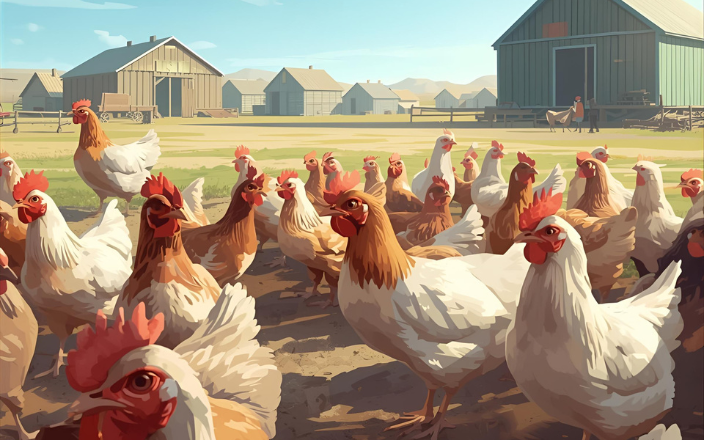
The Syrian poultry industry is sounding the alarm as it teeters on the edge of collapse. In September 2025, the government abandoned its import-substitution policy and lifted the ban on frozen chicken imports, a move that has dramatically reshaped the market. This decision, aimed at curbing rising food prices, has left local producers struggling to compete with cheaper imports, flooding the market.
Spiraling production costs
- According to Nizar Saad El-Din, head of the Central Poultry Committee at the Federation of Chambers of Agriculture, operational costs for Syrian poultry farms surged by 300% this year.
- The spike is attributed to soaring energy and feed prices, making domestic poultry significantly more expensive than imported alternatives.
- Current estimates show that producing 1,000 chickens weighing a total of 2.5 tonnes costs about $4,275—roughly $1.71 per kilogram.
Policy shift and market fallout
On September 23, the government authorized meat processors to import poultry, a decision reportedly influenced by lobbying from industrial players. While imports were intended for processing only, weak enforcement allowed large quantities of frozen chicken to leak into retail markets. This influx triggered a sharp decline in prices, placing nearly 15,000 poultry farmers at risk of bankruptcy. Farmers have criticized what they describe as erratic economic policies, arguing that the lack of control has devastated local production.
Smuggling and regulatory gaps
- Officials insist that imported poultry was meant for industrial use, not direct sale.
- However, former economic advisor Mazen Deirwan suggests that much of the foreign chicken now available in Syrian markets may have been smuggled.
- He advocates for full market liberalization, arguing that restrictive measures have failed and that the real solution lies in addressing high domestic production costs rather than imposing bans.
A difficult choice ahead
The Syrian government faces a stark dilemma: protect consumers from soaring food prices or safeguard a poultry industry vital to national food security and employment. Independent observers believe the recent policy shift was necessary to stabilize prices, but its unintended consequences could dismantle a sector already weakened by years of conflict and economic instability. Without decisive action to reduce production costs and improve oversight, the future of Syria’s poultry industry remains uncertain.
Sources: Available upon request