


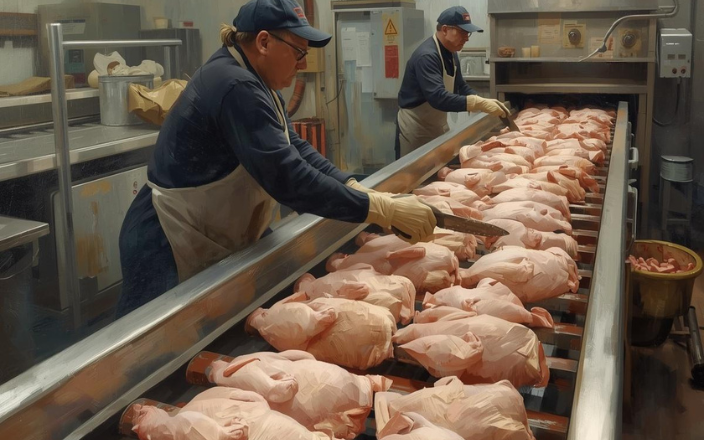
The poultry industry has undergone significant transformation in recent decades, driven by technological advancements in processing. While efficiency and food safety are often the primary goals, the relationship between technified processing and animal welfare has become a central topic of debate. Understanding this connection is essential for balancing productivity with ethical responsibility.
Technification in Poultry Processing
- Technified poultry processing refers to the use of automated systems, robotics, and advanced monitoring tools throughout the production chain.
- These technologies streamline slaughter, defeathering, chilling, and packaging, reducing human error and increasing consistency.
- Automated handling systems also minimize direct human contact with birds, which can reduce stress and injury during transport and slaughter.
Animal Welfare Considerations
Animal welfare in poultry production encompasses both the conditions in which birds are raised and the manner in which they are processed. Welfare concerns include minimizing pain, stress, and suffering during slaughter. Technified systems, when properly designed, can improve welfare outcomes by ensuring rapid stunning, precise cutting, and reduced handling. However, poorly calibrated or mismanaged technology can have the opposite effect, causing unnecessary distress.
Benefits of Technified Processing for Welfare
- Consistency in Stunning and Slaughter: Automated stunning systems ensure birds are rendered unconscious quickly and uniformly, reducing the risk of suffering.
- Reduced Human Handling: Less manual intervention lowers the chance of rough handling, which can cause bruising or stress.
- Monitoring and Data Collection: Sensors and digital tools allow continuous monitoring of welfare indicators, enabling corrective actions in real time.
- Improved Hygiene: Automated systems reduce contamination risks, indirectly benefiting bird welfare by lowering disease transmission before slaughter.
Challenges and Ethical Concerns
Despite its advantages, technification raises ethical questions. Large-scale automated systems may prioritize speed over welfare if not properly regulated. Mechanical failures or poor oversight can lead to welfare breaches, such as ineffective stunning or overcrowding during transport. Additionally, the industrial scale of technified processing often clashes with public expectations of humane treatment, fueling debates about sustainability and ethics.
Balancing Efficiency and Responsibility
The key challenge lies in balancing efficiency with responsibility. Technified processing must be paired with strict welfare standards, regular audits, and staff training. Integrating welfare-focused technologies—such as precision stunning and real-time monitoring—ensures that productivity does not come at the expense of humane treatment. Collaboration between industry, regulators, and animal welfare organizations is crucial to achieving this balance.
Conclusion
Technified poultry processing has the potential to enhance animal welfare when implemented responsibly. By reducing human error, ensuring consistency, and enabling better monitoring, technology can align efficiency with ethical standards. However, without careful oversight, the same systems risk undermining welfare. The future of poultry processing depends on integrating innovation with compassion, ensuring that technological progress serves both industry needs and animal well-being.
Sources: Available upon request