


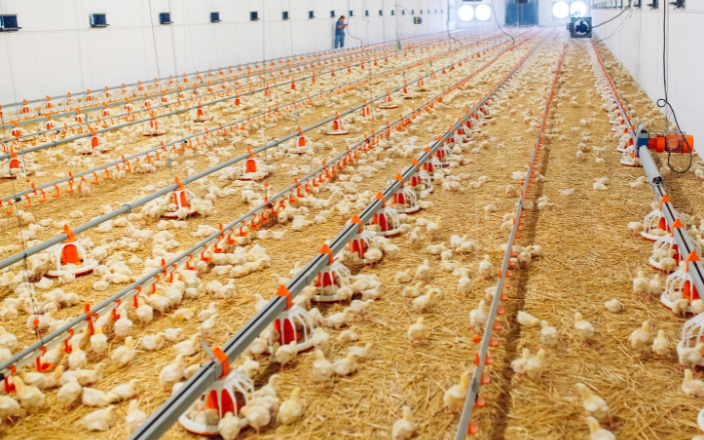
In poultry farming, ventilation serves as the cornerstone for the success of production cycles. It is not merely a matter of bringing fresh air in and expelling stale air out; rather, it constitutes a comprehensive system for regulating temperature, humidity, and the overall quality of the air within the farm environment.
- During intense summer production cycles, birds are susceptible to heat stress—a physiological state that occurs when the bird’s body is unable to dissipate excess internal heat.
- This is particularly critical given that birds lack sweat glands and rely instead on panting as their primary mechanism for self-cooling.
From Daytime Heat Stress to Nighttime Mortality Risk
Throughout the day, temperatures rise, peaking particularly during the afternoon hours. During this period, the bird expends significant energy attempting to shed this excess heat; consequently, its respiratory rate increases, and an imbalance in the body’s fluid and electrolyte levels ensues.
The true danger, one often overlooked by most poultry farmers, does not manifest solely during the daytime; rather, its cumulative effects surface during the night hours, often presenting as sudden and inexplicable mortality events. Although ambient temperatures typically become milder at night, the bird has already depleted its physiological reserves during the preceding daylight hours. As the bird enters its nocturnal resting phase, its adaptive capacity diminishes, particularly if this state coincides with elevated humidity levels or compromised ventilation efficiency. This confluence of factors can lead to vital organ failure and, ultimately, death.
Inadequate Ventilation During the Night
Field experience indicates that one of the most significant causes of nocturnal mortality is inadequate ventilation during the night.
- This often stems from a misconception among farmers that, since ambient temperatures have dropped after dark, they can safely reduce the number of operating fans or scale back ventilation rates.
- In reality, however, the thermal load remains accumulated—both within the bird’s body and throughout the farm facility.
- Therefore, modern ventilation philosophy emphasizes the necessity of maintaining continuous air movement at appropriate velocities—tailored to the birds’ age—and avoiding any reduction in the number of operating fans; this practice is essential not merely during the day, but at all times, to ensure the effective removal of latent heat generated within the farm.
It is recommended to utilize tunnel ventilation systems correctly, ensuring uniform air distribution to prevent the formation of “dead zones” or hot spots, which exacerbate heat stress and, consequently, increase mortality rates.
Adhering to practical operational protocols—such as efficiently running night-time ventilation without drastically reducing its intensity, implementing cooling programs during daylight hours, consistently providing clean, cool drinking water, and carefully regulating stocking density within the facility—serves to minimize the accumulation of latent heat.
In addition to these factors, studies have shown that the use of specific feed additives—such as salts and vitamins—helps support the physiological balance of the birds. Furthermore, conducting regular maintenance on fans and cooling systems ensures optimal operational efficiency and prevents sudden mechanical failures.
Conclusion
In conclusion, the key to minimizing summer mortality—particularly during the night—lies not solely in combating daytime heat, but rather in understanding and properly managing the phenomenon of cumulative heat stress, with a specific focus on the nocturnal period.
- Well-planned and continuous ventilation stands as the decisive factor that distinguishes a successful production season from a failed one.
Sources: Available upon request