


The Role of Gene Editing in Breeding Resilient Poultry for Planetary Health
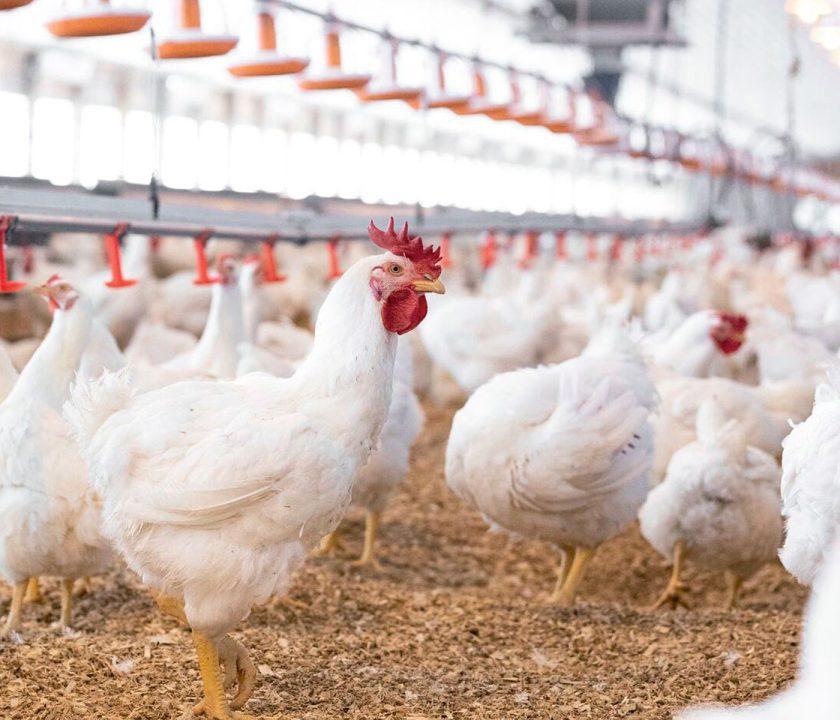
Poultry is one of the most important pillars of the global food system and food security.
- Chickens, ducks, turkeys, and other fowl provide affordable, readily available protein in the form of both meat and eggs.
- The industry is rapidly growing as the demand is increasing due to rising income, growing population and rapid urbanization.
According to USDA’s Economic Research Services (2024), Asia is the largest importer of chicken meat with 3.4 million tons in 2022.
Poultry production is also more environmentally efficient than livestock farming, requiring less feed and land to produce the same amount of protein.
- Yet the industry is far from free of challenges especially when it comes to environmental sustainability.
- It faces recurring disease outbreaks, the threat of zoonotic diseases, pollution from farms and slaughterhouses, and the environmental footprint of feed production.
- The unregulated use of antibiotics and growth promoters adds another layer of concern, fueling antibiotic resistance and contaminating waterways.

Addressing these challenges calls for a multi-pronged approach, from automation and Artificial Intelligence (AI) for real-time monitoring to better farm management practices.
- But at the heart of any long-term solution lies one fundamental requirement: an excellent breeding program.
- We need poultry breeds that are more resistant to diseases, have better feed conversion efficiency, and grow faster without compromising welfare or safety.
This is where gene editing can be a game-changer. By enabling precise, targeted changes to an animal’s genetic makeup, gene editing offers the possibility of developing poultry that are hardier, healthier, improved feed conversion rate and better suited for a changing climate and a resource-constrained planet.
CURRENT CHALLENGES IN POULTRY INDUSTRY
Environmental footprints:
- While the carbon emissions from poultry are lower than those from livestock, they still pose an environmental concern, with about 6.0 kg CO2-equivalent released for every kilogram of meat.
- Waterways are also affected, polluted by nutrient runoffs and pathogens.
- There is also an indirect environmental cost linked to poultry through feed production, particularly from corn and soybean farming. Globally, about 42% of corn and 37% of soybean harvests are channeled into poultry feed.
- Their cultivation brings its own environmental footprint in the form of greenhouse gas emissions, water pollution, and land degradation.
Heavy use of fertilizers, pesticides, herbicides, and fossil fuels are major contributing factors.
Diseases:
- Just like humans, chickens are vulnerable to both infectious and non-infectious diseases. Among the most common infectious threats are avian influenza and Newcastle disease.
- Highly pathogenic avian influenza can wipe out an entire flock, with mortality reaching 100%. It can also spill over to wild bird populations and become a public health concern.
- Similarly, highly virulent Newcastle disease virus can cause up to 100% mortality in poultry. Even when not fatal, it affects egg production and reduces egg quality.
- Outbreaks of these diseases lead to significant economic losses, running into billions globally, due to culling, trade restrictions, and reduced productivity.
HOW CAN BIOTECHNOLOGY ADDRESS THESE CHALLENGES
- Biotechnology offers powerful tools to tackle the above challenges while supporting planetary health.
- These innovations enhance disease resistance and management, improve growth rates and feed efficiency through genetic improvement, and drive the development of vaccines and diagnostic kits.
- They also help reduce the environmental footprint of feed crop production and boost nutrient digestibility and utilization in poultry.
- This, in turn, lowers feed costs and waste through the use of genetically modified (GM) and gene-edited (GEd) corn and soybean.
GM corn and soybeans were first approved for human consumption in the US in 1994, with cultivation beginning in 1996. Adoption expanded steadily, and by 2019, according to the International Service for the Acquisition of Agribiotech Applications (ISAAA), these two crops became the most widely adopted biotech crops in the world.
- Soybeans occupied 91.9 million hectares and corn 60.9 million hectares, accounting for 48% and 32% respectively of the global biotech crop area.
- The adoption rate for biotech soybeans reached 74% of the total global soybean area, while for corn it was 31%.
An environmental study by Brookes and Barfoot (1996-2018) found that GM crops conserved biodiversity by saving 231 million hectares of land, prevented 776 million kg of pesticides from entering the environment, and reduced CO₂ emissions by 23 billion kg, equivalent to taking 15.3 million cars off the road for one year.

THE NEXT WAVE OF BIOTECHNOLOGY: GENE EDITING
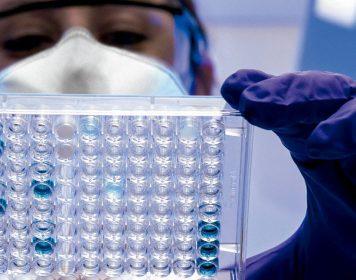
Gene editing (GEd) is a form of genetic modification (GM), but it differs from conventional GM technology in a fundamental way. While GM typically involves inserting foreign DNA into an organism, resulting in more pronounced genetic changes, GEd makes precise, targeted alterations to the organism’s existing genetic code, often mimicking natural mutations.
- The most widely used GEd tool, CRISPRCas9, can accurately target and modify specific locations in the DNA.
- Because gene editing can produce changes that closely resemble natural phenomena, its regulatory process has been eased in many countries, especially for those that do not involve insertion of foreign genes.
- The precision and predictability of technologies like CRISPR-Cas9 have led some nations to exempt certain applications from regulation altogether, while others are moving towards more relaxed frameworks.
- This has been a big advantage to scientists.
Here are the applications of GEd in poultry industry and their benefits:
Environmentally sustainable feed production:
- Gene edited corn is already approved in China with herbicide and insect-resistant traits with 5-year biosafety certificates.
- The varieties were developed by Origin Biotech and cultivation is expected to begin in 1-2 years. Like GM crops, GEd crops are expected to lower environmental footprints.
Animal welfare
- In layer hen farming, male chicks are usually culled shortly after hatching as they do not lay eggs and are unsuitable for meat production, raising both ethical and environmental concerns. This practice wastes resources used in hatching and contributes to unnecessary environmental impact.
- Gene editing offers a potential solution by enabling sex determination before incubation, allowing only female chicks to be hatched, thereby reducing waste and eliminating the need for mass culling.
Allergen-free eggs
- In Japan, chicken egg allergy is the most common food allergy, triggered when the immune system’s IgE antibodies react to egg proteins. Of these allergens, ovomucoid (OVM) is particularly challenging as it remains stable even after heat treatment.
- Using gene editing, PtBio is developing OVM-free, allergy-reduced eggs to offer a safer option for consumers.
Chicken resistant to bird flu:
- The Roslin Institute in the UK is exploring gene editing to develop influenza-resistant chickens. By altering chicken DNA to target a molecule the influenza virus needs for replication, scientists have produced birds with partial resistance to bird flu.
- While full resistance has yet to be achieved, this work points towards creating poultry less susceptible to avian influenza, potentially reducing outbreak risks and their impact on both animal and human health.
CONCLUSION
- Gene editing holds immense potential to transform poultry breeding in ways that align with the principles of planetary health.
- By creating disease-resistant, environmentally efficient, and welfare-friendly poultry, these innovations address not only food security but also the interconnected health of people, animals, and ecosystems.
- As the technology advances and regulatory landscapes evolve, gene editing could become a cornerstone of sustainable poultry production, helping to feed a growing population while safeguarding the planet’s resources for future generations.