


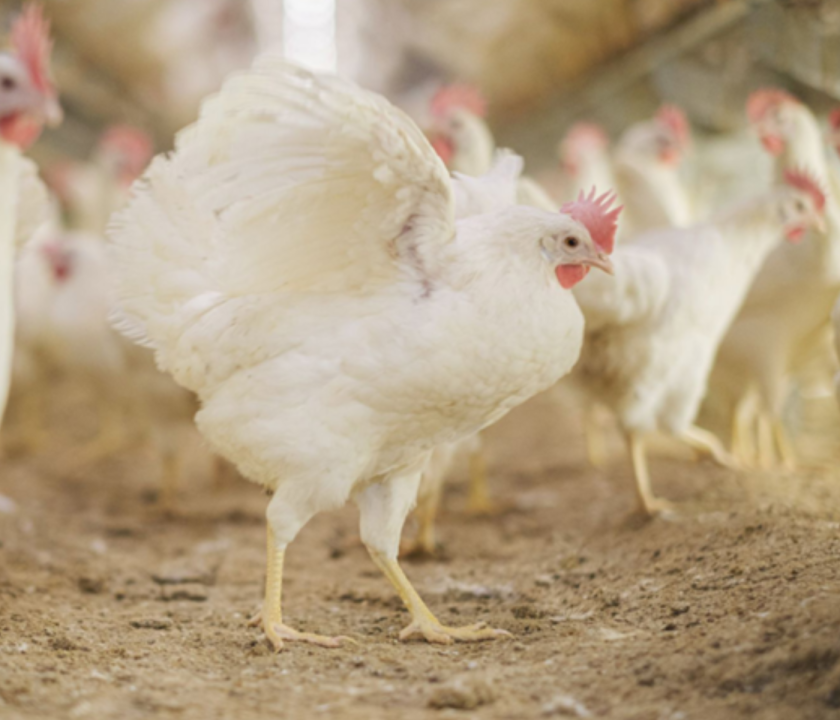
Consistent, proactive management during this phase is the foundation for a productive and well-adapted flock.
The transfer period is one of the most critical (and stressful) events in a bird’s life. How well it is managed directly impacts flock welfare, productivity, and longterm performance. For cage-free systems, this stage requires extra attention to detail.
The transfer process can be divided into three key stages:
- End of Rearing
- Transfer and Placement
- First Weeks Post-Transfer
Success depends on planning and execution at every step.
REPARING PULLETS FOR TRANSFER: KEY PRIORITIES AT THE END OF REARING
As pullets approach transfer age, achieving target body weight and uniformity is essential for proper physiological development and readiness for the laying phase.
Careful attention to stocking density is critical-overcrowding limits movement and access to feed and water, especially in warm climates. Conditions can shift quickly from adequate space to overcrowding, so proactive management is key.
Pullets should be fully familiar with the rearing system, confidently locating feed, water, and perches. This ensures a smoother adjustment to the laying environment. Lighting programs in this stage:
- For brown birds in aviary systems, a controlled dimming period of 30–45 minutes maximum—starting with f loor lights fading first—encourages roosting on system furniture, replicating conditions in the lay house.
- White birds generally adapt more easily, but avoid excessive crowding on upper levels.
Throughout the transfer phase, daylength must never decrease. Maintain controlled lighting to prevent premature maturity. In open-sided housing, minimize light ingress and monitor intensity closely, as excessive brightness can trigger behavioral issues.
Strong communication between rearing and laying farms is vital. Share details on lighting programs, body weight trends, health status, and vaccination reactions to allow targeted strategies for a smooth transition.
In the days before transfer:
- Avoid feed and water restrictions, particularly in hot climates.
- Night loading and transport can help reduce stress.
- Pullets typically receive at least one inactivated intramuscular vaccine during this period—ensure proper storage, needle hygiene, temperature control, and injection technique. For cage-free systems, breast injections are preferred to minimize inflammation and mobility issues.
Finally, timing matters: transferring too early risks underdeveloped birds, while too late delays onset of lay and reduces performance. The optimal age is generally around 16 weeks.
TRANSFER AND PLACEMENT: MANAGING A SMOOTH TRANSITION
The primary goal during transfer is minimizing stress and disruption. Handle birds gently and avoid prolonged feed and water withdrawal. Once placed in the lay system, the first priority is ensuring birds quickly locate water, followed by feed. Because pullets can lose up to 10% of body weight during transfer, rapid recovery is critical. Timely hydration and feed intake are key to recovering that bodyweight loss.
Do not rely on assumptions; monitor closely:
- Check feed and water intake, crop fill, and environmental conditions several times daily.
- Encourage birds to explore the system and prevent overcrowding to ensure even distribution.
- Maintain good airflow and stable temperatures to support adaptation.
For the first 1–2 days, keep nest boxes closed and guide birds to settle on the system at night rather than on the floor in slatted floor and aviary systems. Lighting should be bright enough to help birds find resources and can be gradually increased to help birds adapt in the first few days, starting at a level higher than in rear.

FIRST WEEKS AFTER TRANSFER: SETTING THE FLOCK UP FOR SUCCESS
The weeks following placement are critical for establishing long-term performance. Daily monitoring of feed and water intake is essential—any drop should be treated as a warning sign. Interruptions during sexual development can have lasting negative effects on production.
Key management steps:
- Adjust feeding programs to match increasing intake. This may include adding extra feedings or increasing feed depth to ensure birds have constant access.
- Open nest boxes before the first eggs appear to encourage proper nesting behavior.
- Remove floor and system eggs promptly. Delays can lead to persistent problems that are difficult to correct later.
