


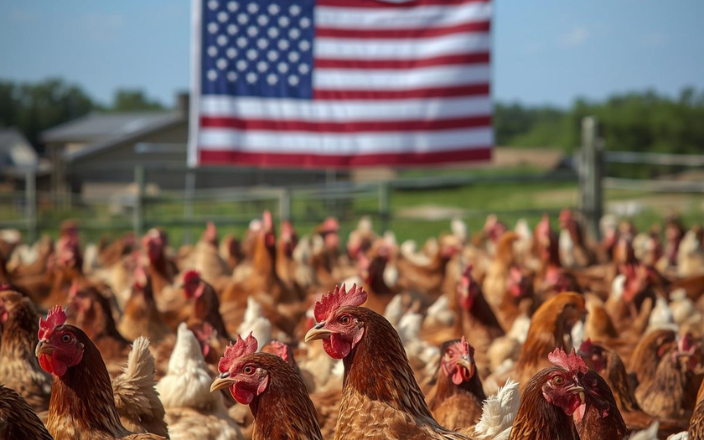
At the beginning of 2026, the United States is confronting a serious outbreak of highly pathogenic avian influenza (HPAI), impacting more than 70,000 birds across multiple states.
Rising numbers in poultry farms
According to the U.S. Department of Agriculture’s Animal and Plant Health Inspection Service (APHIS), the first cases of bird flu in 2026 have already afflicted approximately 76,210 birds in just the first six days of the year—adding to about 880,000 birds affected over the previous month. Major outbreaks have been recorded in:
- Butte County, California: 34,600 game birds
- Anderson County, Kansas: 15,700 game birds
- Sampson County, North Carolina: 14,000 turkeys
- Texas County, Missouri: 6,000 poultry
- Nemaha County, Kansas: 4,600 game birds
These early-year figures exceed 70,000 birds, triggering significant economic and animal welfare concerns.
Spread among wild birds
The virus is not confined to commercial operations. APHIS surveillance indicates that wild birds—including migratory waterfowl and scavengers—are also infected, often without showing symptoms, acting as stealthy carriers across regions. Notable mass die-offs were reported in late 2025, including around 200 Canada geese in Iowa and over ten swans in Orlando, Florida.
Surveillance and response efforts
APHIS emphasizes continuous coordination with state animal health authorities to ramp up surveillance across commercial farms, backyard flocks, and wildlife populations. The U.S. Fish and Wildlife Service also supports monitoring efforts on public lands by:
- Testing dead or sick wild birds
- Enforcing biosecurity
- Enhancing early detection protocols
These proactive measures aim to contain the outbreak and prevent viral spillover.
Economic and industry implications
Since 2022, HPAI has devastated the U.S. poultry industry, with losses nearing 185 million birds raised for food. The egg-laying sector has been hardest hit, accounting for roughly 75% of the total losses, while turkeys account for 11% and broiler chickens approximately 8%.
This persistent virus circulation strains USDA response capabilities and drives up indemnity payments to farmers. Total expenditures from 2022 to 2025 have already reached nearly $1.8 billion.
Challenges ahead: biosecurity and vaccination debates
- Authorities continue to enforce strict biosecurity measures—including culling infected flocks and disinfecting premises—but recent analyses suggest that these efforts may not be enough.
- The virus can spread via wind or water, making containment increasingly difficult.
- Debate continues over expanding vaccination programs.
- Although USDA-licensed vaccines exist, federal concerns about trade restrictions have limited their use so far.
The road forward
With over 70,000 birds already impacted in early 2026 and widespread detection in wild populations, the United States faces mounting challenges. Coordinated surveillance, biosecurity, and possibly vaccination campaigns will be critical as the avian influenza crisis continues into the new year.
Sources: Available upon request