


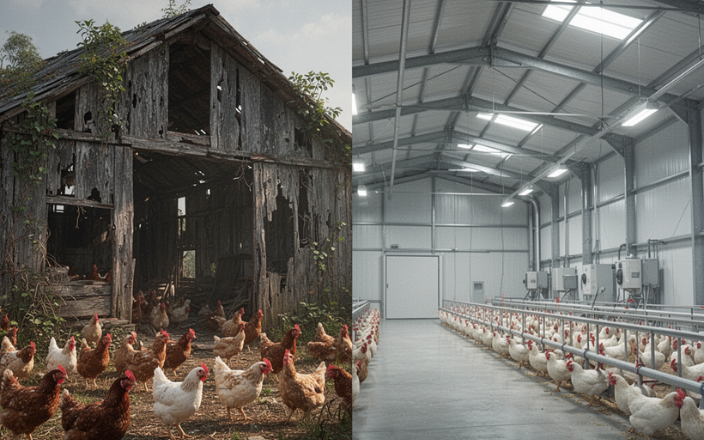
The UK egg sector is facing mounting pressure as ageing layer sheds dominate production capacity while new-build projects have slowed sharply since 2020. This infrastructure gap threatens efficiency, biosecurity, and long-term sustainability.
Ageing infrastructure: a growing concern
- Survey findings: The National Farmers’ Union (NFU) conducted the first UK-wide layer housing survey in 2025, covering 1,271 sheds with capacity for 23 million birds. Results revealed that much of the infrastructure is ageing, with many sheds built decades ago.
- Peak construction period: Between 2016–2020, the sector saw its busiest phase, with 206 sheds built, adding space for 3.45 million hens. Since then, activity has slowed dramatically.
- Dependency risk: Heavy reliance on older sheds increases vulnerability to disease outbreaks, higher maintenance costs, and reduced efficiency compared to modern facilities.
Slowdown in new builds
- Post-2020 decline: The pace of new construction has dropped significantly, with few projects initiated after 2020.
- Key barriers:
- Supply chain disruptions: Rising costs and delays in materials have discouraged investment.
- Planning challenges: Complex approval processes and local opposition have slowed development.
- Economic uncertainty: Volatile egg prices and rising input costs reduce confidence among producers.
Regional and sectoral impact
- Layer sheds: The majority of capacity is concentrated in older layer sheds, many requiring refurbishment.
- Pullet rearing and breeding sheds: These segments also show signs of stagnation, with limited new investment.
- Regional variation: Some areas report more modern facilities, but overall, the national picture is one of ageing infrastructure and limited renewal.
Industry voices
- NFU Poultry Board Chair Will Raw emphasized that the sector needs “the right tools and confidence to invest,” warning that the slowdown is a “warning sign we cannot ignore.”
- Producers highlight the need for government support, streamlined planning, and financial incentives to encourage modernization.
Risks and challenges ahead
- Biosecurity: Older sheds may not meet modern standards, increasing disease risks.
- Sustainability: Energy efficiency and environmental compliance are harder to achieve in outdated buildings.
- Competitiveness: Without investment, UK producers risk falling behind European counterparts who are upgrading facilities more aggressively.
Outlook
The UK egg sector stands at a crossroads. Without renewed investment in modern sheds, the industry risks declining productivity and resilience. Policymakers, supply chain partners, and producers must collaborate to overcome planning and financial hurdles. The next five years will be critical in determining whether the sector modernizes or continues to rely on ageing infrastructure.
Sources: Available upon request