


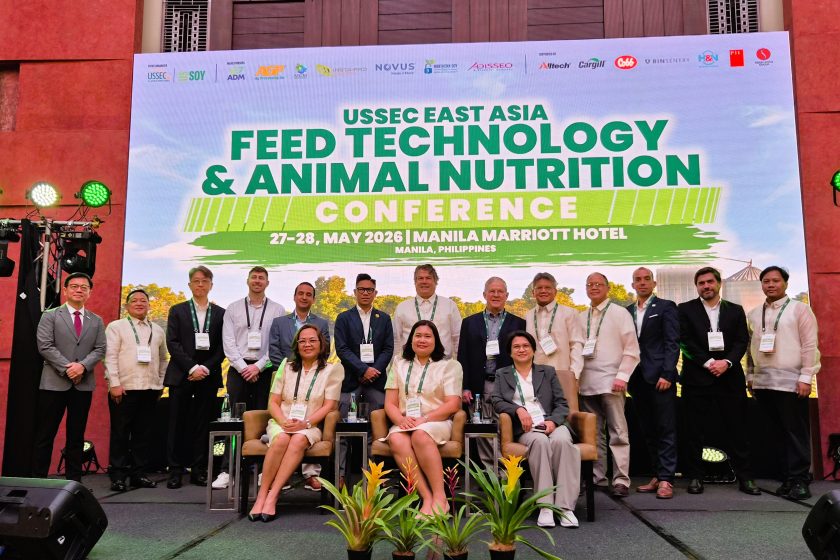
The US Soybean Export Council (USSEC) celebrated its 30th year in the Philippines with the East Asia Feed Technology and Animal Nutrition Conference (FTANC) 2026, held May 27–28 at the Manila Marriott Hotel. The event gathered industry leaders, technical experts, and marketing professionals from across Southeast and East Asia, reaffirming USSEC’s role in advancing sustainable animal nutrition and food security.
Across two days of technical sessions and marketing showcases, FTANC highlighted continuity, adaptation, and resilience, while underscoring the Philippines’ growing importance in global soybean trade.
Continuity and global collaboration
Timothy Loh, USSEC Regional Director for Southeast Asia, opened the conference by emphasizing sustainability, collaboration, and global engagement.

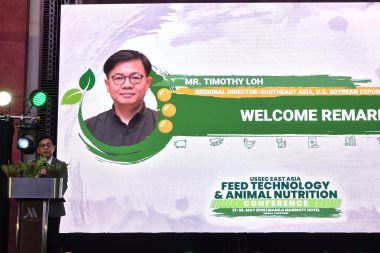
Timothy Loh
Reflecting on FTANC’s 30th anniversary, he acknowledged the decades of backing from partners and institutions, noting that these initiatives have helped farmers and industries adapt.
He noted that programs built over three decades must evolve with science and societal needs to remain effective. Mr Loh stressed that structured approaches, data, and international cooperation are essential to resilience, ensuring long‑term success through science and sustainability.
Soybeans as cornerstone of feed security
Carlos Salinas, USSEC Executive Director for East Asia, underscored the critical role of soybeans in feed and protein supply chains amid market volatility. He explained that the industry has moved beyond simply measuring protein content, stressing that what matters now is digestibility, energy consistency, feed efficiency, and profitability.
“What really matters is digesting more analysis, energy consistency, and performance,” he noted, underscoring the shift toward deeper evaluation of soybean meal quality.
Mr Salinas described the Philippines‑US soybean partnership as one of the most valuable in the region, noting that US soybeans are prized for their nutritional consistency and reliable performance.
He cautioned that rising prices reflect not just cost but availability and risk management, urging industry players to adapt strategies while maintaining trust in US supply.
Efficiency and modernization drive growth
Gustavo Sa Ribeiro, Regional Technical Manager at Alltech, highlighted Asia and Southeast Asia as the fastest moving regions in global protein markets.
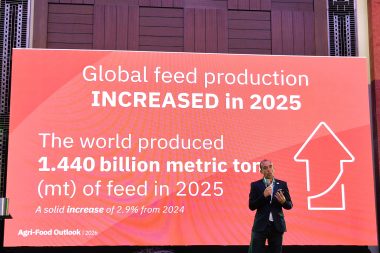
Gustavo Sa Ribeiro
Growth, he explained, is driven by efficiency gains and modernization rather than farm expansion, with China’s recovery from African swine fever and Southeast Asia’s rebound as key drivers. Because disease outbreaks remain a risk, the animal protein sector requires stronger biosecurity stronger biosecurity and supply chain resilience. These will determine whether the region sustains its rapid growth trajectory.
Philippines as a strategic soybean market
Dr Benito Oliveros, USSEC Country Representative for the Philippines, highlighted the nation’s rising role in global soybean trade. Data from the US Department of Agriculture show that the Philippine soybean meal imports now surpass 2.5 million tons annually, with forecasts climbing to 3.3 million.
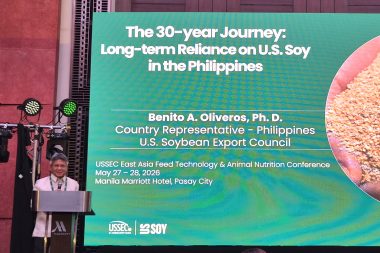
Benito Oliveros
He said surveys confirmed soybeans as the backbone of feed supply, and pointed out that Philippine buyers continue to favor US soybean meal due to quality, logistics, and cost efficiency.
Dr Oliveros stressed that efficiency and sustainability will be critical as demand for protein rises across Southeast Asia.
Procurement strategies and long‑term value
Glen Ibañez, Vice President at Univet Nutrition and Animal Healthcare Co, warned against chasing the cheapest inputs. “You are not buying commodities—you are buying performance,” he said, stressing the need to prioritize value and long‑term outcomes.
Mr Ibañez highlighted risk management as a recurring theme, pointing to contamination, inconsistent protein levels, and poor supplier transparency as critical threats. He urged stronger supplier partnerships and cross‑functional alignment, stressing that procurement decisions ripple across nutrition, manufacturing, and supply chains.
Echoing this, Tom D’Alfonso, USSEC Global Technical Director for Animal Utilization, explained that raw material variability directly affects feed consistency and farm profitability. He cautioned that focusing only on price can undermine long‑term gains, reinforcing the need to align procurement with animal performance.
The 4D’s and soybean production
Mr D’Alfonso also discussed the 4D’s shaping soybean production: deforestation, drying, damage, and digestibility. He explained how each factor undermines crop quality and nutrient consistency, noting Brazil’s rapid expansion has leaned heavily on deforestation and land‑use change.
Mechanical drying often leaves beans either too wet or overheated, reducing nutritional value. Transport and handling add further damage, while variability in digestibility affects protein quality. Comparative data showed US soybeans generally suffer less damage and maintain higher digestibility than Brazilian crops. Tackling the 4D’s, he urged, is essential for reliable feed formulation and sustainable supply chains.
Beyond crude protein
Robert Swick, Consultant at Northern Soy Marketing, addressed animal nutrition, stressing that amino acid digestibility, not crude protein, determines feed effectiveness. He noted US soy consistently delivers higher digestible lysine compared to other origins.
Dr Swick advocated lower crude protein diets balanced with digestible amino acids, citing benefits for animal welfare such as reduced nitrogen excretion, lower water intake, and drier litter conditions.
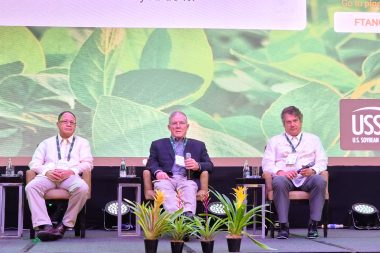
from left: Glen Ibañez, Robert Swick, and Tom D’Alfonso
Breakout sessions and innovations
Day 1 featured breakout sessions on digital nutrition and scientific innovations. In addition, several technical and marketing presentations during plenary sessions on both days of the event. These provided practical insights into emerging technologies and reinforced FTANC’s role as a platform for knowledge exchange.
The conference closed with a clear message: soybeans are not merely commodities but performance drivers in sustainable feed formulation. Value, consistency, and trust in US supply remain the cornerstones of Asia’s protein future.