


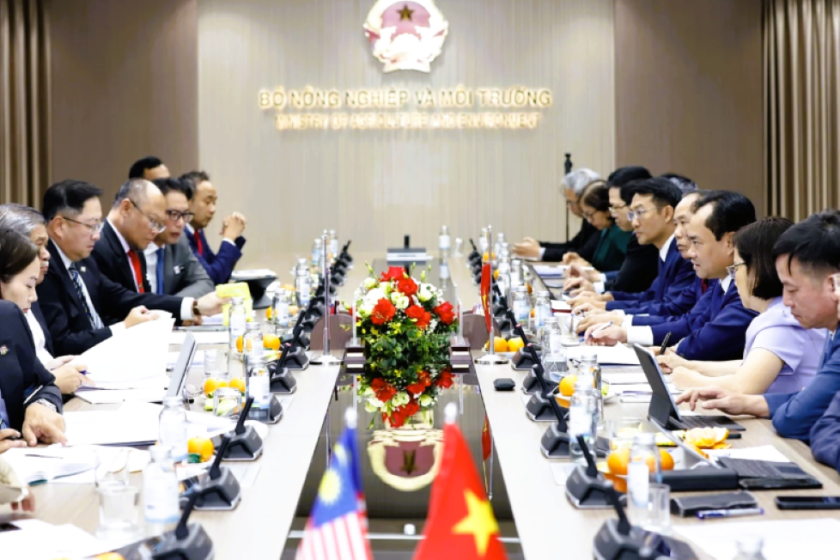
Vietnam and Malaysia signed a new Memorandum of Understanding to strengthen agricultural cooperation, focusing on rice, poultry, and processed products, according to a report from VnEconomy.
Building stronger agricultural cooperation
On April 23, Vietnam’s Minister of Agriculture and Environment Trinh Viet Hung welcomed Malaysian Minister of Agriculture and Food Security Datuk Seri Haji Mohamad Bin Sabu in Hanoi.
During the meeting, both ministers signed an MoU designed to expand collaboration in agriculture, fisheries, and food security. The agreement highlights equality, mutual respect, and shared responsibility, laying the foundation for more resilient supply chains.
Malaysia expressed its intention to resume exports of processed poultry products to Vietnam, which have been suspended since 2024. Priority items include:
- Pasteurized liquid eggs
- Frozen duck meat
- Bird’s nests
- Animal feed
- Pet food
Expanding market opportunities
Mr Hung emphasized that Malaysia must submit technical dossiers for import risk analysis to comply with Vietnamese regulations. He encouraged close coordination with Vietnamese agencies to ensure quarantine and food safety procedures are completed efficiently.
Vietnam, in turn, proposed that Malaysia open its market to Vietnamese poultry, milk, and dairy products. Mr Hung noted these products already meet strict standards in Japan, Russia, and Hong Kong, underscoring their readiness for wider regional access.
Rice trade remains central
Rice continues to anchor bilateral trade. Minister Mohamad Bin Sabu described Vietnam as a vital partner in securing Malaysia’s food supply.
In 2025, Vietnam exported more than 457,000 tons of rice to Malaysia, representing 40% of Malaysia’s total imports. Vietnamese rice enjoys strong consumer preference in Malaysia, and both sides agreed to stabilize prices while maintaining consistent export volumes.
Investing in technology and resilience
Malaysia also expressed interest in private investment and smart agriculture technologies. The delegation sought to learn from Vietnam’s experience in large-scale agricultural production, hoping to modernize its own systems.
Both countries agreed that technology transfer and joint ventures could strengthen resilience against global supply chain disruptions.
Ensuring consumer benefits and food safety
Vietnam stressed the importance of strict compliance with food safety and quarantine standards to protect consumers.
Malaysia acknowledged that transparent procedures are essential for building trust and ensuring smooth market access.
Both sides agreed that consumer protection must remain central to agricultural cooperation.
Aligning with regional goals
The MoU reflects broader Asean objectives of food security and sustainable trade.
Vietnam and Malaysia pledged to align their cooperation with regional frameworks, ensuring benefits for farmers and consumers alike.
Both ministers emphasized that stronger supply chains will help stabilize markets and safeguard vulnerable communities.