


The Vietnam Poultry Association (VPA) has called reforms to address shortcomings in tax policies and customs procedures, arguing that current regulations are increasing costs across the livestock sector.
According to the association, these challenges affect everything from feed production and raw material imports to tax compliance. Businesses also face the risk of retroactive tax assessments and penalties, adding further uncertainty to their operations.
VAT and import taxes increase financial pressure
VPA Chairman Nguyen Thanh Son recently outlined the industry’s concerns in a letter to the Vietnam Chamber of Commerce and Industry (VCCI).

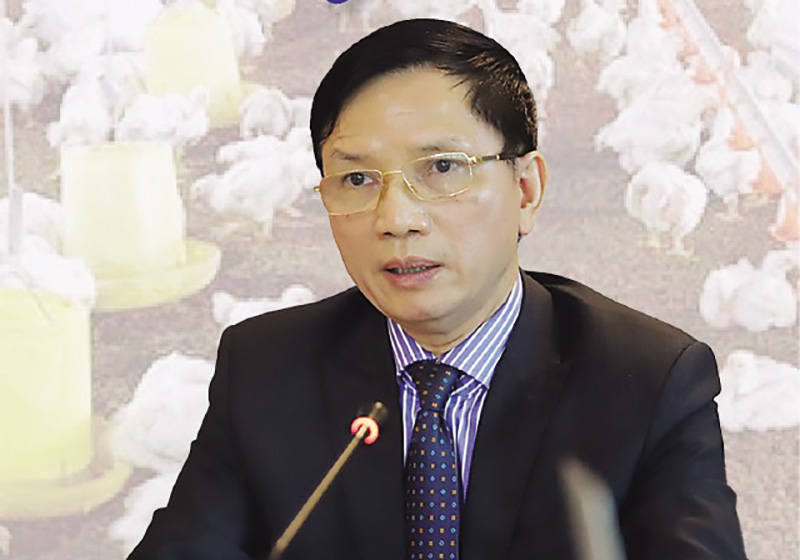
VPA Chairman Nguyen Thanh Son (Photo credit: VPA)
The association said that raw material prices, exchange rates, and international freight rates remain highly volatile. Against this backdrop, policy-related costs make it more difficult for companies to secure supplies and maintain their competitiveness.
One of the industry’s primary concerns is value-added tax (VAT). Commercial animal feed is classified as a product not subject to VAT, meaning domestic manufacturers cannot deduct or claim refunds on input VAT paid for electricity, water, packaging, machinery, and related services.
As a result, those costs become part of production expenses, raising the price of domestically produced feed by an estimated 3-5%. According to VPA, this puts local manufacturers at a disadvantage compared with imported products.
The association also highlighted the financial burden associated with importing feed ingredients. Vietnam continues to depend on imports for 70-80% of several key raw materials, including soybean meal, maize, and wheat.
Because taxes must be paid when goods clear customs, significant amounts of working capital become tied up in the import process. This can limit companies’ ability to build inventories when market conditions are favorable.
To ease the burden, VPA proposed reinstating a 30-day tax payment grace period for feed ingredients and veterinary products. The measure would apply to companies with strong compliance records, including those holding Authorized Economic Operator (AEO) status.
The association also raised concerns about the treatment of losses resulting from disease outbreaks and natural disasters. During such events, producers often must cull animals or reduce flock sizes quickly. However, documentation requirements do not always reflect the actual conditions faced during emergencies.
Without greater flexibility in proving these losses, companies can struggle to account for expenses and complete their tax filings.
HS code disputes create uncertainty
Beyond tax policy, VPA expressed concern over the inconsistent application of Harmonized System (HS) codes for imported feed ingredients and additives.
Products such as lysine, methionine, vitamins, and probiotics may be classified differently depending on interpretation. In some cases, they are treated as animal feed preparations. In others, they are categorized as pure chemical products.
This inconsistency can result in varying tax rates, higher import costs, and increased compliance risks. The uncertainty also leaves businesses vulnerable to future disputes.
Some companies companies have imported products using classifications supported by technical documents and accepted by customs authorities at the time of clearance. However, subsequent inspections have led to revised classifications, including for shipments imported years earlier.
According to VPA, companies can face back-tax claims covering up to five years, as well as administrative penalties, even without any fraud, significantly increasing legal risk.
To address the issue, the group called for stronger advance HS code ruling mechanisms and more consistent guidance nationwide.
It also argued that when products have been fully declared, inspected, and cleared, any later change in regulatory interpretation should apply only to future imports. This would reduce the risk of retroactive tax claims and penalties where no intentional violations occurred.
Customs procedures add costs and delays
For commodities with frequently changing market prices, including maize and soybeans, customs authorities may conduct import value consultations that can take five to 10 days. During that period, importers must maintain tax guarantees while incurring additional warehousing and storage costs.
VPA further called for a review of certificate of origin (C/O) verification procedures. It said minor errors involving spelling, punctuation, or formatting can sometimes result in documents being rejected.
When that happens, companies may lose access to preferential tariff rates available under free trade agreements, increasing import costs even when shipments would otherwise qualify.
The industry’s concerns extend beyond individual tax provisions or customs procedures. More fundamentally, companies need regulations that are applied consistently and predictably across the country.
The association expects VCCI to consolidate industry feedback and submit it to relevant ministries and agencies. The goal is to reduce compliance burdens, improve business certainty, and support the stable, long-term development of Vietnam’s livestock sector.