


Vietnam’s cold logistics industry is entering a new chapter, moving beyond simple product preservation. Cold storage is now a strategic foundation for exports, pharmaceuticals, and sustainable growth.
The market is shifting from fragmented capacity toward high-tech integration, international standards, and large-scale foreign investment. This transformation is redefining the role of cold logistics in Vietnam’s economy.
Rising demand from exports, pharmaceuticals, and e-commerce
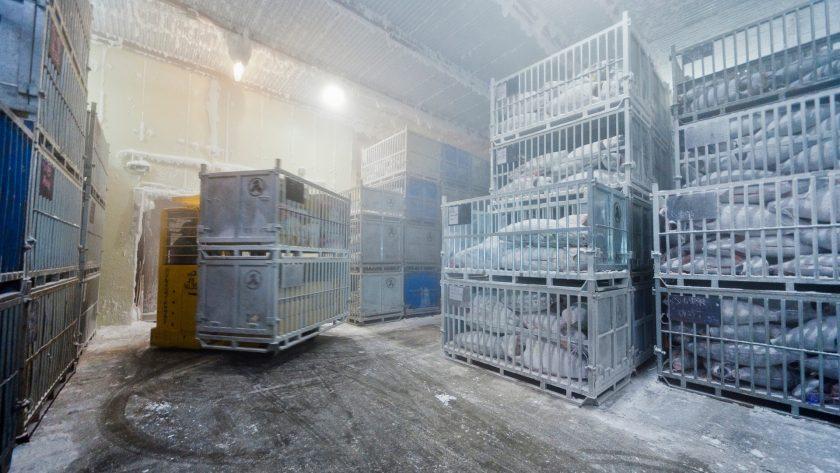
A report by FiinGroup noted that between 2020 and 2023, Vietnam’s designed cold storage capacity grew by nearly 45%, reaching 1.3 million pallets by late 2024. Current infrastructure includes 117 cold storage facilities, 1,499 refrigerated trucks, and 47 specialized transport units. If projects proceed as planned, capacity could surpass 1.7 million pallets by 2028, a 70% increase.
Three pillars drive this momentum:
- Agriculture and seafood exports: Seafood turnover rose from USD 8.5 billion in 2019 to USD 10.9 billion in 2022. Fruits, vegetables, dairy, and processed foods continue to expand, requiring end-to-end cold preservation..
- Rapid pharmaceutical expansion: The pharma market is projected to grow from USD 6 billion in 2023 to USD 8.7 billion by 2028. Vaccines, biologics, and biosimilars demand strict temperature control under global standards, fueling specialized cold storage needs.
- Fresh food e-commerce: Temperature-controlled fulfillment services, from picking and packing to last-mile delivery, are creating a high-value segment within cold logistics.
Cushman & Wakefield estimates the market at roughly USD 202 million in 2024, rising to USD 295 million in 2025. With a CAGR of 15%, Vietnam ranks among Southeast Asia’s fastest-growing cold storage markets.
Regional expansion and high-tech integration
Geographically, Southern Vietnam continues to be the heart of the cold chain, anchored by Binh Duong, Dong Nai, Long An, Ba Ria-Vung Tau, and Can Tho. Proximity to deep-sea ports and the Mekong Delta’s resources strengthens its role.
Northern provinces such as Hai Phong, Bac Ninh, and Hung Yen, are expanding cold storage for pharmaceuticals and export manufacturing. Meanwhile, Central Vietnam is emerging as a logistics corridor, with Da Nang, Khanh Hoa, and Binh Dinh shortening transport routes and opening gateways to the Pacific.
Parallel to capacity expansion, the market is shifting toward integrated high-tech models:
- Automated racking systems to optimize storage space.
- Warehouse Management Systems (WMS) and Transport Management Systems (TMS).
- Real-time temperature and humidity monitoring sensors.
- Integration of traceability and electronic documentation.
This shift lowers operating costs, improves accuracy, and ensures compliance with the strict standards of the US, EU, and Japan. Consequently, the cold chain is no longer viewed as a ‘supporting phase’ but a decisive factor in strengthening Vietnam’s export competitiveness.
Foreign capital and the southern ‘cold triangle’
Since 2023, foreign investors have accelerated development, marking a more professional phase. Key international corporations include:
- Lineage Logistics (US): The world’s largest cold storage operator entered the market via a deal with Emergent Cold Vietnam and plans to expand in Haiphong, Da Nang, and Ho Chi Minh City.
- LOTTE Global Logistics (South Korea): Began building a USD 34 million cold chain center in Dong Nai in March 2025 to serve the entire southeast region.
- Daiwa House Logistics Trust (Japan): Acquired the Tan Duc 2 project in Long An for nearly USD 20 million with a 20-year long-term lease.
- Nichirei Corporation (via Nichirei TBA Logistics): Inaugurated the Long Hau cold storage in Long Anwith 20,000 pallet positions, serving both exports and domestic distribution.
These investments are shaping a ‘cold triangle’ in Long An, Dong Nai, and Binh Duong, converging seaports, industrial zones, and abundant supply sources. Beyond scale, foreign capital introduces global standards and advanced preservation technologies, raising industry benchmarks.
Toward green cold storage
Vietnam’s cold chain evolution aligns with national goals for green logistics. By 2030, the sector aims to reduce greenhouse gas emissions by 7-10%.
New projects pursuing the ‘green cold storage’ emphasize:
- Application of high-performance insulation materials
- Energy Management Systems (EMS)
- Utilization of rooftop solar power
- Use of natural refrigerants
- Integration of electric vehicles or clean-fuel refrigerated transport
Corporations such as LOTTE, Nichirei, and Daiwa House are investing in energy-saving and carbon-reduction standards, consistent with Vietnam’s Net Zero 2050 roadmap.
Cold chain as national infrastructure
Vietnam’s cold chain is no longer a supporting phase. It is becoming strategic infrastructure that enhances agricultural exports, safeguards pharmaceuticals, attracts foreign capital, and promotes sustainable growth.
With double-digit growth and global participation, Vietnam’s cold storage market is entering a high-tech, integrated phase. It is now a decisive link in the modern logistics ecosystem.