


Content available at: Tiếng Việt (Vietnamese)
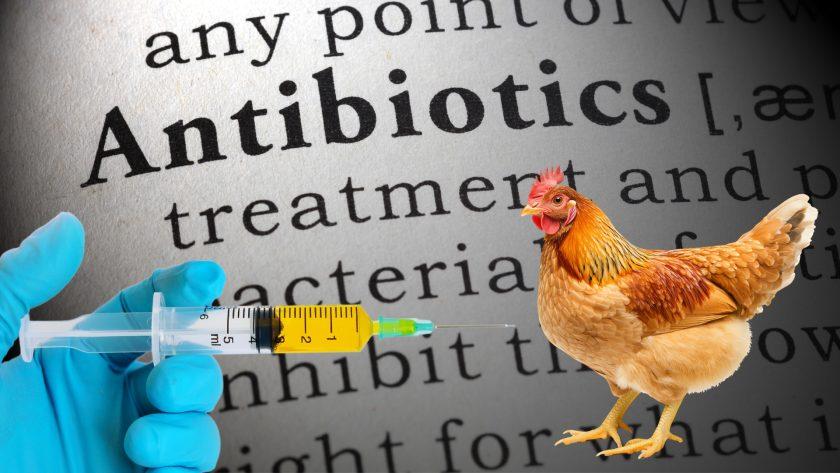
As Vietnam’s livestock industry faces challenges related to antibiotic overuse, rising antimicrobial resistance, and drug residues in food, new technological solutions are being pursued to create breakthroughs.
One promising approach is the development of nano-based antibacterial materials that can reduce reliance on conventional antibiotics while still ensuring animal health and food safety.
At the Institute of Materials Science (Vietnam Academy of Science and Technology), the research team led by Associate Prof Dr Ha Phuong Thu has completed the project “Research and development of plant-based nano antibiotics, synthetic nano antibiotics, and evaluation of their effectiveness for application in poultry production” (code: 06/2020/TN).
The project, funded by NAFOSTED, has generated significant results, opening a new direction for sustainable livestock production.
Traditionally, antibiotics have been widely used to prevent diseases and improve livestock productivity. However, prolonged misuse has led to serious consequences:
- uncontrollable antimicrobial resistance,
- harmful antibiotic residues in food, and
- negative environmental impacts.
The WHO has also warned that antibiotic resistance could become a “silent pandemic” if not effectively managed in both agriculture and healthcare.
Although Vietnam has tightened regulatory control, the livestock sector still needs practical alternative solutions.
Nano technology: A new direction for natural and synthetic antibiotics
A key highlight of Dr Thu’s research is the development of nano antibiotic systems under 100nm, which allows active compounds to penetrate bacterial cells more effectively, increasing antimicrobial efficiency while reducing dosage and side effects.
Two main groups of nano products were developed:
- Plant-based nano antibiotics derived from garlic and Phyllanthus urinaria.
- Nano systems combining synthetic antibiotics (Doxycycline, Florfenicol) with silver nanoparticles.
Among these, silver nanoparticles play a crucial role. Thanks to their ability to adhere to cell surfaces, they disrupt bacterial membranes and inhibit transport functions, rapidly weakening bacteria.
When combined with conventional antibiotics, the ability to eliminate drug-resistant bacteria increases significantly, especially against E. coli and Salmonella, two common pathogens in poultry.
Meanwhile, plant-based nano extracts provide natural biological mechanisms that enhance immunity and reduce infection risks, aligning with organic farming trends.
In laboratory conditions, the nano formulations demonstrated strong activity against common drug-resistant bacterial strains.
Their sustained-release properties help maintain stable bacterial balance in the gut without causing biological shock – something traditional antibiotics struggle to achieve.
Experimental results: 90% reduction in antibiotic use, higher survival rate, and improved food safety
The true value of the research is shown through real-world application.
The team conducted a trial at a broiler chicken farm in Hiep Hoa District (Bac Giang). Results after more than 45 days clearly showed:
- Antibiotic use decreased tenfold compared to the control group.
- Survival rate reached 98%, higher than the traditional method’s 94%.
- Antibiotic residues in chicken meat measured only 35 µg/kg, far lower than the control group’s 197 µg/kg.
These figures confirm the biological effectiveness and the potential to meet strict food safety standards.
As global markets impose tighter restrictions on antibiotic-related agricultural products, these outcomes provide a major opportunity for Vietnam’s agricultural competitiveness.
Beyond experimental results, the team also completed a pilot-scale production process (100 liters per batch), forming the basis for commercialization.
The project earned two patents, two international publications, and one domestic conference report – exceeding initial targets.
Toward a future of antibiotic-free livestock production
Nano technology not only holds potential for poultry farming but can also be extended to pig farming, aquaculture, and even veterinary vaccine development.
In the long term, once processes are standardized and transferred, Vietnam can build livestock systems with low or no antibiotic usage – meeting domestic and export market demands.
From laboratory to farm, the results demonstrate that nano technology is a strategic solution for reducing antimicrobial resistance, protecting public health, and improving product quality.
This is not only a scientific breakthrough but also an appropriate answer to the development needs of Vietnam’s agriculture in the era of green growth and biosecurity.