


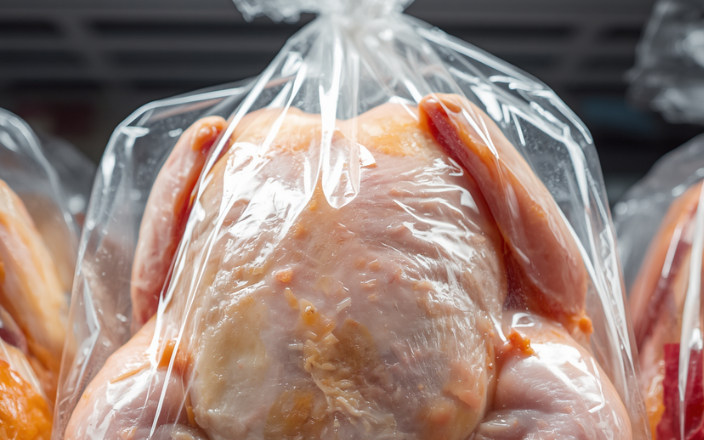
Understanding Bloated Packaging
Consumers often encounter chicken products in vacuum-sealed or modified atmosphere packaging (MAP). Normally, these packages are tight and firm. However, sometimes the packaging appears bloated or swollen. This change raises concerns about food safety and whether the product is still suitable for consumption1.
Causes of Package Swelling
Bloated packaging typically results from gas production inside the sealed environment. The main causes include:
- Microbial activity: Bacteria such as Clostridium or Enterobacteriaceae can generate gases like carbon dioxide and hydrogen.
- Spoilage organisms: Growth of spoilage bacteria accelerates when refrigeration is inadequate, or the product is stored beyond its shelf life.
- Packaging defects: Small leaks or improper sealing may allow external contamination and gas accumulation.
Safety Risks
Swollen packaging is often a warning sign of spoilage. Key risks include:
- Foodborne illness: Pathogens such as Salmonella or Listeria monocytogenes may be present if the product has been compromised2.
- Reduced quality: Even if harmful bacteria are absent, spoilage organisms can cause off-odors, slimy texture, and unpleasant taste.
- Unreliable shelf life: Once packaging integrity is lost, the product should not be trusted, regardless of the printed expiration date.
How to Evaluate the Product
Consumers should use a combination of visual, sensory, and contextual checks:
- Visual inspection: Bloated packaging, discoloration, or liquid accumulation are red flags.
- Smell test: Sour or foul odors indicate microbial activity.
- Storage history: If the chicken has been kept outside recommended refrigeration (below 4°C), safety is compromised3.
Recommended Actions
Food safety experts advise against consuming chicken from bloated packaging. Best practices include:
- Do not taste-test: Even a small bite can expose you to harmful pathogens.
- Dispose safely: Seal the product in a bag before discarding to avoid cross-contamination.
- Report issues: If purchased recently, notify the retailer to help identify storage or distribution problems.
Conclusion
Bloated packaging in chicken products is a clear indicator of spoilage or microbial activity. While not every swollen package contains dangerous pathogens, the risk is significant enough that consumption should be avoided. Safe handling and proper refrigeration remain the best defense against foodborne illness. When in doubt, it is always safer to discard the product rather than risk your health.
Sources: