


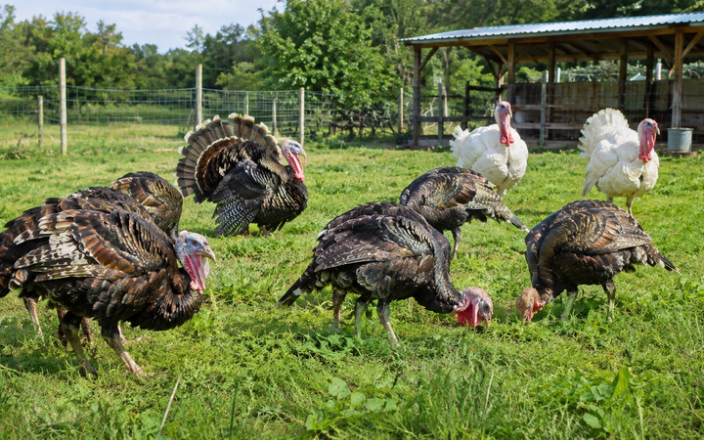
Rethinking genetic selection for free-range and extensive turkey farming
The expansion of organic and free-range poultry production is encouraging turkey producers to reconsider traditional breeding strategies. While commercial hybrids have been selected primarily for rapid growth and high meat yield, their performance under outdoor and extensive production conditions may differ considerably from that achieved in intensive housing systems.
Recent research is highlighting the importance of matching turkey genetics with the production environment, raising new questions about whether locally adapted breeds could offer advantages in alternative farming systems.
Outdoor conditions challenge conventional growth expectations
In conventional production, commercial turkey hybrids are selected for rapid weight gain, feed efficiency and predictable slaughter performance. However, outdoor environments introduce additional variables, including climatic fluctuations, increased physical activity and differences in access to feed and shelter.
A 2026 study published in the Journal of Animal Science investigated growth patterns in locally adapted Andalusian turkeys and commercial hybrids raised outdoors in southern Spain. Researchers evaluated multiple mathematical growth models to identify differences in development and optimal slaughter age.
The findings revealed that commercial hybrids experienced reduced growth potential and efficiency under outdoor conditions, while the growth patterns of locally adapted Andalusian birds appeared less affected by the production environment. The results suggest that genetic selection developed for intensive systems may not always translate into equivalent performance under extensive conditions (1).
Genetic adaptation and production efficiency
The findings highlight an important consideration for alternative turkey production: selecting birds according to their ability to perform under specific environmental conditions rather than relying exclusively on maximum growth potential.
Locally adapted genotypes may offer opportunities for production systems characterized by outdoor access, seasonal variation and lower production intensity. Nevertheless, their commercial suitability must also be evaluated through feed conversion, carcass yield, meat quality, reproductive performance and production costs.
The objective should not simply be to replace commercial hybrids with traditional breeds, but to identify the genetic characteristics that best match each production system.
Welfare management remains essential
Genetic selection alone cannot guarantee successful alternative production. Housing conditions, space availability, litter quality and environmental enrichment remain critical factors affecting flock health and performance.
In its scientific assessment published in February 2026, the European Food Safety Authority (EFSA) emphasized the importance of providing turkeys with sufficient space, dry litter, suitable enrichment and opportunities to express natural behaviours.
The assessment also highlighted the importance of selecting birds for improved leg health rather than prioritizing body weight alone. These recommendations reinforce the need to integrate genetic progress with appropriate husbandry practices in alternative production systems (2).
Towards a more adapted turkey production model
The future of alternative turkey farming may depend on a more precise relationship between genetics, environment and management.
For producers, evaluating locally adapted breeds alongside commercial hybrids could help identify production models that balance growth performance, animal welfare and economic viability.
Ultimately, the success of alternative turkey production will depend not only on where birds are raised, but also on whether their genetic potential is suited to the conditions in which they are expected to perform.
References
(1) Salgado Pardo, J. I., Delgado Bermejo, J. V., González Ariza, A., León Jurado, J. M., Lupi, T. M., & Camacho Vallejo, M. E. (2026). Characterization of the growth curve of free-range turkeys using linear and non-linear models in locally adapted versus commercial hybrid genotypes. Journal of Animal Science, 104.
(2) EFSA Panel on Animal Health and Welfare (AHAW). (2026). Welfare assessment of turkeys (Meleagris gallopavo gallopavo) on farm. EFSA Journal.