Content available at:
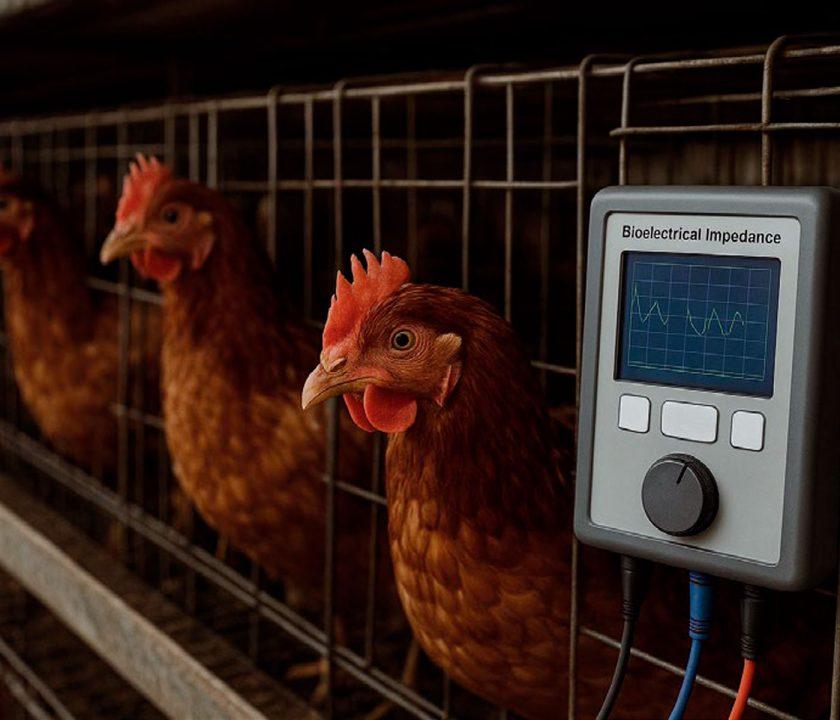
Applications of Bioelectrical Impedance in Poultry Production
Poultry production can gain more precision and consequently productivity by measuring body, meat, or egg composition affected by diverse factors. Knowing the body composition of animals is essential for several reasons.
- It is important to assess nutritional needs and the impact of nutrients in metabolism, determining the meat value and fat content of carcasses, and monitoring health.
Understanding the proportions of fat, muscle, and bone in animals allows for better management of their diet, prediction of growth rates, and optimization of production efficiency.
- Genetic characteristics dictate body composition, but it can be affected dynamically by multiple nutritional, environmental, and health status factors.
- This information can be valuable to integrator companies, meat processors, geneticists, and nutritionists in decision-making.
Wet chemistry methods can help to quantify body composition. These are expensive, time-consuming, destructive, increase variability, and are not sustainable. Several alternatives have been proposed. Near-infrared spectroscopy (NIRS) and bioelectrical impedance analysis (BIA) are the techniques with the most potential practical applications.
- The benefits of NIRS in poultry production have been presented in previous articles on AviNews International. This time, we will discuss BIA.
Bioelectrical Impedance Analysis (BIA)
The BIA is non-invasive, safe, user-friendly, portable, real-time, and relatively inexpensive. This method evaluates the application of a low-level constant alternating current in biological structures that results in a frequency-dependent impedance to the current’s spread. Bioimpedance (Z) is evaluated as a function of three elements: resistance (Rs), reactance (Xc), and phase angle (PA).
- The Rs is a measure of the dissipation of energy in a conductive body or fluid.
- The Xc is related to energy storage, and the PA is the time delay between a stimulating current and the voltage generated by an alternating current.
- These electrical properties that are measured are contingent upon the integrity of the cell membrane and the presence of extracellular and intracellular fluids.
The impedance is usually labeled as Z, and it is calculated as Z = √ (Rs2 + Xc2). The phase angle is calculated as PA =Arc tangent (Xc/Rs)*180/π.
The Rs and Xc in Ohms are measured with body composition analyzers. These devices measure the voltage drop in each proximal electrode after an excitation current is applied to each distal electrode, typically operating at around 50 kHz and 400 μA.
- The device accuracy can be tested to verify impedance measurements with a known ohm resistor.
Body composition
The BIA has been used in human medicine for several decades to estimate body composition, detect chronic diseases such as cervical cancer, and monitor malnutrition, changes in hydration status during pregnancy, and postpartum.
In animals, BIA has been used to estimate body and meat composition for fish, sheep, cows, pigs, and rabbits. In poultry production, BIA has been used previously to estimate body composition of broilers, breeder turkeys, and broiler meat composition.
- The prediction equations used for BIA must be specific for each population of birds evaluated. These equations should vary between sexes, broiler strains, and age to gain more accuracy in the predictions.
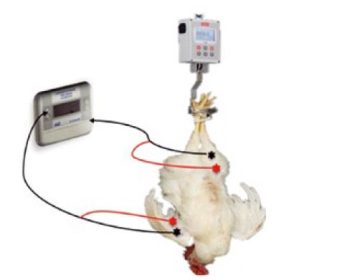
There are distinct methods for applying BIA in poultry. The electrodes can be placed on both legs. This method displays higher values for Xc in comparison to Rs. However, Rs is a more reliable predictor since it holds a greater proportion of the total impedance than Xc. Other options are to place two electrodes on the ventral surface of the wing and two on the inner thigh, or two on the right thigh and two near the sternum (Figure 1).
- The Rs of a conductive material is proportional to its length and inversely proportional to its cross-sectional area.
- Consequently, as animals grow, the Rs and Z decrease with age, despite the increase in fat content.
- Then, Rs generally has a negative correlation with fat and energy, and a positive correlation with water, protein, and ash.
BIA has proven to be reliable in predicting body composition in male and female broilers with similar precision and accuracy comparable to other well-established techniques.

In one recent study conducted by Benítez Puñal and collaborators (2024), the coefficient of determination (R2) to estimate water (%), protein, fat, ash (% DM), and energy content (cal/g DM) was 0.909, 0.825, 0.795, 0.493, and 0.838, respectively. But, other researchers (Zuo et al., 2024) have been able to predict fat with higher accuracy (R2 = 0.884%).
Detect myopathies
Bioimpedance has also been used to detect myopathies in breast fillets in poultry production (Figure 2). Severe woody breast filets exhibit significantly higher resistance and reactance compared to regular fillets, indicating that BIA can be used to detect them.
- BIA can also differentiate between four woody breast severity levels using the whole filet. Significant differences were observed in resistance and reactance of normal and other woody breast categories.
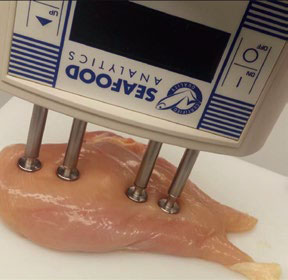

Segmental BIA of those filets indicated that BIA can be used to separate cranial, medial, and caudal regions of the breast filet based on the presence of woody breast myopathy. This provides more granular data as well as a better understanding of the spread of the myopathy in the muscle.
The accidental finding on the interference of spaghetti breast meat in detecting woody breast indicates that BIA could be used to detect spaghetti breast myopathy.
- The research also demonstrated that BIA can be altered with the freshness of the filets, and each processor must develop the resistance and reactance threshold values based on their process.
In its current state, the hand-held device can be used as a near-line technology by quality assurance departments to detect woody breast prevalence, differences between flocks, and determine the effects of nutrition and management practices on the prevalence of this myopathy.
- Further processors can use BIA technology together with machine learning to separate woody breast meat from the normal meat, helping to reduce consumer complaints about woody breast.
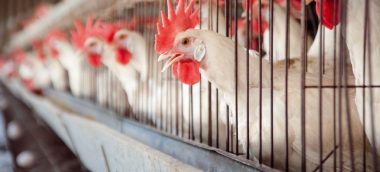
Fatty liver detection in hens
- At the 2025 European Symposium of Poultry Nutrition in Maastricht, NL, results from a project led by Kakhki and collaborators from Trouw Nutrition were presented. The project aimed to use BIA to predict liver traits in laying hens.
- Liver health is a critical determinant of productivity and longevity in laying hens, yet traditional assessment methods remain invasive and destructive.
- The preliminary results indicated some potential for BIA to detect heavier livers or with more fat content. The models likely require more samples from diverse age periods to improve accuracy.
- Still, the concept has been proven that it may be possible to detect fatty liver in laying hens using BIA.

Fertile egg freshness and chick quality
There are many laboratory methods to measure egg composition factors that may influence hatchability; however, all are invasive and do not allow eggs to be subsequently incubated.
Bioelectrical impedance has been used to evaluate fertile egg freshness since the chemical reactions that occur inside the eggs during the storage period can alter impedance.
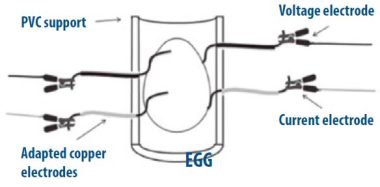
Eggs stored for seven days exhibited higher resistance (Rs 457.20 Ohms) and a lower phase angle (PA, 55.04) compared to those stored for only one day (Rs 454.60 Ohms and 55.29). Additionally, higher PA values and Xc indicate better chick quality and cellular integrity. The challenge in implementing these findings lies in how to place the electrodes and create a system for massive application in hatcheries (Figure 3).

The BIA is a promising technology that soon could be applied at commercial level to enhance our ability to understand development of birds, health status, and egg traits.