


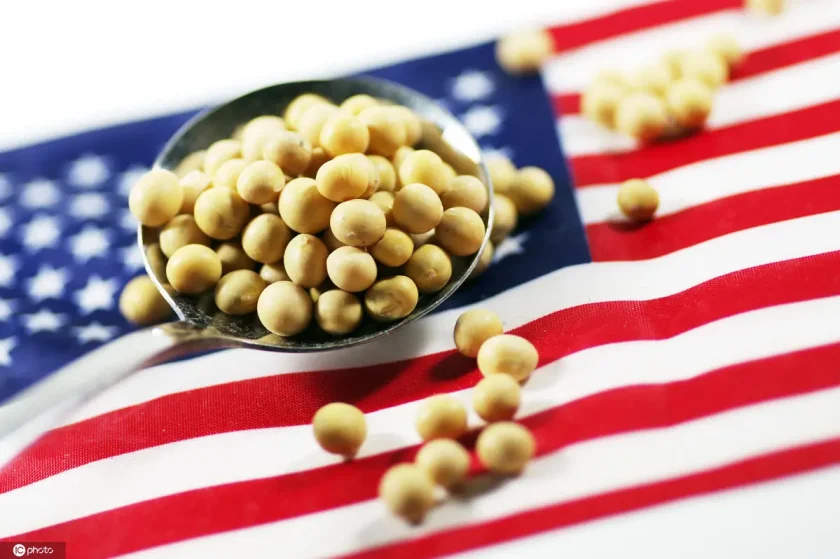
Bangladesh is reaping the benefits of a trade war between Washington and Beijing, with local importers snapping up cheap soybeans from the US after China reduced its purchases drastically.
China, once the biggest buyer of American soy products, has reduced imports following US President Donald Trump’s reciprocal tariffs, which strained trade relations between the two economic powers.
Local soybean importers, millers, crushers, and traders said they are taking advantage of the US soybean glut, as China’s absence from the US market has left American farmers with excess stock.
Traditionally, Bangladesh sourced soybeans from low-cost Latin American suppliers such as Brazil and Argentina. But recent price hikes there, followed by increased Chinese demand, have made those options less attractive.
China, the world’s largest soybean importer, has not booked a single shipment from US farmers this season, Bloomberg reported. This unusual move has affected the US growers, as they rely heavily on the Chinese market.
In 2024, the US accounted for about one-fifth of China’s soybean imports, worth more than USD 12 billion, representing more than half the total value of US soybean exports. Without that market, growers have been left with fewer buyers and weaker prices.
Reuters reported that US soybean exports to Bangladesh rose sharply to just over 400,000 tons, still only a fraction of China’s usual demand.
Price gap
Amid surging Chinese demand, Brazilian traders have increased their prices, said Md Taslim Shahriar, Deputy General Manager of Meghna Group of Industries (MGI).
“This came about following China’s imposition of a 20% retaliatory duty on imports of US soybeans,” he told The Daily Star.
“Sometimes the price gap is USD 40 per ton between Brazilian and US soybeans. Local importers are enjoying zero-tariff facilities on imports of American soybeans,” he added.
Before the tariff took effect on August 7, MGI sourced 60% of its soybeans from Brazil and 40% from the US. “This year, 80% of our soybeans may come from the US because of the price advantage,” Mr Shahriar said.
The quality of US soybeans is also far better than Brazilian and Argentine varieties, said Amirul Haque, Managing Director of Delta Agrofood, one of the country’s major soybean crushers.
“The price difference is USD 20-30 per ton between US and Brazilian soybeans, which in international trade represents a significant margin and competitive edge,” he said.
In the current international market, US soybeans are selling for around USD 470 per ton, compared with USD 490 for Brazilian soybeans, Mr Haque added.
He said the growing focus on US soybeans could help reduce the trade deficit between Bangladesh and the US.
“This is because the Trump administration wants to narrow the trade deficit between the two countries,” said Mr Haque, who took part in the reciprocal tariff negotiations on behalf of the country’s private sector.
During those talks, Washington imposed a reduced 20% tariff on Bangladeshi goods entering the US, tied to efforts to reduce the trade imbalance.
Trade between the two countries remains heavily in Bangladesh’s favour, with exports to the US crossing USD 8.2 billion a year, while imports from the US total around USD 2 billion.
Increasing import volume
Khabibur Rahman, Country Team Lead for Bangladesh at the US Soybean Export Council (USSEC), confirmed the surge in US soybean imports following the reciprocal tariffs.
“Over the last two months, soybean imports into Bangladesh have boomed because of the advantageous price,” he said.
In August and September, Bangladesh imported 400,000 tons of soybeans, up from 200,000 tons in the previous two months, said Mr Rahman.
In September alone, 114,000 tons came from the US, accounting for 87.11% of total imports that month. Brazil supplied 16,800 tons, or 12.89%, he said.
“Even in July, before the tariffs took effect, 45.84% of soybeans were imported from the US and 54% from Brazil. The picture is now completely reversed,” he added.
Bangladesh’s soybean crushing is forecast to rise 9.1% to 2.4 million tons in the 2025-26 marketing year, Mr Rahman said.