


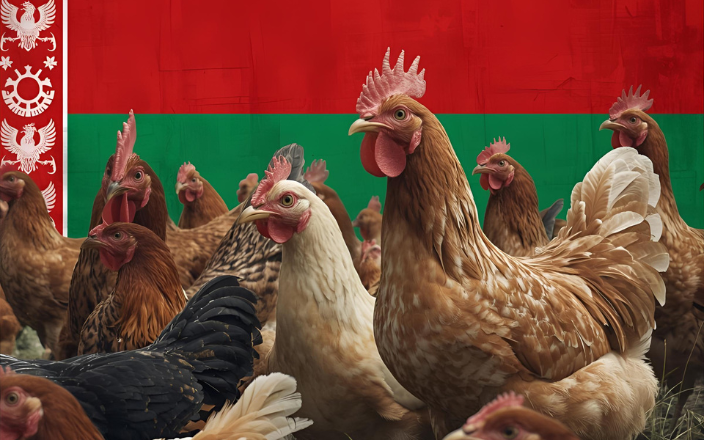
Belarus is taking decisive steps to reduce its reliance on imported poultry genetics, aiming to achieve full self-sufficiency within the next five to seven years. This strategic shift was announced by President Alexander Lukashenko during a government meeting in Minsk, where he emphasized the risks associated with foreign genetic imports, including supply disruptions and the potential introduction of diseases.
- Currently, Belarus imports most of its parent stock and hatching eggs from the European Union, which has raised concerns about the stability and biosecurity of its poultry industry.
- To address this, the government has initiated plans to establish a national breeding and genetics center.
- Although construction has been slow—only 3% completed as of October 2025—the initiative remains a top priority.
Agriculture Minister Yuri Gorlov highlighted the economic impact of imports, noting that Belarus loses approximately €1.5 million annually by purchasing chicks abroad. Imported chicks cost around €6.2 each, while domestically bred ones are priced at €5.2. Gorlov stated that the industry is technically ready to transition to domestic genetics but requires the development of a breeding farm for parent stock, estimated to cost between $5 and $7 million.
- In the broiler meat segment, Belarus currently meets 56% of its parent stock needs domestically.
- However, the egg-laying sector remains entirely dependent on foreign suppliers.
- The government plans to build facilities for maintaining parent flocks of laying hens and turkeys at key agricultural complexes such as Agrokombinat Dzerzhinsky and Soligorsk Poultry Farm.
Belarus’s move mirrors similar efforts in Russia, which has successfully reduced its dependence on imported hatching eggs to less than 10%. By investing in domestic breeding infrastructure, Belarus hopes to enhance food security, reduce costs, and strengthen its agricultural independence.
The initiative also aligns with broader goals to boost poultry production and exports. In 2024, Belarus exported $477.2 million worth of poultry meat and $70.9 million in eggs, primarily to Russia and China. With a self-sufficiency rate of 158% for poultry meat and 126% for eggs, the country is well-positioned to expand its genetic capabilities and reinforce its status as a regional agricultural leader.
Sources: Available upon request