


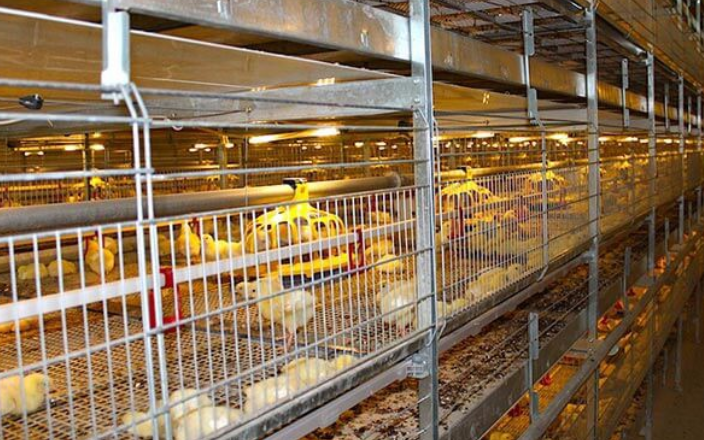
Automation in Modern Broiler Farming
Large-scale broiler poultry farms are increasingly adopting auto-harvesting cage systems to improve efficiency and reduce reliance on labor. These systems integrate feeding, watering, manure removal, and bird harvesting into a single automated process, which minimizes stress on the birds and optimizes farm management. Automation reduces the stress caused by handling, which directly impacts the birds’ welfare and carcass quality1.
Enhanced Stocking Density and Space Utilization
Compared to floor systems, cage-based auto-harvesting designs allow higher stocking density, maximizing house utilization and lowering energy costs. Optimized space allocation improves feed conversion ratios (FCR) and overall production efficiency2.
Automated Feeding and Drinking Systems
Modern cages feature multi-tier feeding lines and automatic drinking systems, ensuring uniform access to feed and water. Automated distribution reduces feed waste and supports consistent growth rates. Precision feeding systems enhance nutrient utilization and lower environmental impact.
Manure Management and Environmental Benefits
Auto-harvesting cages incorporate automatic manure cleaning systems, which improve hygiene and reduce ammonia emissions. Efficient manure removal is linked to better respiratory health in broilers and reduced pathogen load in facilities. Controlled manure management lowers greenhouse gas emissions and improves sustainability3.
Welfare Considerations and Leg Health
The cage flooring, often made of polypropylene (PP) material, is designed to minimize leg deformities and footpad dermatitis. Welfare-focused designs reduce injury risks during harvesting and improve bird mobility. Flooring material and design significantly influence broiler leg health.
Automated Harvesting and Labor Efficiency
The hallmark of these systems is automatic bird removal, which reduces labor costs and minimizes bird stress during collection. Automation ensures uniform handling, lowering mortality rates associated with manual catching. Mechanical harvesting reduces bruising and carcass downgrades compared to manual methods.
Conclusion: Toward Sustainable Large-Scale Production
Broiler cages with auto-harvesting systems represent a technological leap for large-scale farms, combining efficiency, welfare, and sustainability. By integrating feeding, drinking, manure removal, and harvesting, these systems reduce operational costs while enhancing bird welfare and environmental performance. As global demand for poultry meat grows, such innovations will be central to sustainable intensification strategies.
Sources:
1. An analysis of the welfare of fast-growing and slower-growing strains of broiler chicken (2024).
2. Stocking density effects on growth performance and processing yields of heavy broilers (2005).
3. Greenhouse Gas Emissions from Animal Manures and Technologies for Their Reduction (2013)