


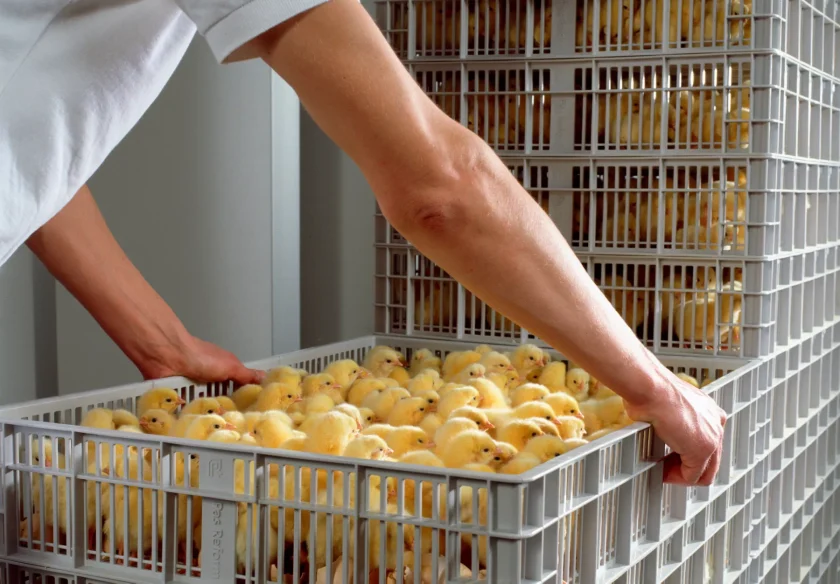
Part2: Hatchery design and incubation management
Scientific hatchery design
A well-designed hatchery follows a unidirectional workflow, moving from clean to contaminated zones to minimize the risk of cross-contamination.
Key sections include:
- Egg receiving and fumigation room
- Cold storage facility
- Setter room
- Hatcher room
- Chick processing area
- Dispatch section
Airflow management and controlled personnel movement are critical. Biosecurity must be integrated into the design to maintain hygiene standards.
Incubation management: The core process
Incubation is the most critical phase in hatchery operations.
Setter phase (Day 1-18)
During this stage:
- Temperature is maintained at 37.5°C
- Humidity is kept at 50-60%
- Eggs are automatically turned at regular intervals
Egg turning prevents embryo adhesion and supports proper development. Additionally, proper ventilation ensures a continuous supply of oxygen and removal of carbon dioxide.
Candling: Monitoring embryo development
Candling is conducted between day 7 and day 10 to evaluate embryo growth.
It helps identify:
- Fertile eggs
- Infertile eggs
- Dead embryos
Removing non-viable eggs improves hygiene and enhances overall hatchery efficiency.
Hatcher phase (Day 19-21)
Eggs are transferred to hatchers where environmental conditions are adjusted:
- Temperature: 36.5–37°C
- Humidity: 65–70%
Higher humidity supports easier shell breaking. By the 21st day, chicks hatch, marking the successful completion of the incubation cycle.
To read the Part 1, click here.