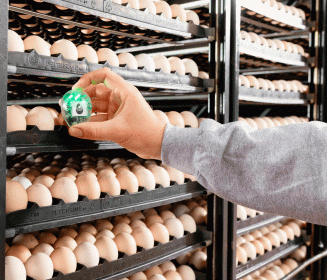
Part2: Hatchery design and incubation management
Scientific hatchery design
A well-designed hatchery follows a unidirectional workflow, moving from clean to contaminated zones to minimize the risk of cross-contamination.
Key sections include:


Airflow management and controlled personnel movement are critical. Biosecurity must be integrated into the design to maintain hygiene standards.
Incubation management: The core process
Incubation is the most critical phase in hatchery operations.


Setter phase (Day 1-18)
During this stage:
Egg turning prevents embryo adhesion and supports proper development. Additionally, proper ventilation ensures a continuous supply of oxygen and removal of carbon dioxide.
Candling: Monitoring embryo development
Candling is conducted between day 7 and day 10 to evaluate embryo growth.
It helps identify:
Removing non-viable eggs improves hygiene and enhances overall hatchery efficiency.
Hatcher phase (Day 19-21)
Eggs are transferred to hatchers where environmental conditions are adjusted:
Higher humidity supports easier shell breaking. By the 21st day, chicks hatch, marking the successful completion of the incubation cycle.
To read the Part 1, click here.

Subscribe now to the poultry technical magazine
AUTHORS

Setting the Global Standard for Soy
Isa Tan
Importance of Eggshell Temperature, Checking and Record Keeping in a Commercial Poultry Hatchery
Rasel Ahmed
The Reality of the South African Egg Industry
Abongile Balarane
Mycoplasmosis update: Antimicrobial Resistance, Vaccines, and Control Challenges
Edgar O. Oviedo Rondón
Future Flock: Antibiotic-Free Solutions for a Rising Population
Dr Ahmad Safi Dr. Faran Hameed
Interview Dr. Nivin Nasser
Dr. Nivin Nasser
Disinfection of Fertile Broiler Breeder Eggs
Edgar O. Oviedo Rondón
Precision Matters: Tackling Quality Issues in on‑Farm Vaccination
Jaime Sarabia Fragoso Kevin Gandon Pascal Paulet
Process Control: 30 Specific Aspects to Evaluate from Pre-Slaughter to Slaughter
Eduardo Cervantes López
Ishikawa Diagram Applied to Processing of Chickens
Eduardo Cervantes López