


In northern Thailand, the dry season often brings piles of fallen leaves and yard waste. For many households, burning debris remains the cheapest and most convenient way to clear it. Yet this practice releases smoke and fine particulate matter, worsening seasonal air pollution.
San Kamphaeng district, located east of Chiang Mai, is known for its rural villages, farmland, and handicraft communities. Like many areas in the region, it faces the recurring challenge of managing large amounts of dried leaves during the dry months.
Leaves for eggs
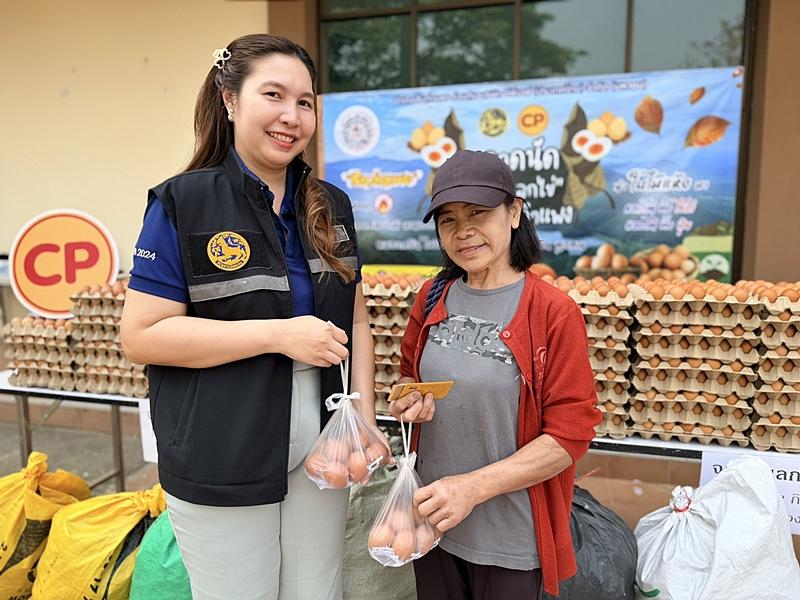
To address the problem, local authorities, supported by Charoen Pokphand Foods (CPF), have introduced a small initiative to encourage alternative ways of managing yard waste. Residents are invited to bring dried leaves to collection points and exchange them for eggs, offering a simple incentive to reduce burning.
Under the ‘Leaves for Eggs Market’ campaign, residents can trade 2kg of leaves for one egg, up to 10 eggs per day. The collected leaves are fermented and processed into compost, which is later distributed back to the community to improve soil quality.
By turning everyday yard waste into a useful resource, the initiative discourages open burning while promoting community participation in sustainable practices.
District chief Kanes Khamnon said the initiative is designed to encourage people not to burn yard debris, a common practice during the dry months.
“This activity helps people see that what was once considered waste can become something valuable,” he said. “People are helping reduce burning and smoke, while also bringing nutritious food back to their households.”
The project, now in its second year, collected 25 tons of leaves during its first run, according to district officials.
A practical way
For some residents, the benefits are immediate. Bunyom Chomphukham noted that the program offers a practical way to manage dry leaves, which can otherwise pose a fire risk. Nimnuan Chomphukham added that the eggs help lower household food expenses.
Northern Thailand faces recurring air pollution during the dry season, with PM2.5 caused primarily by forest fires. Even so, local officials say that reducing small-scale burning in communities can still help improve air quality.
Projects that encourage people to stop burning leaf waste can ease local pollution while strengthening community participation in environmental solutions.
Pinyo Romket, Associate Director of Pullet and Commercial Layer Production at CPF, said the project shows how communities can turn local waste into a useful resource while addressing an environmental problem.
“It helps reduce burning, which contributes to PM2.5 pollution, while also providing high-quality protein to families in the area,” he said. “CPF is pleased to support a community initiative that turns local action into tangible environmental and social benefits.”
The exchange runs every Wednesday from March 4 to May 27, 2026, from 9:30 am to 11:00 am, at the San Kamphaeng District Office. It is open to registered residents.
By linking waste management, composting, and household support, the campaign shows how local action can address air pollution while strengthening community ties. With CPF’s backing, San Kamphaeng demonstrates that small initiatives can create practical solutions for sustainable development in northern Thailand.